
A sheep in wolf's clothing
and a recipe for a soup that makes the most of new summer potatoes

To everyone new here, welcome. I’m Elizabeth, the writer of The Delicious Bits Dispatch, a weekly missive for the curious, blending discovery, reflection, and musings, always wrapped up with a seasonal recipe worth lingering over.
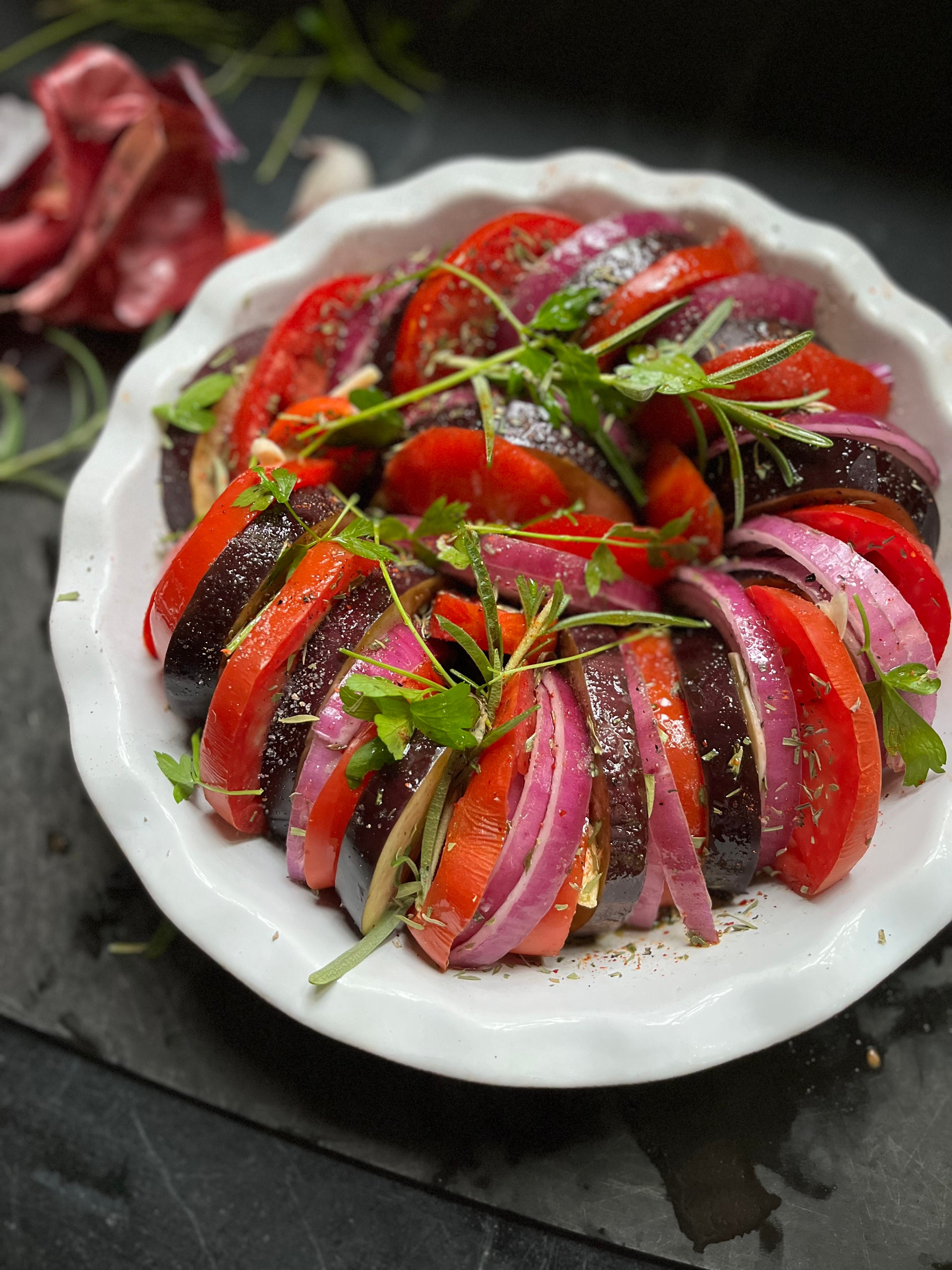
It was all tomatoes and eggplants and new potatoes and shiny purple, green and red peppers at the market this morning.
Somewhere in the dog days of summer, the nightshades have come on like a fury, a sudden overwhelming tidal wave of excess that arrives all at once.
Welcomingly unavoidable as one sultry sunny day after another, heatwaves shimmering off concrete, the instant rush of relief from a plunge into the nearest pool. A feeling at once joyful and full of angst. The sense that the days of plenty will slip away too fast, their memory collapsing like an overripe tomato in a hot kitchen.
Or perhaps I should say the nightshades are as inevitable as fate.
In Greek mythology, the three sisters of Fate controlled destiny. Clotho wove the thread of a life, Lachesis measured its length, and Atropos decided when to cut it short. Over time, fate has taken on a broader meaning beyond life and death, but still with the same sense of inevitability. “It’s fate” renders something inevitable, meant to be, immutable.
I like to think that the abundance of nightshades that surround me make my extreme consumption of them inevitable.
Guilt by association
In an age where foodstuffs that are unique, unusual and exotic are sought out, their consumption splayed across Instagram and TikTok like so many badges of honour, it’s hard to imagine a time when these glorious fruits and vegetables were considered anything but delicious.
Blame it on a shared family tree, botanical confusion, a bit of bad luck, and plain unfamiliarity.
Nightshade comes from the Old English word nihtscada: night's shade, or shadow, a name older than the family, Solanaceae, it would eventually come to cover. Like most families, Solanaceae have some unsavoury relatives lurking in the shadows, including deadly nightshade, henbane, and hallucinogenic mandrake. It’s unclear when New World potatoes, eggplants and tomatoes came to be called nightshades too; but whether through folklore or later scientific classification, once the family connection was established, fear and suspicion ensued.
Part of the lore and mystery of nightshades is where and how they were first adopted. And if you think the Italians were first to the party with tomatoes and eggplants, think again.
A sheep in wolf’s clothing
The tomato's journey began with a wild ancestor from the lower Andes, but it was in Mesoamerica, hundreds of miles north, that the plant was actually domesticated, eventually cultivated by the Aztecs, who called it "tomatl," or "swollen fruit." Spanish conquistadors later brought the novelty to Europe and christened it tomato. Alongside other New World treasures like maize, potatoes, and chilies, the tomato found its way to Spain in the early 16th century, courtesy of Columbus’s voyages.
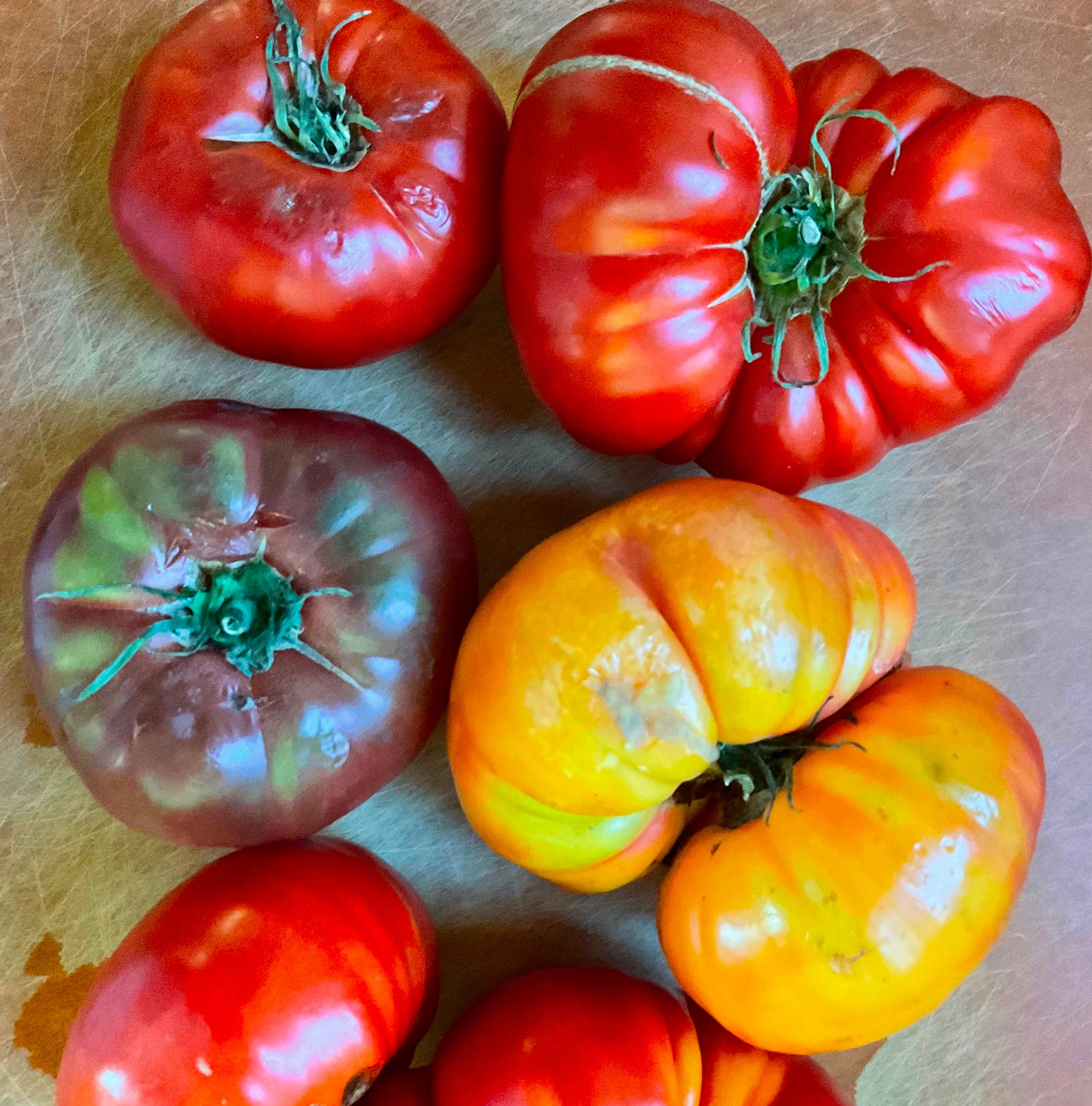
Yet early European botanists, unfamiliar with this New World import, were quick to draw connections between the tomato and its toxic relatives.
Add to that a series of unfortunate coincidences. It was common practice for16th and 17th-century European nobility to dine on pewter plates laced with lead. Tomatoes, with their high acidity, caused the lead to leach from the plates into the food, resulting in what we now know as lead poisoning. Symptoms were severe, and often fatal. Naturally, the blame fell on the tomato.
Eggplant’s adoption followed a similar path. Domesticated in India and China, they arrived in the Mediterranean via Arab traders and Moorish Spain. Mistakenly thought to cause insanity, perhaps because their bitterness, eggplants were dubbed “mad apples.” Generations of farmers kept the least bitter, largest fruit for seed, breeding out both the bitterness and the toxins that came with it.
All talk and no potatoes
What of the beloved potato? It wasn’t until European wheat crops began to fail that potatoes found a permanent place on the table. What started as a suspect root has now become the world’s most widely produced vegetable.
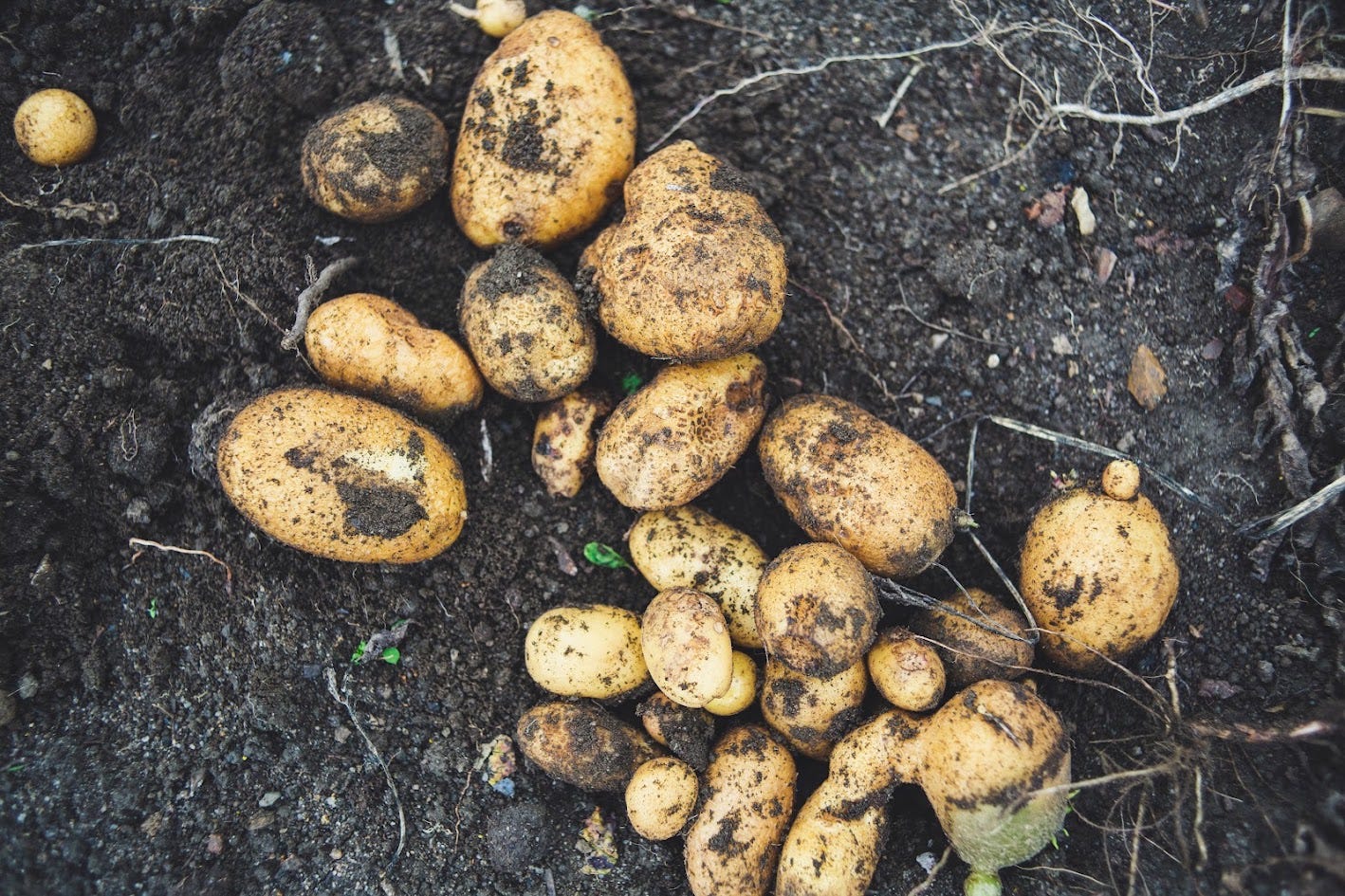
It seems only fitting to give the humble potato a starring role in this week’s seasonal recipe. With their year round availability, potatoes may not seem like the first thing you’ll want to fill your market basket with. But if you haven’t had new potatoes, really new, with the dirt still clinging to them and the warm musky scent of earth perfuming your hands, now’s the time to try them.
If you enjoyed this week's Dispatch, I'd be delighted if you subscribed, shared it with someone who might enjoy it, or joined the conversation below.
Potato soup with fresh lovage
Soup: A Way of Life, Barbara Kafka
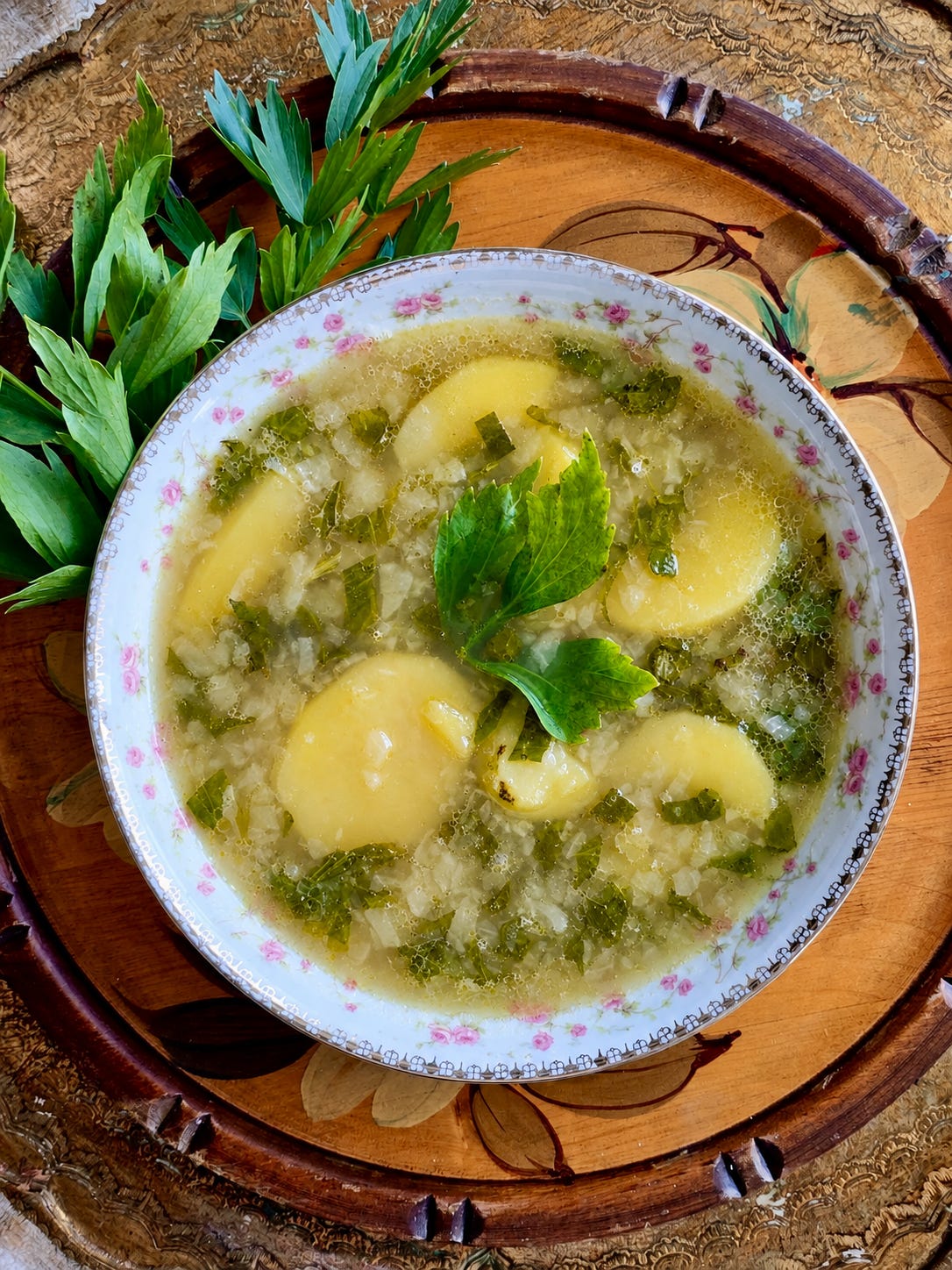
It may be a bit unfair of me to propose a potato soup recipe whose key ingredient may be hard to come by. But perhaps I might intrigue you enough to seek out lovage for this simply sensational potato soup that also make the most of new potatoes.
Lovage, with its bold celery-like flavour and aromatic leaves, adds a vibrant touch to any dish. It was prized for its medicinal properties and culinary uses in ancient Rome and medieval Europe, and while not necessarily a kitchen staple now, it is still beloved by many. As Kafka says, lovage is a perennial worth growing that stays green from earliest spring late into the fall.
Note: New potatoes are waxy, low in starch and high in moisture, which makes them well suited to steaming and boiling but not ideal for baking or frying, since they tend to fall apart too easily under dry heat.
If you can’t find fresh lovage, substitute ¾ cup finely chopped celery leaves and ¼ cup chopped parsley leaves for 1 cup fresh herbs total. This gets you closest to lovage's distinctive flavour.
Ingredients
2 tablespoons (30 g) unsalted butter
2 medium onions, coarsely chopped
6 cups (1.5 l) chicken stock
2 pounds (900 g) new potatoes, peeled and cut across into ¼-inch (.5-cm) slices (see Note)
1 cup loosely packed lovage leaves, stems removed, cut across into narrow strips (or a mix of celery and parsley leaves; see Note)
Kosher salt and freshly ground black pepper, to taste
In a medium stockpot, melt the butter over medium heat. Stir in the onions and lower the heat. Cook, stirring occasionally, for about 20 minutes. The onions should be very soft and golden.
Stir in the stock and potatoes. Bring to a boil. Lower the heat and simmer for 20 minutes, or until the potatoes are just starting to fall apart. Stir in the lovage and simmer for 4 minutes more.
Gently whisk it with a balloon whisk so that the potato slices break up slightly and thicken the soup. Season with salt and pepper to taste.
The soup can be made up to 3 days ahead and refrigerated.
Funny how afraid we were of certain foods. I read a piece about the first settlers from England who arrived to America and nearly starved because they were afraid to eat the produce. It was the native Indians who showed them what to eat.
What an excellent and charming piece Elizabeth, so many threads of knowledge woven into a nightshade tapestry. I know your soup will be delicious too.