

To everyone new here, welcome. I’m Elizabeth, the writer of The Delicious Bits Dispatch, a weekly missive for the curious, blending discovery, reflection, and musings, always wrapped up with a seasonal recipe worth lingering over
Is there anything more satisfying than curling up with a new issue of your favourite magazine?
Whether your passion is music, food, long-form fiction writing, fashion….there is a periodical just for you.
That simple pleasure hints at something deeper.
Magazines have always existed somewhere between information and imagination. They carry ideas, but can also stir longing—for beauty, creativity, escape, connection, tastes. Long before they were measured, and then destroyed, by circulation or ad buys, magazines offered a space where words, images, and design could come together as a singular expression of distinct points of view.
To love magazines is not simply to consume them, but to recognise them as an art form in their own right—and, just maybe, as inspiration for our own creative impulses.
A platform for ideas
While the first “magazine” was published in England in 1731, it was really in the 19th century that magazines actually came into their own. Nowhere was this more apparent than in the United States, where magazine empires began and flourished.
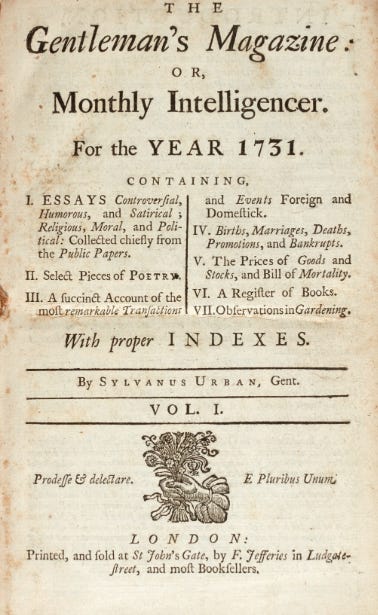
Yet, even as the new medium proliferated, with every innovation, whether radio, television, or the internet, the imminent demise of the printed word was continually remarked upon.
And indeed, magazines have borne the brunt of the long-predicted print media fallout. The first seismic loss was Gourmet in 2009, a beloved magazine first published in 1941. A cultural icon that encompassed travel, politics, design, and lifestyle alongside food, Gourmet treated eating as a way of understanding the world and in the process, created a singular style of journalism.
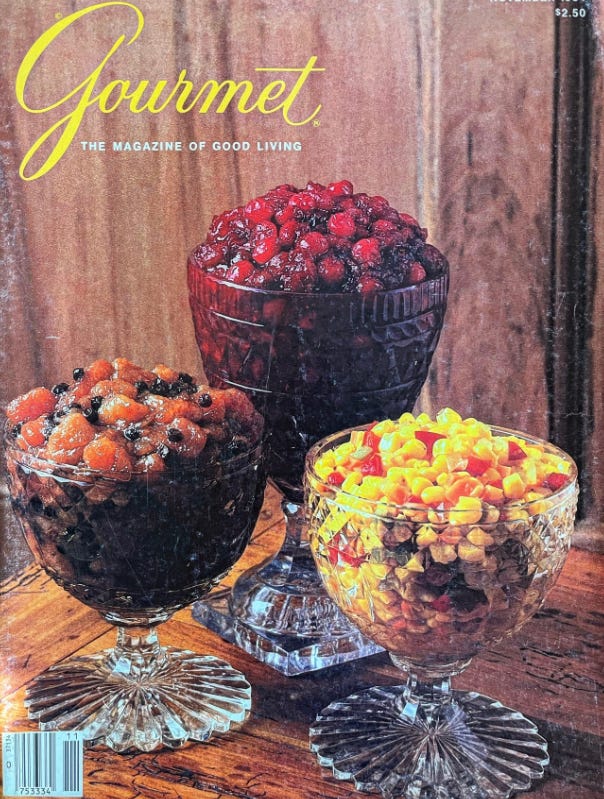
Gourmet also cared about great writing as much as it cared about food. Its pages regularly blurred the boundaries between food writing, travelogue, and literary essay, and the magazine’s contributors were drawn from both culinary and literary worlds, with everyone from James Beard, Laurie Colwin and M.F.K. Fisher to George Plimpton, Paul Theroux, Ray Bradbury and David Foster Wallace amongst its contributors.
In this sense, Gourmet is best understood not simply as a food magazine, but as an expression of what magazines, at their best, can make possible.
The pleasures of a slow read
Even as many magazines have ceased to be, I’ve been encouraged by the heroic rise of the magazines of the future.
New titles continue to appear, many of them niche, carefully produced, and published less frequently—quarterly, biannually, annually. These are magazines designed to be kept rather than skimmed, often focused on a single subject or sensibility, suggesting that the slow read still has currency.
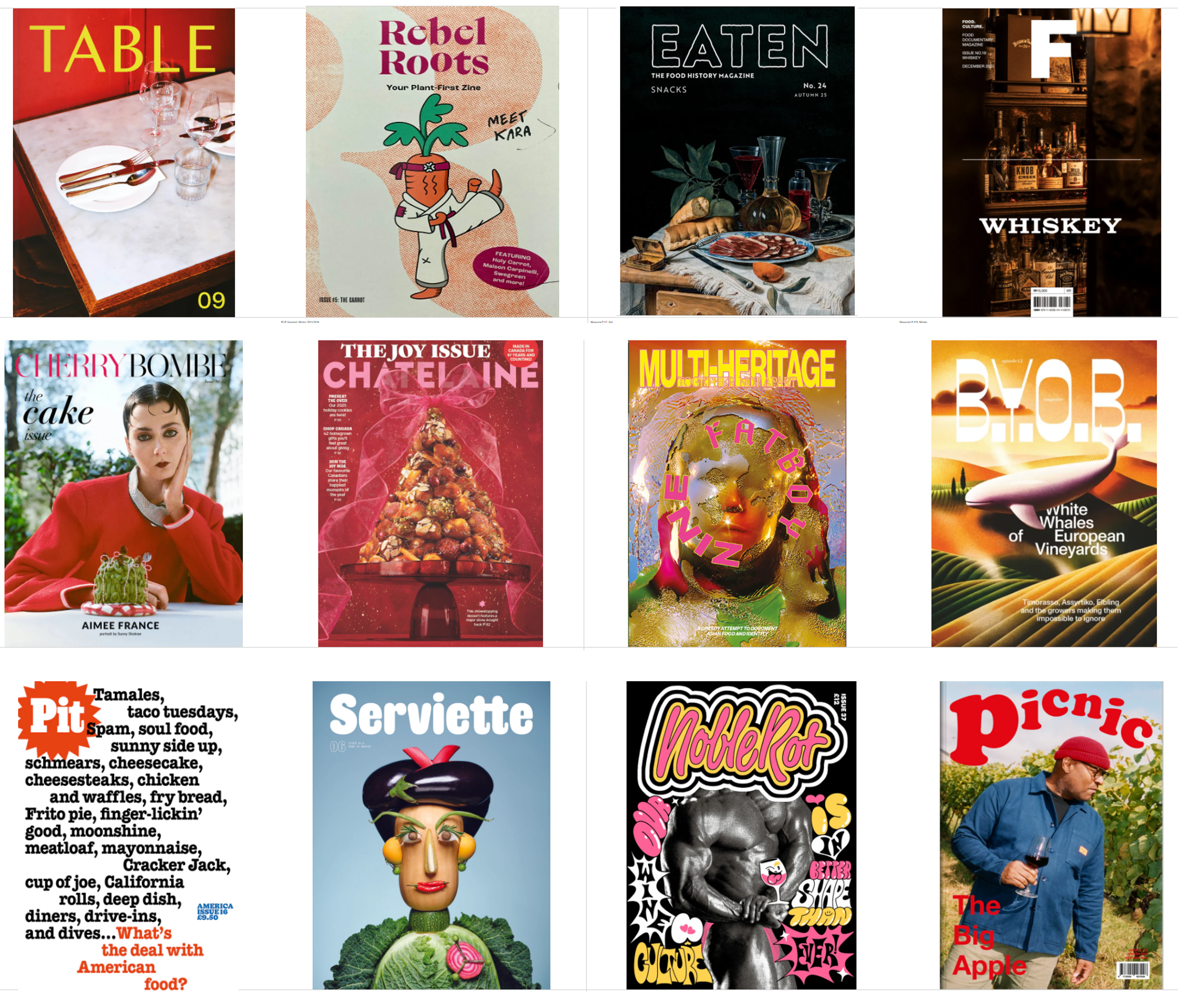
Magazines are personal and broad-ranging, bespoke and unexpected. The shiny pages beguile, the crack and whisper of the pages, even the advertising (especially in those back issues), intrigue. They invite lingering.
Perhaps it is precisely because magazines sit at this intersection—between art and function, information and imagination—that they also invite another kind of engagement altogether.
Beyond reading, magazines engage the sense of touch through glossy or matte, thick or thin pages shaped by the publication’s style and budget. The fragments of images, words, textures can be lifted out of context and made to speak anew. And it is here, in this act of selection and rearrangement, that magazines begin to move from art form to raw material. A collage created and shaped by the words and images of others, but uniquely one’s own.
Cut and paste
And so it was that this past Saturday afternoon found me surrounded by magazines, scissors, a glue stick and a large white piece of Bristol board, its size and blankness at first overwhelming*.
But almost like an Ouija board drawing me to the right letters, as I slowly flipped through the magazine pages, unrelated images and words beckoned, their context and connection still hidden from my inner view. As I began to arrange these fragments on the board to build my collage, a story emerged at once revealing and exciting.
Focus and let the wheel spin. Be quiet, said David Bowie. Forget to do lists of twenty impossible things. Know that my inner clock is a colourful chaotic mess of joy, and will never likely be pointing serenely to 10 minutes to 10. See deeply and joyfully.
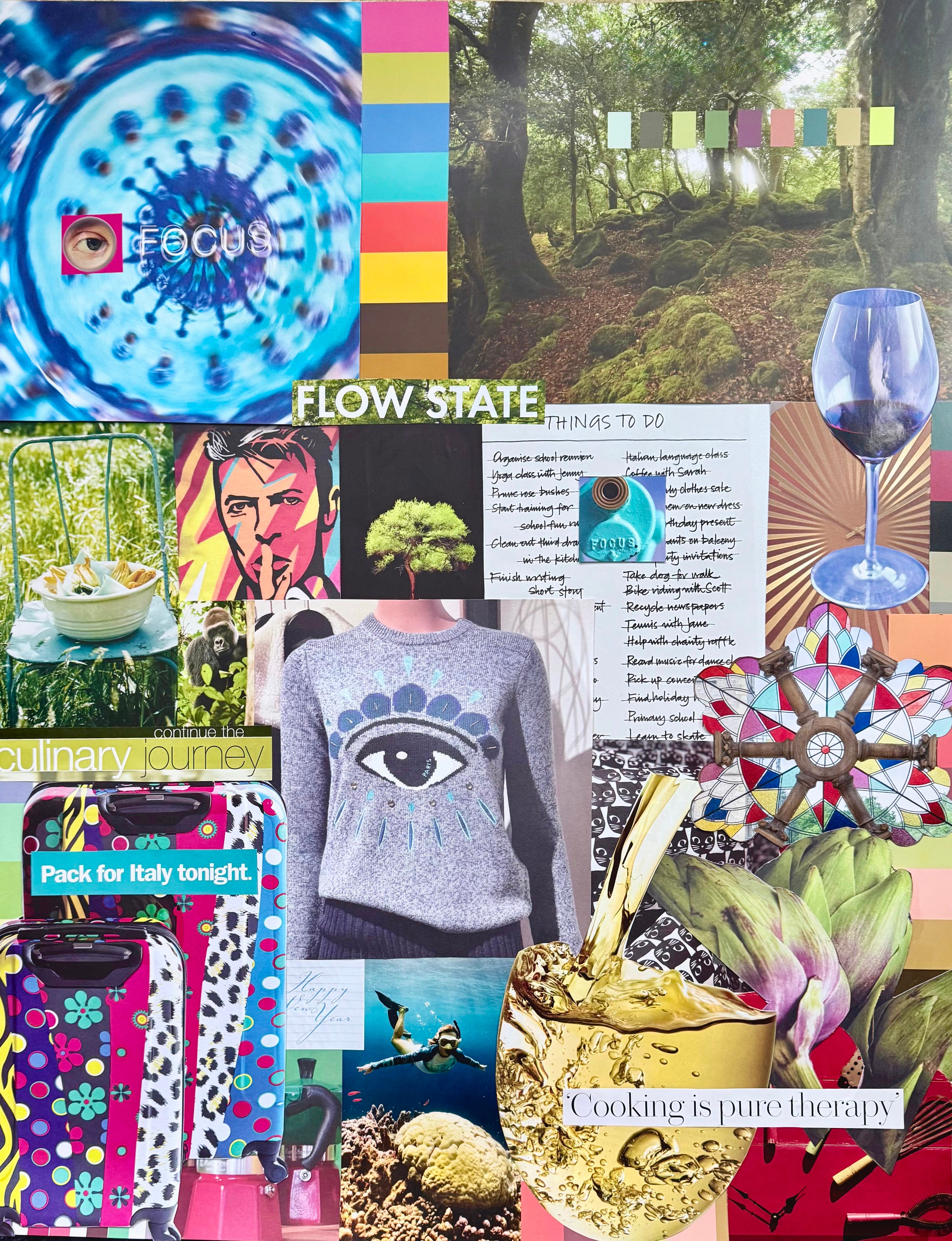
Dive deep. Go back to Italy as soon as possible. Continue my culinary journey, starting with the WSET wine course I’m starting next week. Learn to love artichokes. And always remember to escape to the forest and breathe deeply. Most of all, live in Technicolor, as Lucia did.
The making of the collage drifted into this morning. As the beginning of today’s snow storm took shape and built two foot high drifts against my windows, I was as intent on my task as a child building an intricate Lego tower. And like that child, with each piece that fell into place, I felt a thrill as the story revealed itself, a larger-than-life roadmap to discovery.
If you enjoy these Dispatches—and I hope you do—tap the heart, share, or comment to help new readers find their way here
*This weekend’s collage was inspired by my participation in the New Year’s Journaling Project, a 30-day ritual designed by the wonderful Suleika Jaouad. Follow the links to learn more.
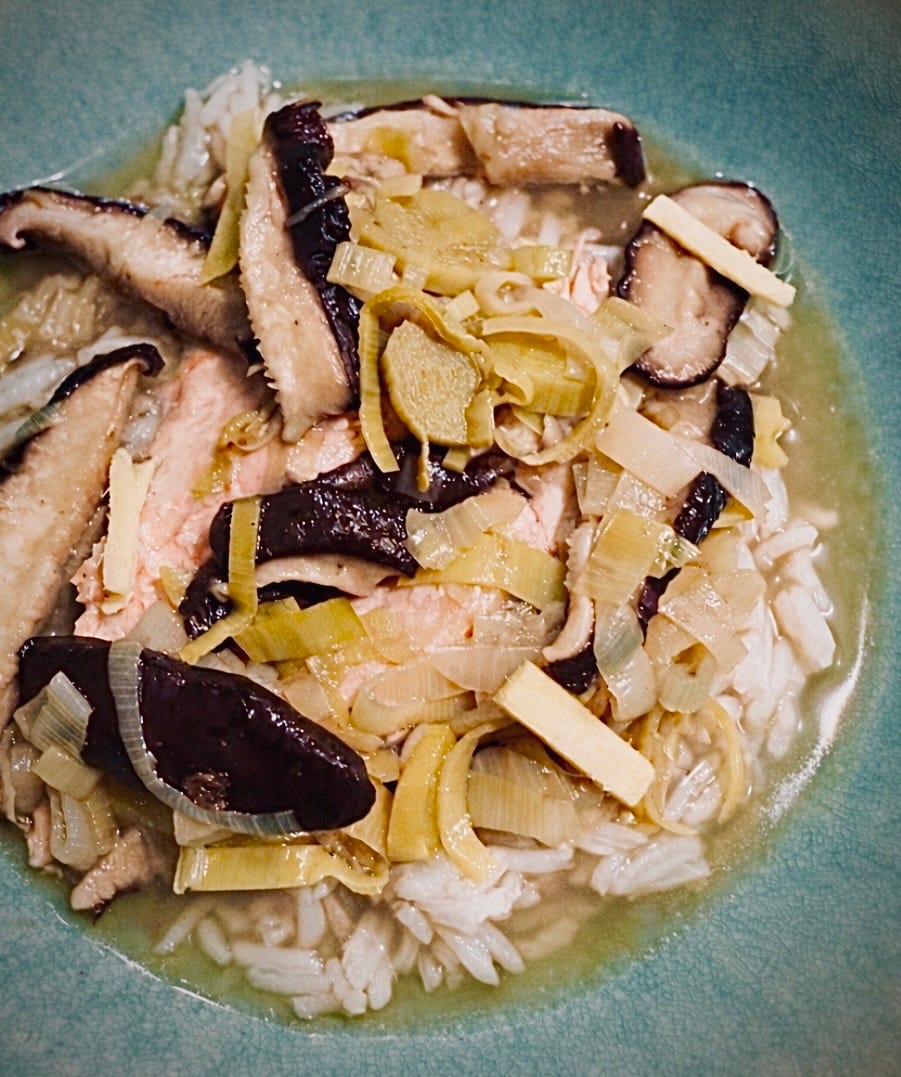
Slow-roasted salmon with mushroom-leek broth
Sue Li, New York Times
4 servings
Yesterday the scene at the grocery store brought back those early days of the pandemic. Long snaking lines, bread shelves empty, carts piled high with frozen pizzas, ice cream, potato chips.
I had a different objective. Plenty of vegetables to augment my well stocked freezer; oranges, radicchio, fennel and pomegranate for the salad I’ve had on repeat; and especially shiitake mushrooms and leeks to complement the beautiful salmon we bought at the farmers’ market.
This oh-so-simple dish is both nourishing and comforting, not quite a soup or stew but substantial enough to feel just right on a snowy evening.
Ingredients
1 (1½-pound) piece skin-on or skinless salmon
2 tablespoons sesame oil, plus more for serving
Kosher salt
2 medium leeks, trimmed, white and light greens cut crosswise into 1-inch rounds (about 2 cups)
8 ounces fresh shiitake mushrooms, destemmed and sliced
4 cups chicken broth
2 cups cooked short-grain white rice
Fresh ginger, peeled and cut into very thin matchsticks, for serving
Heat oven to 325 degrees. Place salmon skin-side down on a baking sheet. Drizzle salmon with 1 tablespoon sesame oil, sprinkle with about ½ tsp salt and roast in the oven until cooked, 25 to 30 minutes. Remove salmon from the oven and let it rest another 5 minutes.
While the salmon roasts, heat remaining 1 tablespoon sesame oil in a pot over medium heat. Add leeks and mushrooms, season with 1 tsp salt, and cook, stirring occasionally, until the leeks and mushrooms are lightly golden on the edges, about 10 minutes.
Add chicken broth and simmer until the leeks are tender, 20 to 25 minutes. Season with salt.
To serve, divide rice among four bowls. Scoop salmon by the spoonful onto the rice, and ladle vegetables and broth over salmon and rice. Top with ginger and a drizzle of sesame oil.
You are multi-talented! You should do more collages. They are as fun and interesting as magazines themselves.
Have you been to the (newish) magazine store on Dundas West? It has a wide selection of rare magazines I'd never seen before. I would have carried them all home, but for the little issue of money and luggage restrictions.
Keep the up the collage work! Consider cutting around your selected subjects to free them further from the page.