
Flow state
and a recipe for creamy rosemary cauliflower soup

To everyone new here, welcome. I’m Elizabeth, the writer of The Delicious Bits Dispatch, a weekly missive for the curious, blending discovery, reflection, and musings, always wrapped up with a seasonal recipe worth lingering over.
Is there anything more intimidating than a blank page?
Perhaps a blank mind, that panicky feeling that, just when you need to have a burst of inspiration, start that project, finish the outline, write the strategy, suddenly everything has dried up, as arid as the Sahara.
Or perhaps you don’t think of yourself as creative at all. Creativity is often framed as output…being “good at something”: having a talent that’s distinctive and recognizable, whether that’s drawing, singing, photography, fashion design, woodworking or even arranging the flowers just so. Creativity becomes performance art, something we do for someone else instead of ourselves.
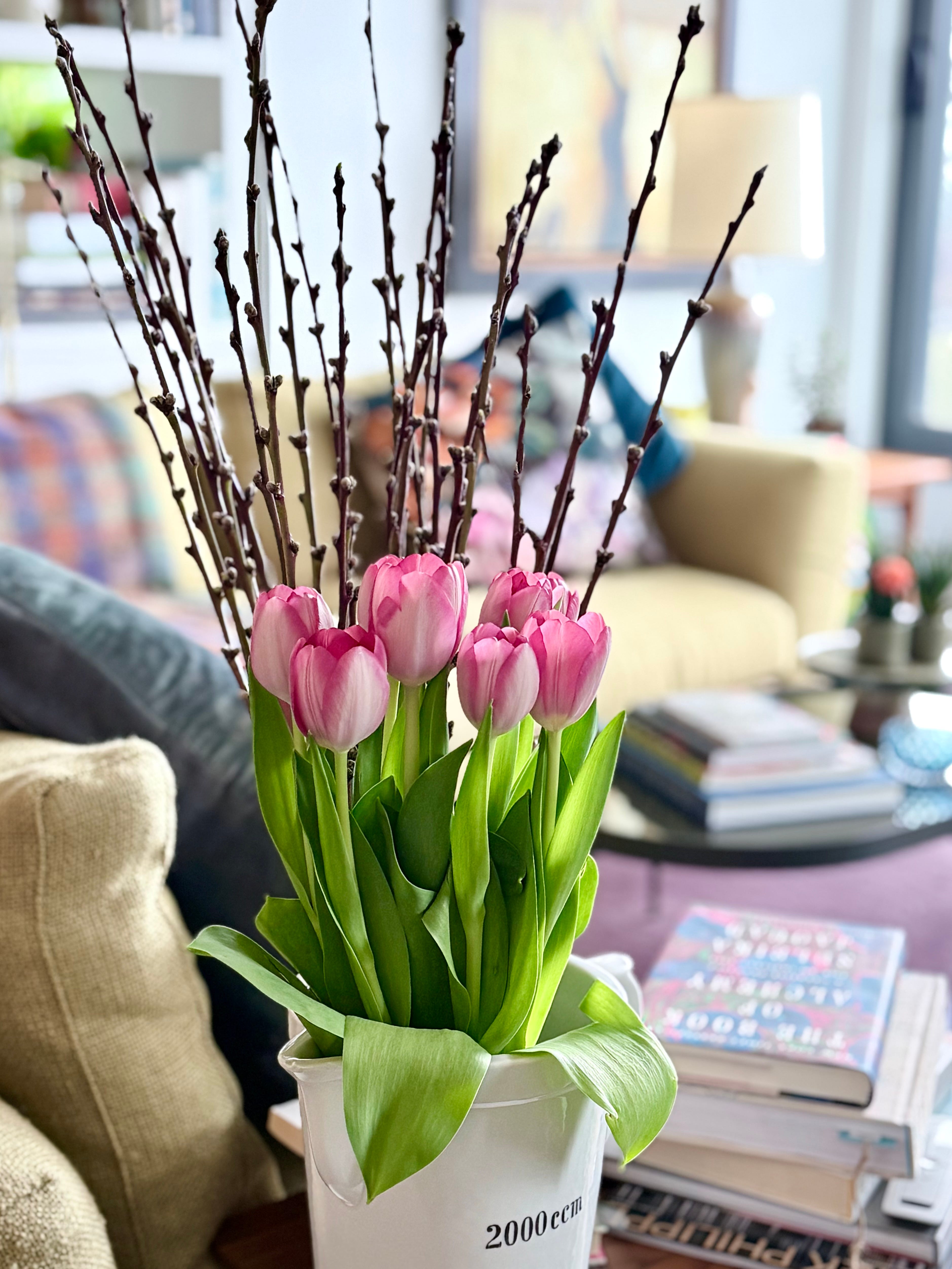
When we hesitate and start second-guessing our innate ability to create something wonderful, we become our own worst enemies. What if creativity isn’t something that you do, but something that you let happen?
All grown-ups were once children… but only few of them remember it.
— Antoine de Saint-Exupéry, The Little Prince
We all know this and see it: children have an abundance of creativity. They dance spontaneously, they combine clothing in the most, ermmm, imaginative way, they draw outside the lines, using the printed page as a starting point for unbridled energy, colour and confusion.
For those lucky amongst us to have been raised by families that cherished this outpouring, our creativity can continue to flower and grow, branching off and winding tendrils around our life choices, whatever they may be. All that joie de vivre wells up unbidden, a natural spring source that started bubbling in our childhood, and never runs dry.
In the weeks leading up to the Food Writers’ Retreat, that spring of creativity was on my mind. As Rebecca Blackwell and I prepared to lead a conversation at the retreat on living a creative life, the conversations we had—and later shared with the group—began to crystallize my own sense of what keeps me open, curious, and alive to the world of possibility.
It also led me to the work of Mihály Csíkszentmihályi.
Flow state
Creativity is a central source of meaning in our lives… when we are involved in it, we feel that we are living more fully than during the rest of life.
—Mihály Csíkszentmihályi
We all know what being in the zone, in the groove or having everything click means.
What you may not know is that the concept of a flow state was first developed by Mihály Csíkszentmihályi, a Hungarian-American psychologist whose work focused on optimal experience and human flourishing.
Having grown up in wartime Hungary, Csíkszentmihályi was shaped early by the question of what makes life worth living, a curiosity born out of witnessing the suffering around him during the Second World War. After moving to the United States, he began developing his ideas about flow in the 1960s and 1970s, drawn to moments of deep absorption and engagement.
While studying creativity, he noticed that painters would become so immersed in their work that they lost track of everything else—food, time, even themselves—and that the act of creation mattered more than the finished piece. He began to see that this kind of experience wasn’t limited to art, but showed up across all kinds of activities, wherever people were fully engaged and doing something for its own sake.
At a time when psychology was largely focused on illness and dysfunction, Csíkszentmihályi turned his attention instead to these moments of aliveness—an approach that would later help shape the field of positive psychology—eventually naming this state “flow.”1
Creating is about being our most human selves.
—Jason McBride, Canadian writer, editor, and cultural critic
Understanding creativity as a central source of meaning can be revelatory, especially when we’re surrounded by those we consider to be “more than” us. More talented. More successful. But what if the “more” is really about being the most we can be, as McBride says?
Since the retreat weekend that sparked all this rumination, I’ve been thinking about how to keep the wellspring of creativity as that central source of meaning—not just in a space and time where the travails of daily life fall away, but even more so when the demands of our busy minds, lives, and the grief of the world weigh us down.
If I might sum it up somehow, I think it comes down to three truths: notice more; follow curiosity; let things be imperfect. As Rebecca said so beautifully:
“Creativity springs from a lack of pretense; from the willingness to let go of the scaffolding and bring forth more of what makes you you. At the heart of creative expression is what you love; what you hate; what inside you clamours for attention; your demons; your heartaches; your tragedies; your talents; your aspirations; your ideas. It’s about bringing more of who you are into the world for its own sake, without attachment to outcome.”
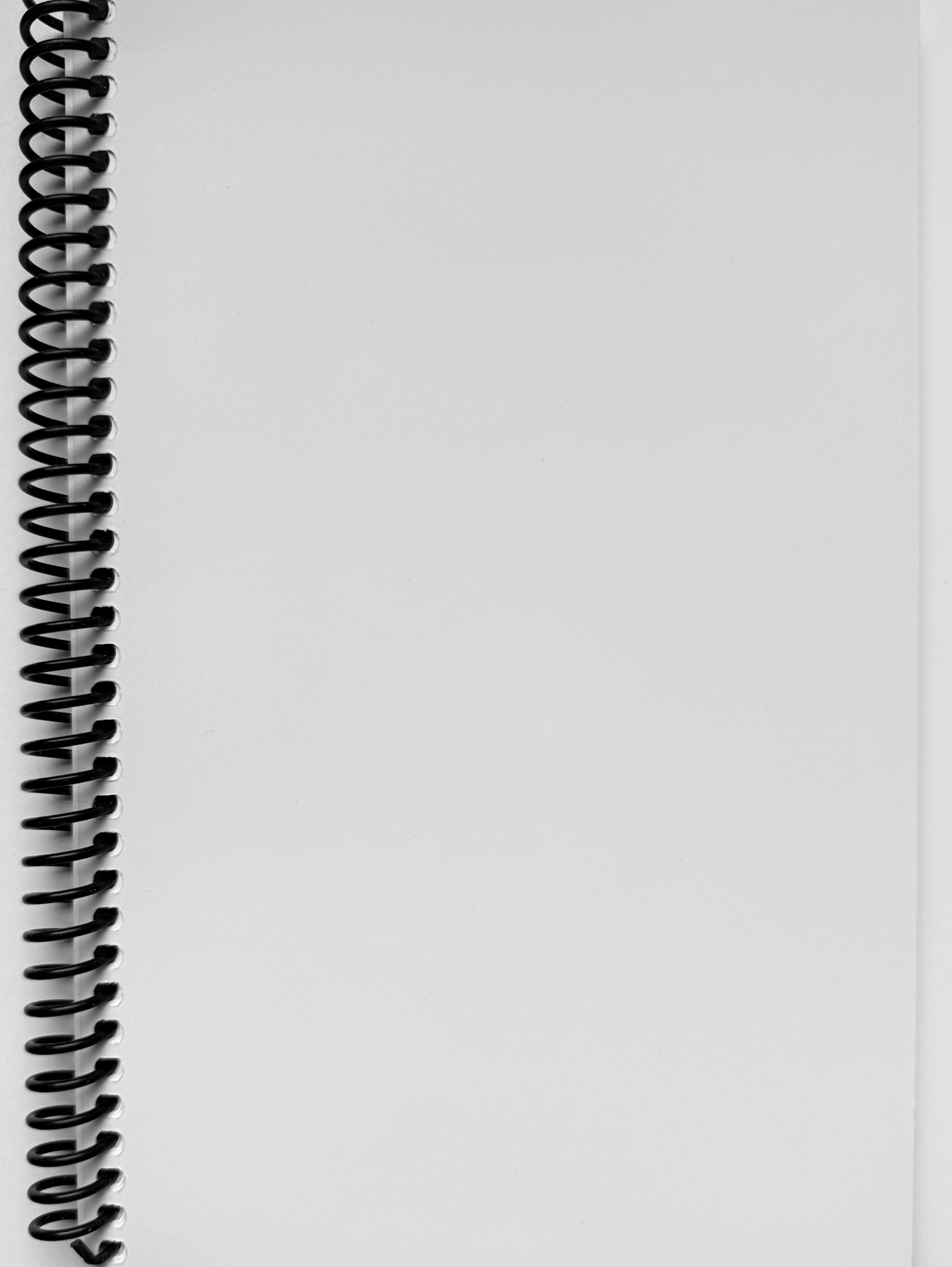
About that blank journal at the top of this post.
It was the same journal we gave everyone at the start of the weekend. Along with inspirational and thought-provoking journaling prompts: How will you give your creative mind the space and freedom it requires?… What does it mean to create without attachment to outcome?… What is here now?, the blank cover was meant to prime the pump and get the creative waters flowing through our veins.


We provided a beautiful John Derian sticker book, full of botanicals, colours, fragments of images, oddities and wonderments. Over the course of the weekend, everyone shared the book, creating their own magical stories born out of their imaginations and some inspiration.
A joyful life is an individual creation that cannot be copied from a recipe.
—Mihály Csíkszentmihályi, Hungarian-American psychologist
What will your creative life recipe be? How will you decide the ingredients, choose the implements, bake the cake? What will you notice, pour yourself into, leave behind?
There’s no single way to fill a page, or decorate a journal’s cover, just as there’s no single way to live a creative life. It begins the same way, every time—with something blank, a moment of attention, and the willingness to begin.
*The beautiful journals of Retreat attendees Betty Williams, Alex Sharp, Debbie Dale Blackwell, and yours truly
If you like what you’ve read, press that heart ❤️, share the post, comment or best of all subscribe. It brings me joy and helps more readers find their way here.
Creamy cauliflower soup
adapted from Lidey Heuck, The New York Times
serves 6
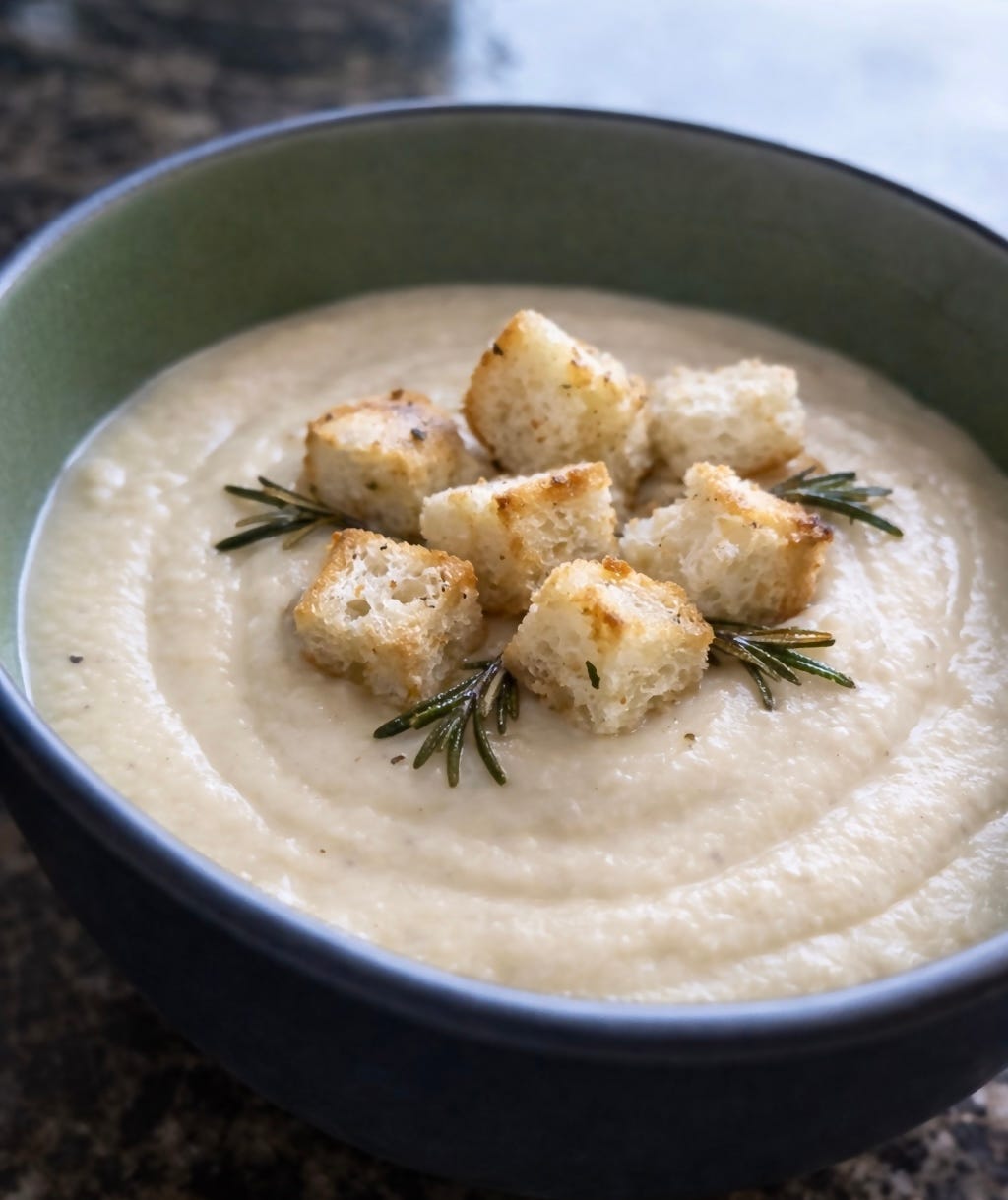
When it comes to cooking for others, we can get caught up in believing that elaborate is best. The show of effort, the complexity of techniques or ingredients can fool us into believing that the end result will be worth the stressful effort. That may seem particularly true when it’s high-stakes cooking for a group of food writers, recipe developers and cookbook authors. But people who are obsessed with food are generous souls, and seek nothing more than to gather round the feast; we know that every dish is made with love and offered with generosity.
So when Kerry Faber and I made lunch at the Food Writers’ Retreat, I chose what I would make based on two criteria: what I love to eat and how simple it could be. But I also wanted to put my imprint on these familiar, simple dishes. I loved the sound of cauliflower soup with rosemary and with a little imagination, made it even better. Roasting the cauliflower, amping up the aromatics with the rosemary oil…little touches made a big flavour difference.
Note: You’ll use the same skillet to make both the rosemary oil and the croutons, so leave the thin layer of rosemary oil in the pan. Leftover rosemary oil will keep in a sealed container at room temperature for up to 1 week. You can make more of the delicious croutons. Cool them completely, and keep them in an airtight container for a few days or as long as they will last.
1 medium head cauliflower, cored and broken into 1½-inch florets (about 2½ pounds)
1 tablespoon olive oil
For the rosemary oil
¾ cup olive oil
4 x 4-inch sprigs fresh rosemary
For the soup
2 tablespoons rosemary oil (see Note)
1 medium yellow onion, chopped (about 1 cup)
1 garlic clove, minced
1 quart low-sodium vegetable or chicken stock, plus more as needed for reheating
2 teaspoons kosher salt, plus more to taste
3-4 grinds fresh black pepper, plus more to taste
2-3 cups rustic country bread, torn into bite-sized pieces (see Note)
Heat the oven to 400°F / 200°C. In a bowl, toss the cauliflower with the olive oil and season lightly with salt and a few grinds of black pepper. Spread the cauliflower on a baking sheet in an even layer and roast until just tender and starting to turn golden brown in spots. Remove from the oven and set aside to cool.
Make the rosemary oil: In a medium skillet, heat the olive oil over medium heat. Add the rosemary sprigs, then reduce the heat to low and sauté for 5–7 minutes, until the sprigs begin to gently sizzle. Remove the skillet from the heat and take out the rosemary sprigs. Pour the oil into a bowl and let it cool. If desired, return the rosemary sprigs to the oil to further infuse as it cools.
In a heavy pot or Dutch oven, heat 2 tablespoons of the rosemary oil over medium-low. Add the onion and cook, stirring occasionally, until tender and translucent, 6 to 8 minutes. Add the garlic and cook until fragrant, about 30 seconds.
Add the stock, roasted cauliflower, salt and pepper, and bring to a boil. Lower the heat, cover, and simmer until the cauliflower is fully tender when pierced with a fork, about 7-10 minutes.
Transfer the vegetables, stock and ¼ cup rosemary oil to a blender in batches and blend on high until creamy. Taste and add more rosemary oil, salt and pepper to taste, and blend to combine.
Make the croutons: Heat the reserved skillet over medium heat. Add the bread cubes, sprinkle generously with salt and pepper, and sauté, tossing often, until golden and toasted, 4 to 5 minutes. Set aside to cool.
To serve, garnish each serving with a swirl of rosemary oil and a few croutons. The soup will thicken as it sits; add more stock as necessary when reheating.
Let things be imperfect is one I need to practice more! This was such a fun exercise at the retreat and I love my notebook. Thanks for sharing your delish soup recipe - it was such a hit!
These journals & your post is just lovely. I missed it. This concept of flow state got me thinking abt Viktor Frankl’s logotherapy. Have you read abt this, Elizabeth? In the midst of the suffering in concentration camps, Frankl was thinking abt how the meaning of life comes from finding your true purpose. As Viktor would work in the camps, he would run each of his patient’s cases in his mind & re-think the diagnosis & line of treatment. He was a psychiatrist. This is what carried him through those insane years. Just gives me chills thinking abt it.