
Garden diaries: the Summer Solstice edition
and a recipe for rhubarb shrub, an summer elixir you should make now

To everyone new here, welcome. I’m Elizabeth, the writer of The Delicious Bits Dispatch, a weekly missive for the curious, blending discovery, reflection, and musings, always wrapped up with a seasonal recipe worth lingering over.
It is a perfect morning. Liquid cardinal notes, the kind of cotton-candy clouds you can imagine floating on, an ever-so-gentle breeze.
But like the three red-tailed hawks that have taken to circling above my building, summer is a prey we haven’t quite caught—an elusive rabbit slipping underneath the hedge.
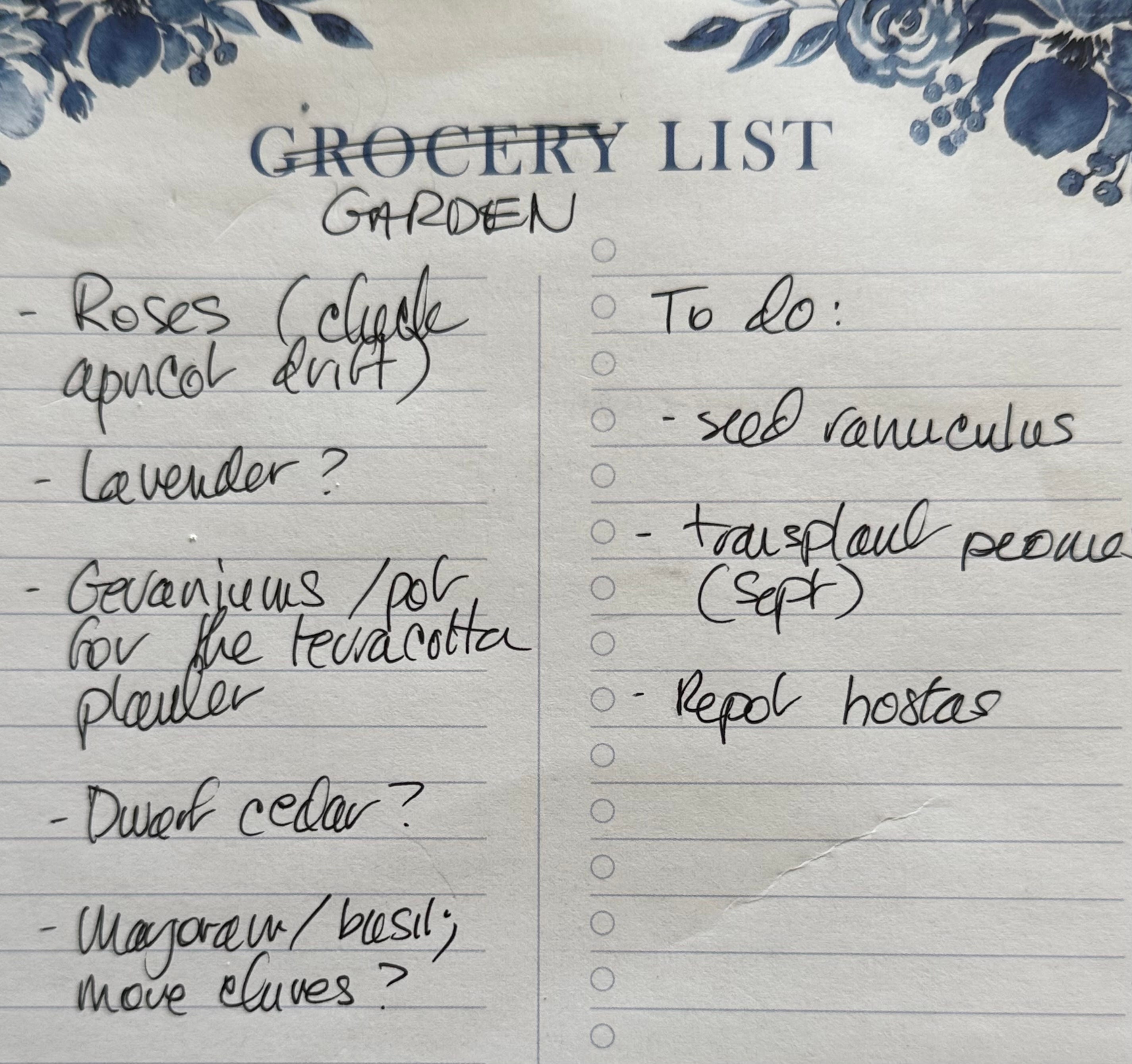
As the longest day of the year unfolds and welcomes summer in its wake, my gardening list seems impossibly long for the end of June. There is still so much to do, promises I am planting for a summer just started, a season waiting in the future.
Is it a reflection of my age, the passages of time around me—news of dear ones gone too soon, the racing clock, the grey roots of my hair that I still vainly cover—that beat a certain refrain in the air?
Life is short.
There are only twenty summers left.
The cats may outlive me.
…say the people around me.
An ever-present sense of finality even as I transplant my fledging lilac tree to a bigger pot so that it may grow and thrive for many more summers than I might be here for.
And so.
I go into the garden for a summer’s eve reset. Apparently I have no time to waste.
There is no gardening without humility. Nature is constantly sending even its oldest scholars to the bottom of the class for some egregious blunder.
—Alfred Austin, English poet, essayist, and gardener
In garden time, the summer solstice usually announces the beginning of the end of planting, and the move to enjoyment. For once, nature has lined up with the calendar, bestowing the most glorious of first summer weekends of recent note.
Yet it is a truth that every gardener, novice or expert, comes to know: as in life, perfection is an ever-receding goal. With this late start to summer proper, as I walk around my aerie terraces, I am steeled for both disappointment and unbridled joy. The garden, as always, offers both in equal measure.
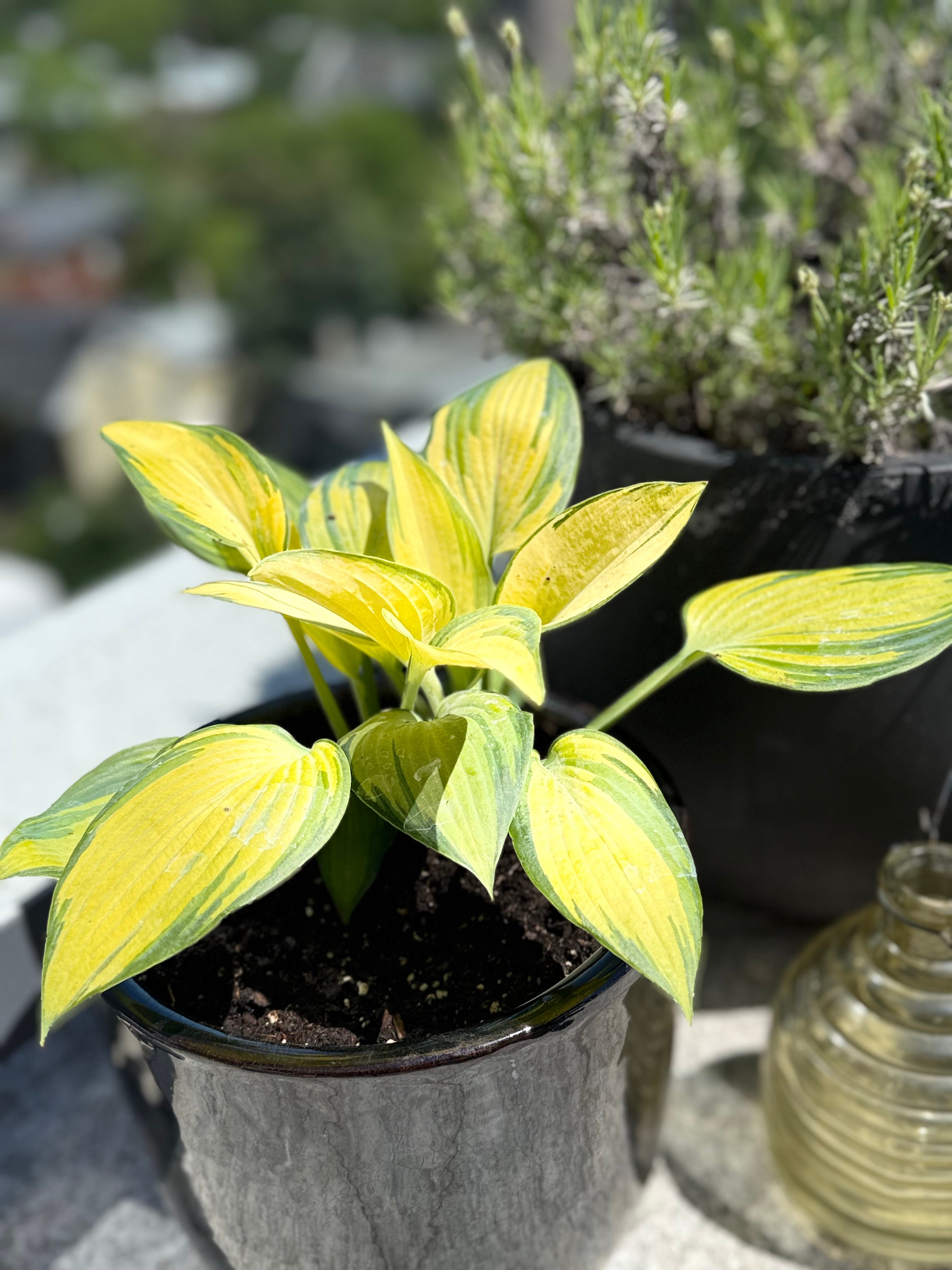
The lavender’s come back, I see, a very cold spring keeping it hostage until now. The flower spikes are just beginning to unfurl, their tiny florets shyly waiting to open. Lovely green and variegated hostas came back too, the tiny ones that survived ready to find a more permanent home in a bigger pot.
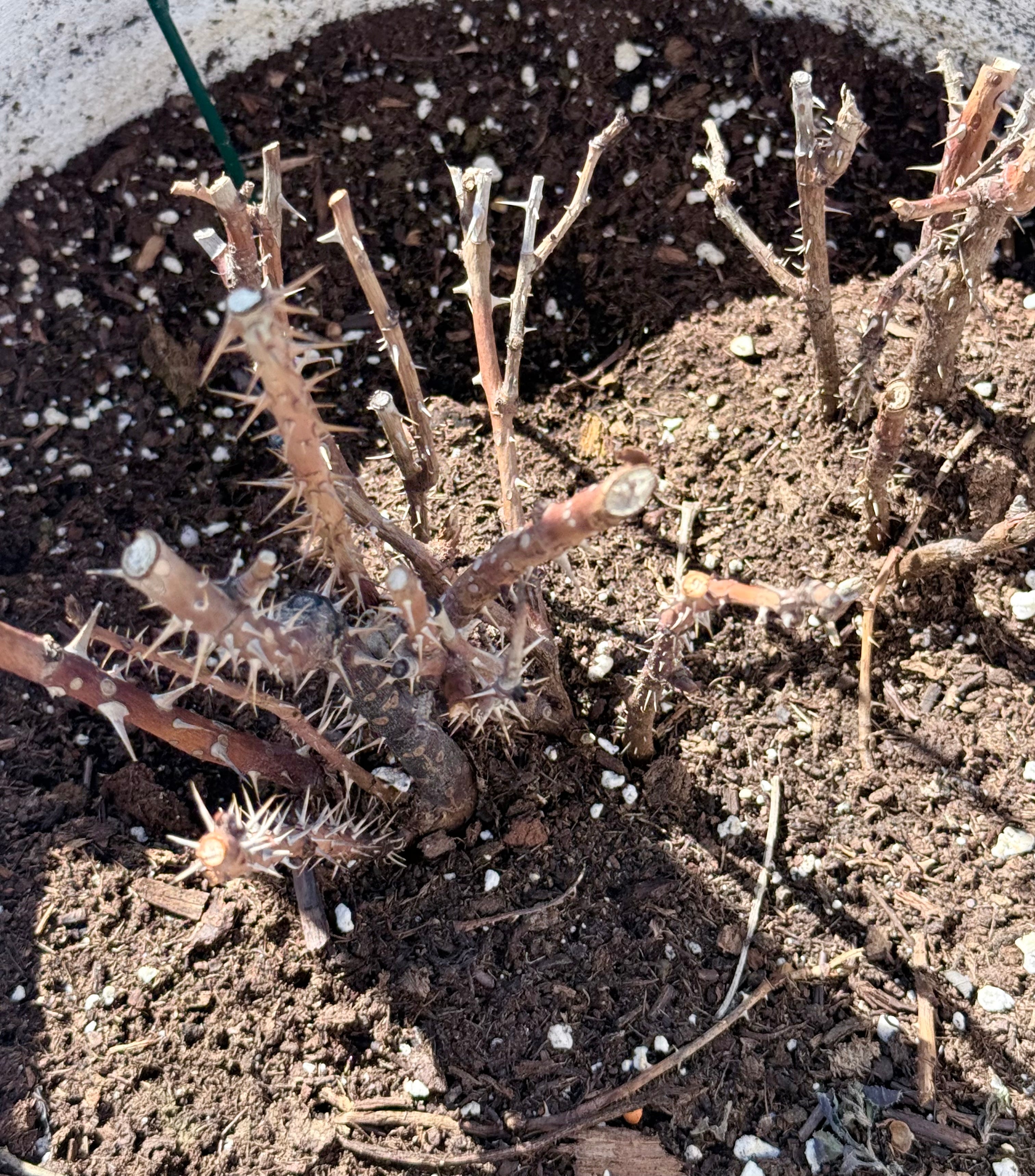
The roses, sadly, are gone. I poke at the canes that showed early glimmers of green, but they have given up the ghost of their blood red blooms, now stubbornly brown and stiff and shrivelled up.
The pansies…well, the pansies were another story entirely. A miracle of defiance. My favourite summer annual, with their wide-open smiling faces, the first to arrive at the garden centre, waving hello wildly in early spring’s brisk bluster. The last to be pulled from amongst my Japanese Hakone grasses, where they add merriment with their constant to-ing and fro-ing.
Yet somehow last autumn I didn’t get around to covering the grasses or pulling out the pansies. They lay enshrouded, hidden under mounds of snow tombs, a fairytale slumber without certainty of a happy ending.

When the sodden and heavy rains of April finally washed away the last of the snow, the beds seemed defeated. Clumps of dead-looking grasses had given up any pretense of standing at attention. Anise hyssop, my most intrepid garden nomad, was beginning to pop up uninvited, trying to gain dominion over the lot. I had no thought of pansies other than to put them at the top of my garden shopping list.
And yet, in the way that nature always reminds us who holds sway, the pansies had other ideas. What I took for a snow-covered grave was merely a long winter’s sleep. As the grasses slowly roused themselves, there among them appeared familiar leaves, then buds, then blooms—larger, brighter, and more exuberant than the year before. Their purple-and-gold faces bobbed above the soil as though nothing remarkable had happened at all.
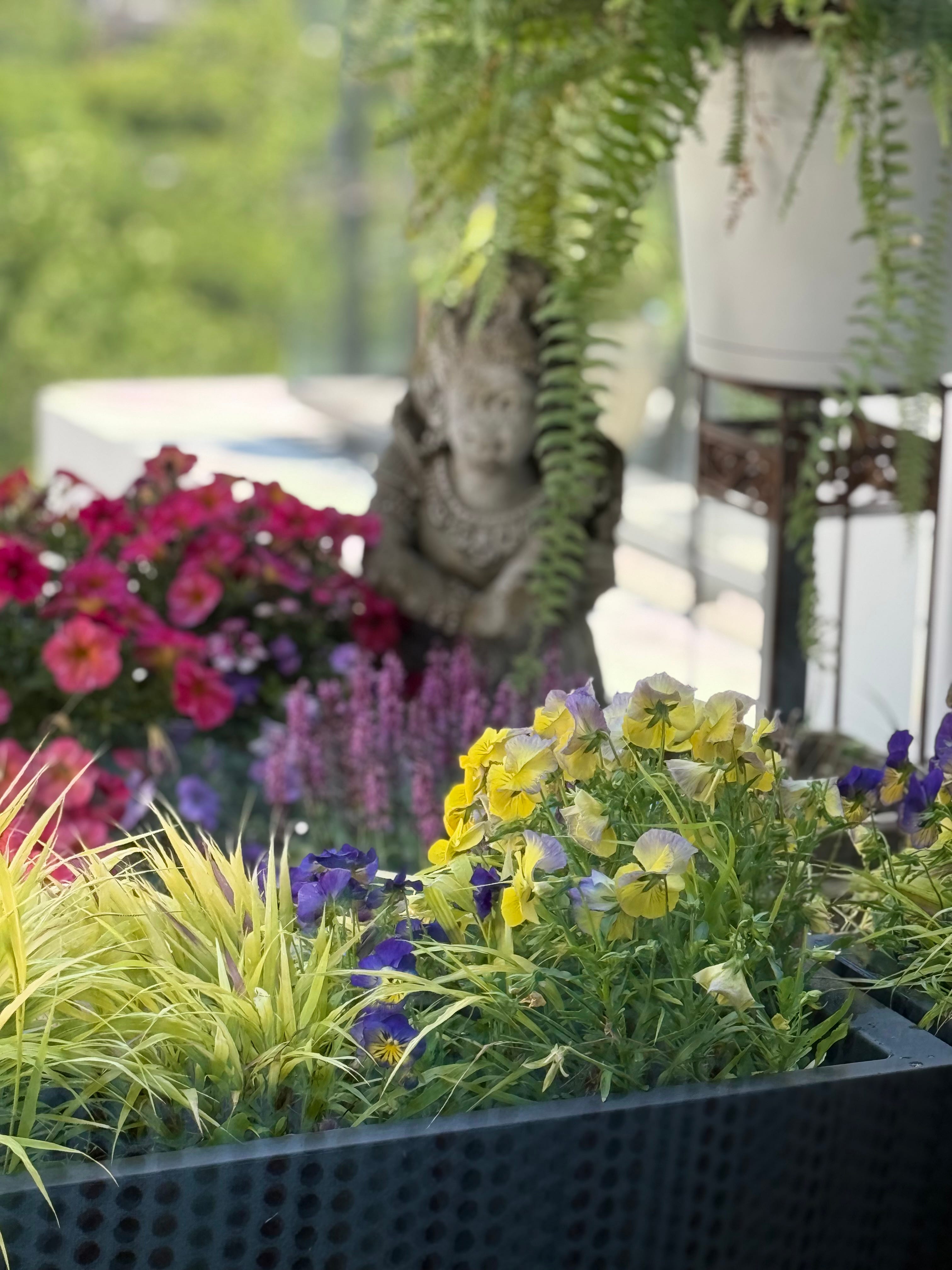
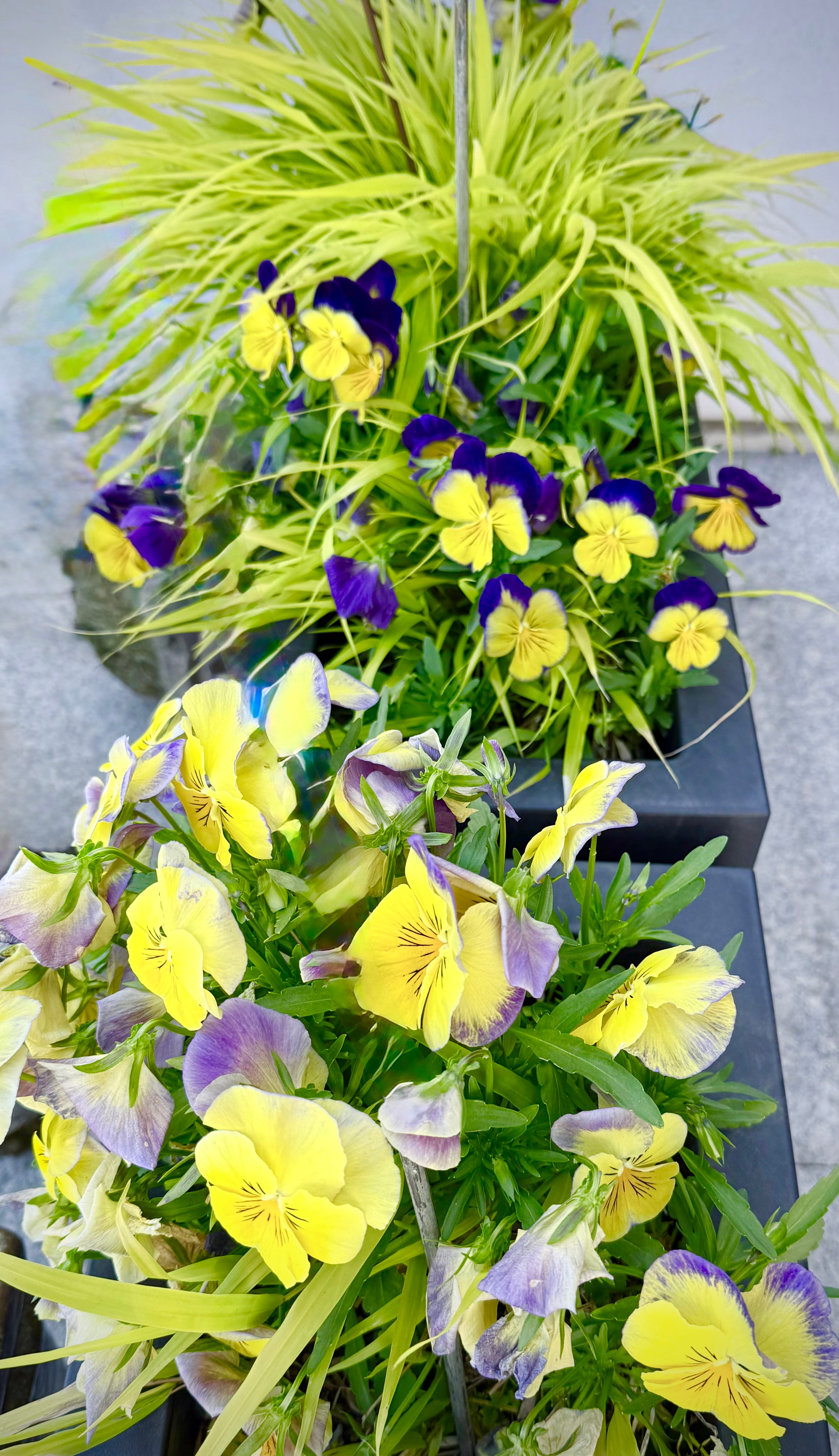
Once again, the garden had offered its gentle correction. The pansies I had already replaced in my mind were the very ones greeting me first, smiling up from the terrace with all the confidence of old friends who knew they would be back long before I did.
To garden is to let optimism get the better of judgment.
Eleanor Perényi, gardener and author
So, how did I do on my list?
I didn’t find Apricot Drift, but instead planted a lovely Yukon Gold shrub, full of pretty fragrant yellow roses. Another lavender joined the terrace family, and begonias were nicer than the leggy geraniums that dawdled on the garden centre shelves. I made up a grouping of perennials that I’ll divide later this autumn (she said optimistically), potted the hostas, bought more herbs.
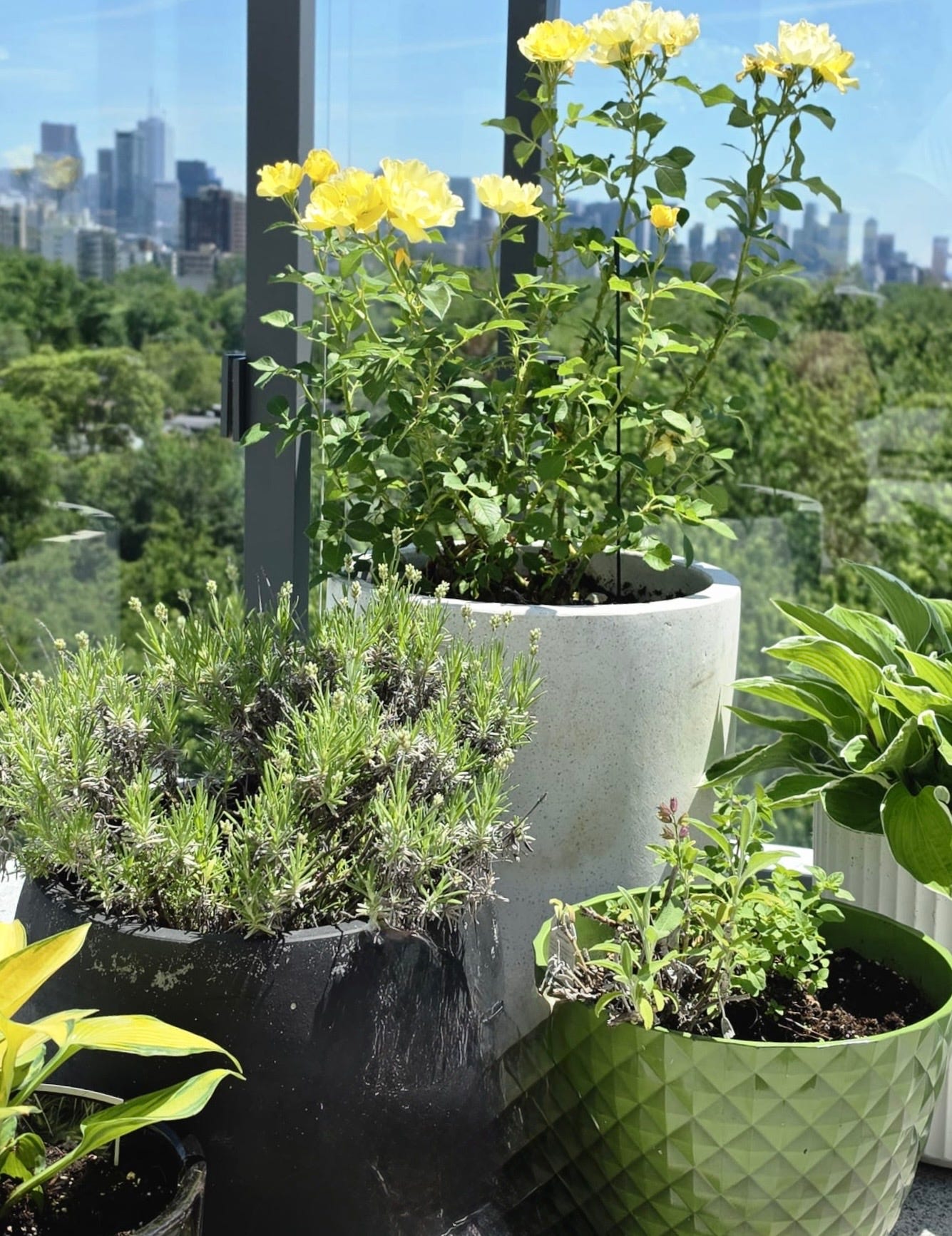
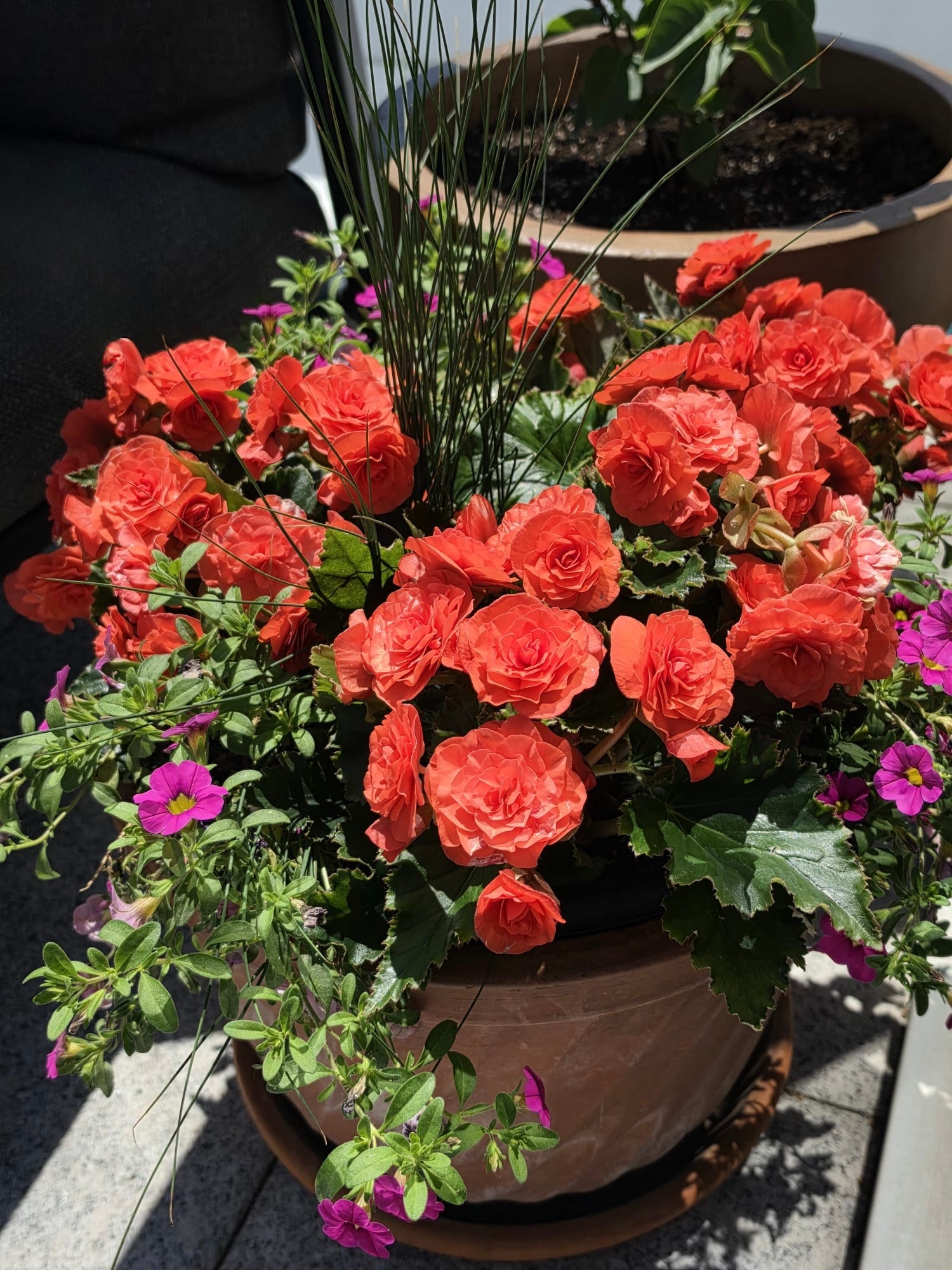
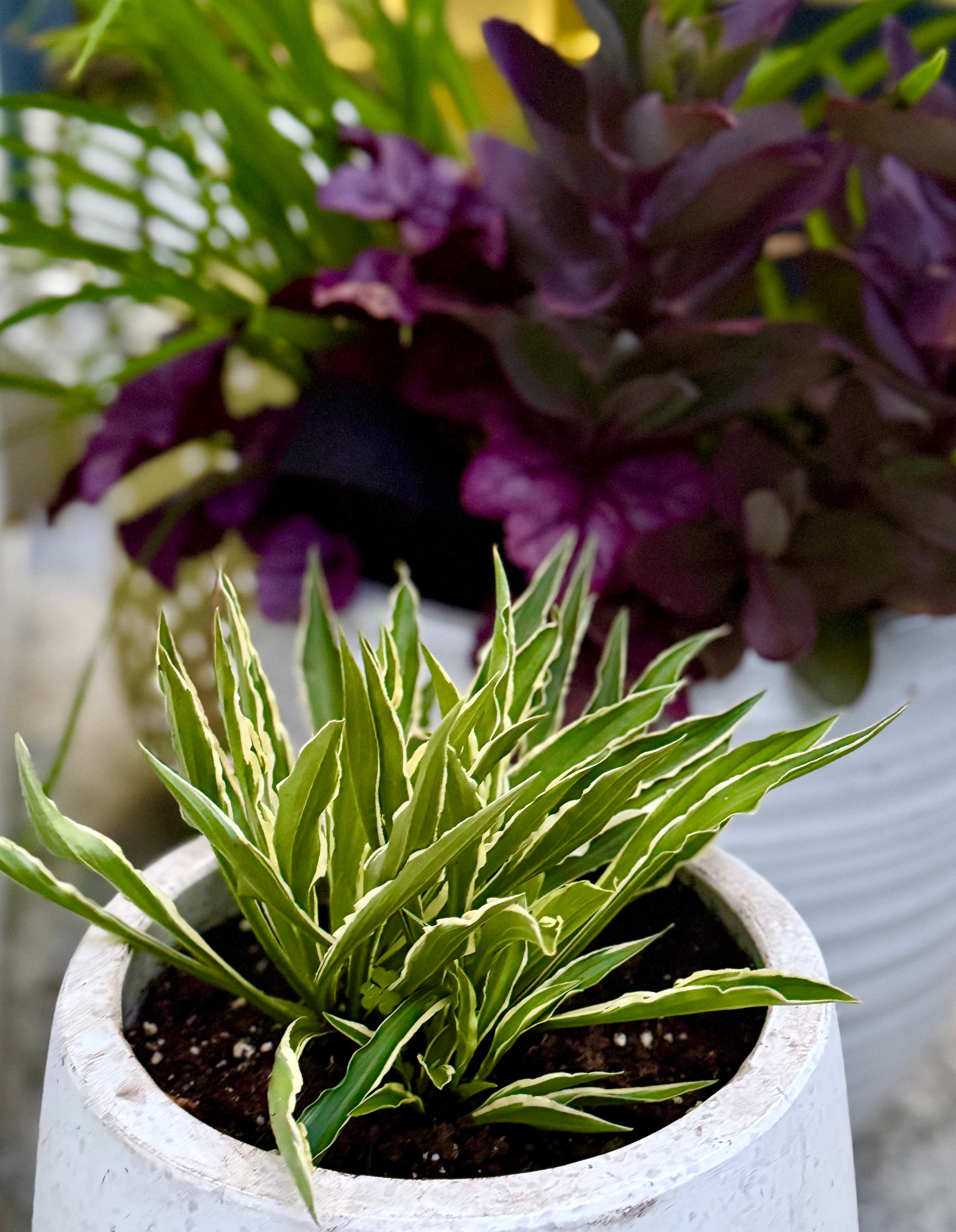
The garden rarely delivers exactly what I set out for, and perhaps that is part of its charm. It asks for plans, rewards flexibility; invites intention, then leaves room for surprise. By season's end, I suspect I will have forgotten what was on the list and remember only the pleasure of what came home instead.
If you liked this post, let me know by clicking the ❤️ button, commenting, sharing, or subscribing. It helps spread the word about Delicious Bits and brings me joy. Thank you, dear readers and eaters!
Rhubarb shrub
adapted from Lynn Crawford
Makes about 3 cups of shrub syrup
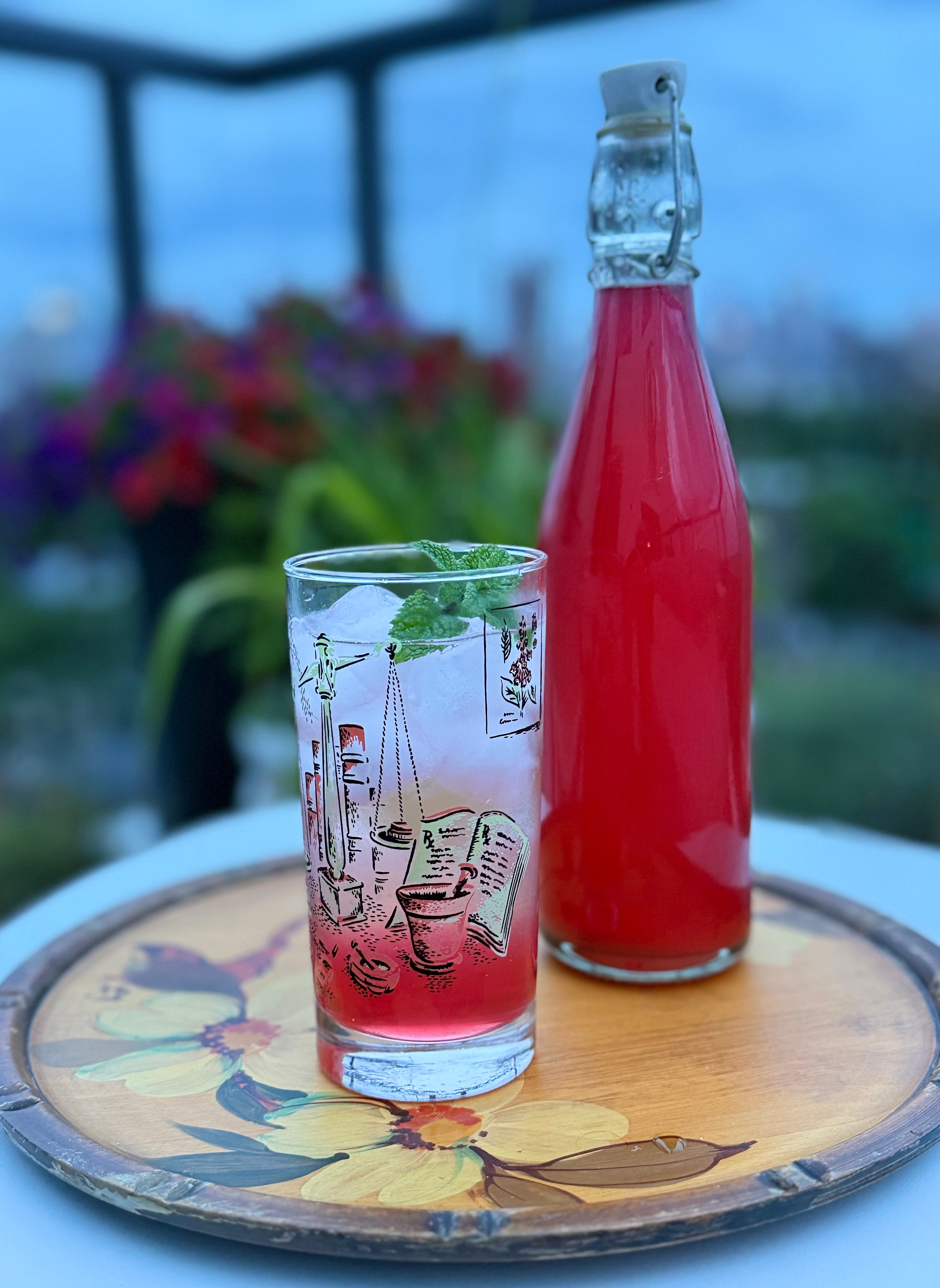
Last weekend, we joined friends to watch Canada play its first game of the World Cup. It was a great backyard setting, with plenty of delicious bites and drinks, including gin cocktails made with my favourite cocktail/mocktail mixer: rhubarb shrub.
The game ended in a draw against Bosnia and Herzegovina, but Canada scored its first-ever goal in a World Cup tournament. We happily raised our glasses to mark the occasion.
Do you know shrubs?
A fruit-based drinking vinegar with roots that stretch back centuries, the word shrub comes from the Arabic sharāb, meaning “to drink”. These types of sweetened fruit beverages have been enjoyed throughout the Middle East and Europe for generations. The vinegar-based shrub we know today became popular as a way to preserve seasonal fruit before refrigeration.
Today, shrubs are experiencing a revival thanks to the craft cocktail and mocktail movement. This rhubarb version balances the fruit’s natural tartness with ginger, bright lemon, and the essential vinegar, creating a syrup that’s both refreshing and complex. Mixed with sparkling water, tonic, or gin, it delivers a distinctive sweet-and-sour flavour that adds depth to any drink and can be enjoyed year-round.
Note: Stored in a clean, sealed bottle in the refrigerator, this recipe should keep for at least two to three months. The combination of sugar and vinegar acts as a natural preservative, creating an environment that inhibits spoilage. Some homemade shrubs can last up to six months under ideal conditions, though the flavour is usually brightest in the first few months. If you notice any mould, off odours, unusual cloudiness, or signs of fermentation, it's best to discard it.
Ingredients
4 cups rhubarb, chopped into ½-inch pieces
2 strips lemon zest
2-inch (5 cm) piece fresh ginger, peeled and thinly sliced
1¾ cups granulated sugar
2 cups white vinegar
Combine rhubarb, lemon zest, ginger, sugar, and vinegar in a heavy saucepan. Bring to a boil, then reduce heat and simmer very gently for 30–40 minutes, stirring occasionally, until the fruit is soft.
Set a fine-mesh sieve over a large bowl. Pour the rhubarb through the sieve and leave to drain, without pressing on the fruit. To extract the most syrup, leave to drain for at least 45 minutes.
Carefully pour the syrup into a clean bottle, cover, and refrigerate for up to six months (see Note).
How beautiful to see your garden. I've just bought rhubarb for my Colorado garden and have set aside your shrub recipe for when the plants are big enough to harvest.
So grounding to read your garden diaries, Elizabeth! As your Alfred Austin has mentioned- one cannot garden without humility.
Actually, gardening/growing/raising a life form tends to never ever go as planned. I do not have the green thumb or the outdoor terrace as you have, but the ragtag rescued indoor plants that I have respond to just the right amount of care: Too little or too much, it will show signs of stress. Life is about doing enough- and trusting the process, because it really is up to each plants to blossom, grow taller, or shrivel and go dormant.
Like you have mentioned- there is both excitement and disappointment during this time . Life is that way too, but then again- each season each year will be different. That is still growth. Perhaps that’s the real beauty.
The Rhubarb Shrub looks and sounds delicious . Thank you for sharing!