

To everyone new here, welcome. I’m Elizabeth, the writer of The Delicious Bits Dispatch, a weekly missive for the curious, blending discovery, reflection, and musings, always wrapped up with a seasonal recipe worth lingering over.
This is the first of a three-part series about how we grow, change, and come into our own, often in ways that don’t follow a neat or predictable schedule. This week I’m reflecting on late bloomers, second acts, and why being a lifelong learner should be more than a tag line on your LinkedIn profile.
At their best, birthdays are both celebratory and reflective. And, as we get older, it’s not that the birthday cake or the cards and gifts are appreciated less; it’s that the reflective part becomes even more important.
It’s very easy, as the age meter ratchets ever higher, to feel a sense of running out of time. No matter that longevity has increased, that 50 is the new 40, that we have more opportunities to reinvent ourselves than ever before. It’s more that the value placed on our experience, empathy, compassion, and ultimately wisdom doesn’t seem to have as much currency in a high-tech, youth-obsessed culture.
But who is it that set the clock on when we are at our very best? And is that really just a singular moment in time?
Different people peak at different times… We don’t have one prime of life. We have many.
— Rich Karlgaard, Late Bloomers: The Hidden Strengths of Learning and Succeeding at Your Own Pace
In fact, neuroscience shows that different parts of our brains peak at different ages, giving us multiple periods of blooming across our lives.
Look up “late bloomer” and you’ll find a pretty consistent list of people who succeeded late in life. Julia Child (53 when Mastering the Art of French Cooking was published); Colonel Sanders (65 when he started the first Kentucky Fried Chicken); Ray Kroc (who opened the first McDonalds when he was 54); Grandma Moses (who started painting when she was 76).
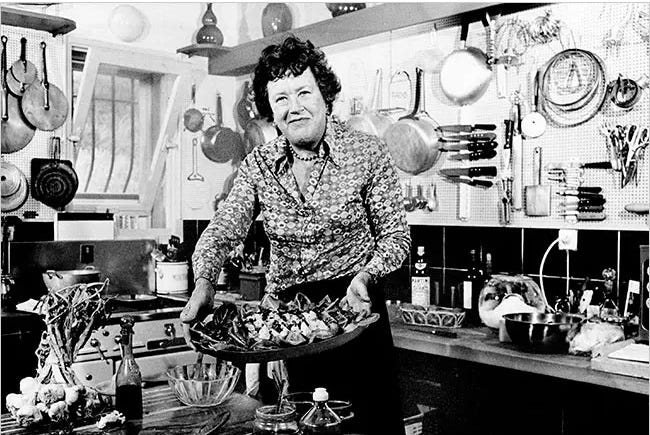
We hold up these examples because they give us hope: hope that if we haven’t truly found something that fulfills us, fuels us, inspires us by a certain age, it’s not too late.
But there’s a very important kernel at the heart of these tales that may be missed. What those late bloomers had was the sum total of their life experience. That accumulated wisdom—the many “prime of life” moments that Karlgaard writes about—add a richness and depth to the moment. And some of the most profound wisdom comes from failing and learning from the failure.
As I approach a rather momentous birthday this year, I’m thinking more about the art of possibility—how, at any age, growth can open paths that are unexpected and deeply rewarding.
One friend, upon turning 65, took up acting after a very successful career in human resources (if you live in Colorado, you may have seen her latest commercial). Another, at 57, completed his PhD in a field completely unrelated to his profession. His thesis turned into a book deal, and he’s publishing his second book this October. And, lest we think that second acts only happen after 50, a 45-year-old family member got his Masters at 40, became a professor and is now completing his PhD.
It’s about time
Our high-drive competitive society loves to make rules for us, laying out a linear path for all to follow. But a prescribed list of life milestones doesn’t allow for detours, roadblocks, setbacks. In life’s off-roading moments, it’s easy to get panicked about losing time, falling behind, being overlooked, or worse.
In these moments, trust is the greatest gift we can give ourselves. It’s in trusting in the moment, in focusing on the “what next”, “what now” instead of the “why”, that we can unearth the real richness and depth of our potential, and the abundance of what we still have to give.
As we get older we should—we must—begin to trust the timing of our lives. Not just that “things happen for a reason” but that there is something wonderful to discover, if we try. After all, isn’t the comeback always greater than the setback?
As you read this, where are you at? More importantly, what are all of the incredible things you have learned and seen and done to get you there? Late bloomer or second act—it matters not. A very wise friend said to me recently “If you don’t fall on your face, you’re not moving forward.” Just remember the collective wisdom you bring to this day, this moment, will give you enough momentum to pick yourself up and fly, if you let it.
If you enjoy these Dispatches—and I hope you do—tap the heart, share, or comment to help new readers find their way here
White bean and lamb stew
Noor Murad, Lugma
Serves 4–6
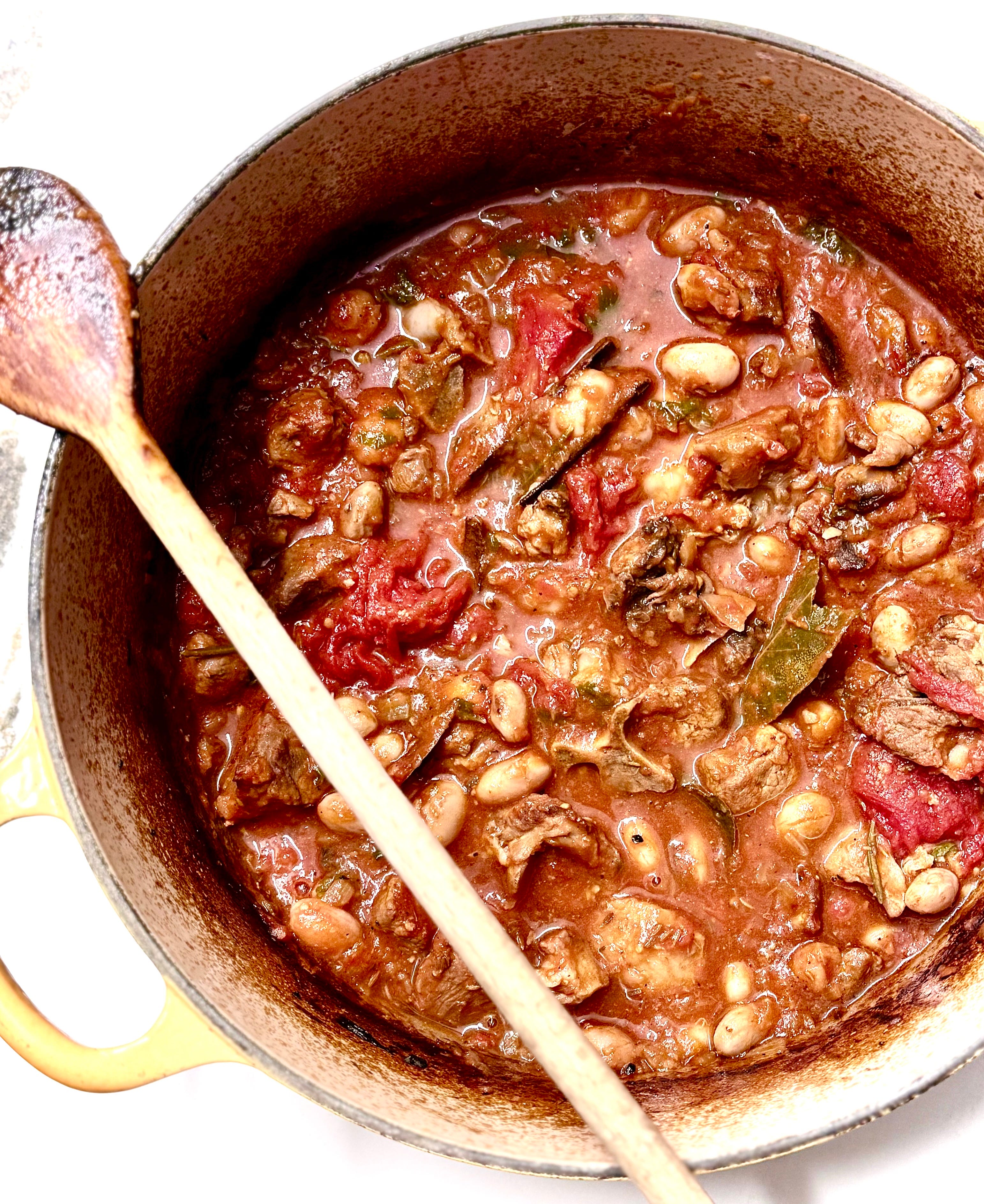
Richard is the resident stew- and soup-maker in the household. When the temperature plummets to deep-freeze levels, that’s when I’m especially grateful for his skill in the kitchen.
This was the first recipe we’ve made from Noor Murad’s lovely new book. I suspect there will be many more to follow.
Ingredients
1 oz (25g) ghee or 3 tbsp olive oil
1 pound, 2 oz (500g) boneless lamb shoulder, cut into 1½in cubes
1 red onion, roughly chopped
3 fresh bay leaves
1 cinnamon stick
3 garlic cloves, crushed
2 tbsp tomato paste
8 oz (220 g) canned skinned plum tomatoes, chopped
2 x 14oz (397 ml) cans cannellini beans, drained
1 tbsp cumin seeds, finely crushed using a pestle and mortar
1 cup chopped cilantro, plus more to serve
2 jalapeños, thinly sliced into rounds, seeds and all
2 tbsp apple cider vinegar
fine sea salt and freshly ground black pepper
Heat the oven to 350°F/170°C
Melt the ghee in a large, heavy-based, lidded Dutch oven over a medium-high heat. Pat the lamb dry with paper towels and season all over with ½ teaspoon salt and a good grind of pepper. Once the ghee is hot, add the lamb to the pan and sear for about 5-7 minutes in total, turning as necessary, until nicely browned.
Add the onion, bay leaves and cinnamon and cook for about 3 minutes, stirring often, until softened and lightly coloured. Add the garlic and the tomato paste and cook for just a minute more, stirring all the while.
Pour in 2½ cups (600 ml) water add ½ teaspoon salt and a good grind of pepper and bring to the boil. Cover and transfer to the oven for 1 hour and 40 minutes, stirring halfway, or until the lamb is tender.
While the lamb is cooking, add the jalapeños to a small bowl with a pinch of salt and the vinegar and mix to combine.
Remove the lid and stir in the tomatoes, beans, cumin, cilantro, another ½ cup (100 ml) water, ½ teaspoon salt and a good grind of pepper. Replace the lid and bake for 30 minutes more. Let settle for 10 minutes before serving.
When ready to serve, transfer the stew to a large shallow bowl, and serve the pickled jalapeños alongside.
Sharing a Substack quote found today from a Jeff Buckley song "The whole secret in searching for your own voice is to have faith in your deepest eccentricities, your dumbest banalities, your epic romanticism. Accept what’s inherently inside of you, without fear."
I love your reflections on this important topic and want to know what comes next. One of my favourite writers, Penelope Fitzgerald, published her first novel at 60. The slow-cooked stew is a perfect metaphor.