
Living in joy
and a recipe for an Arabic orange salad with nasturtiums

To everyone new here, welcome. I’m Elizabeth, the writer of The Delicious Bits Dispatch, a weekly missive for the curious, blending discovery, reflection, and musings, always wrapped up with a seasonal recipe worth lingering over.
On the quiet and unsteady feet of this past December, the world has been weirdly akilter.
Is it Sunday or Tuesday? Was Boxing Day yesterday? If New Year’s Eve is on Wednesday what day is it today?
But, really, doesn’t all that fail to matter when your routine comes to a screeching halt, as mine did these past few weeks? Perhaps the most important question and answer is “When can I take a nap?” and “Right now.”
In this quiet in-between time, as each moment glides seamlessly into the other, one day barely distinguishable from the next, a rather significant milestone slipped past me unawares: five years of writing on Substack.
Those early days of writing, which began in the heart of the pandemic, seem a lifetime ago, although the sense of time is much the same as now: the slow drift, the soft blurring of days. It mattered not that I was writing into the abyss, that my readers were few. Writing weekly was an anchor that marked both a passage of time and a way to chronicle a moment that I hoped was singular, not to be repeated.
It also, unexpectedly, became a pathway to joy.
We cannot cure the world of sorrows, but we can choose to live in joy.
Joseph Campbell, American writer and professor
It is a fact of life that emotions are never compartmentalised. Joseph Campbell understood this well. His life’s work traced how cultures across time used myth not to deny suffering, but to give it shape, and through that shaping, to find meaning. So when Campbell spoke about sorrow, he understood suffering as inevitable. But importantly, he also understood that joy was not the absence of sorrow — it was what became possible once sorrow was fully acknowledged.1
“The cave you fear to enter holds the treasure you seek,” Campbell wrote. Writing, it turns out, was that place for me. Returning to my interior world week after week, I found not an escape from the weight of the world but a way of moving through it…the choice to find magic and meaning in the everyday wonder of life.
Creative practice doesn’t make the hard things disappear. It makes room for them and for whatever joy might exist alongside them.
—Suleika Jaouad, The Book of Alchemy: A Creative Practice for an Inspired Life
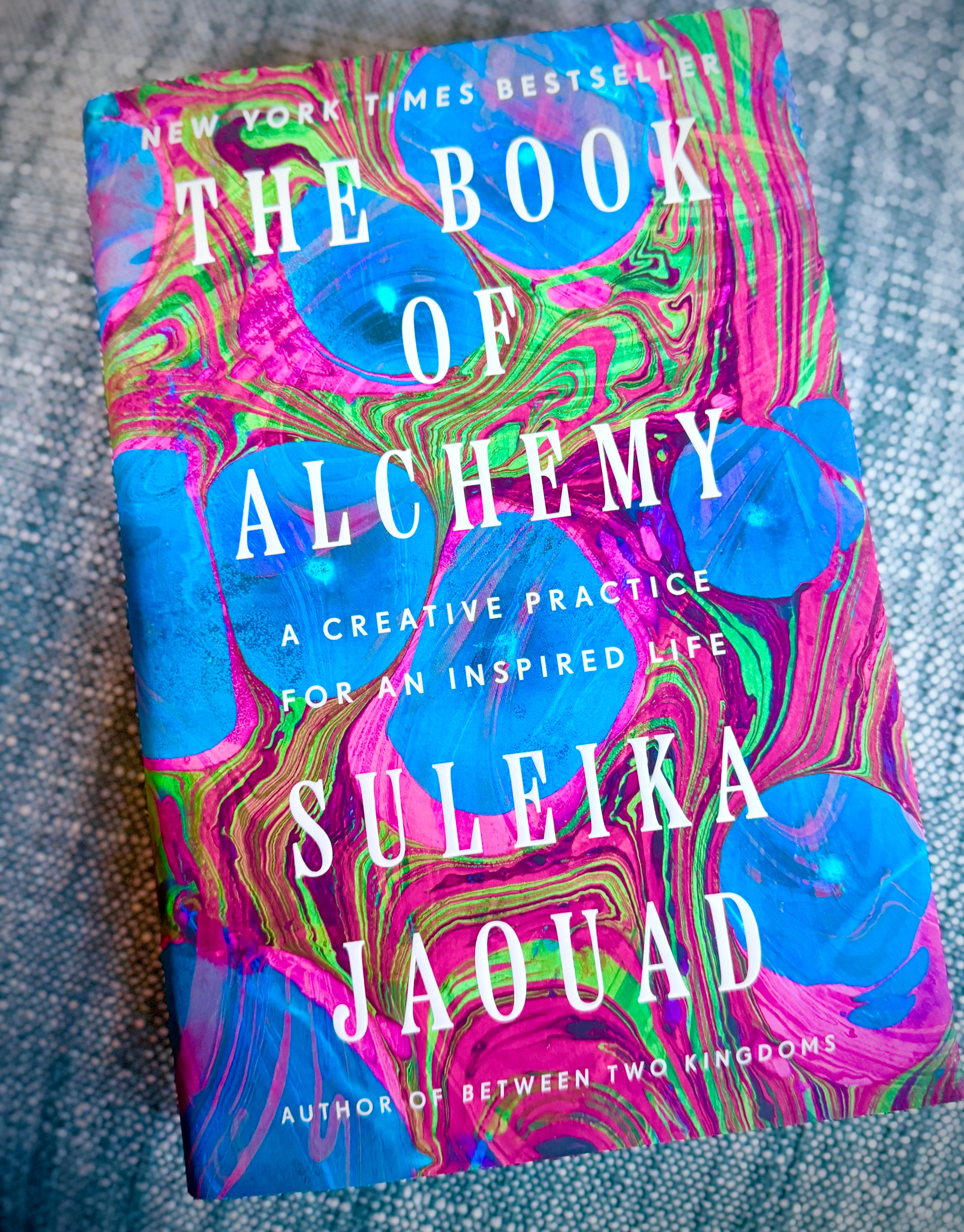
Decades after Campbell framed joy as a way of meeting a broken world, Suleika Jaouad brings the idea down to the level of the day-to-day. In The Book of Alchemy, her focus is not on transcendence but on practice: how a regular creative habit can hold sorrow and joy at the same time, and make room for both.
Her wonderful book, a recommendation from a fellow Substacker Barbara Ellen McMahon, is my five-year anniversary gift to myself. If Campbell offers the wide frame—using joy as a way of facing life, even when life is painful—Jaouad shows how that way of living is sustained through the simple, daily act of writing.
Writing lives somewhere in the middle for me. While I’m striving to make it a daily practice—a resolution of sorts, that I might make stick—I do know that some habits of these past five years are already ingrained. A way of observing what might otherwise pass unnoticed: a fleeting thought, a half-formed feeling, the particular texture of a day and how that makes me feel. The trick, I’ve found, is not to try too hard to make sense of it all, but to remain open to wherever that kernel might lead me.
And in that openness, joy has a habit of blooming, not because everything is neatly resolved, but because I’m paying attention to what lies beneath.
If you enjoy these Dispatches—and I hope you do—tap the heart, share, or comment to help new readers find their way here
Arabic orange salad with nasturtiums
Radically Simple, Rozanne Gold
serves 4
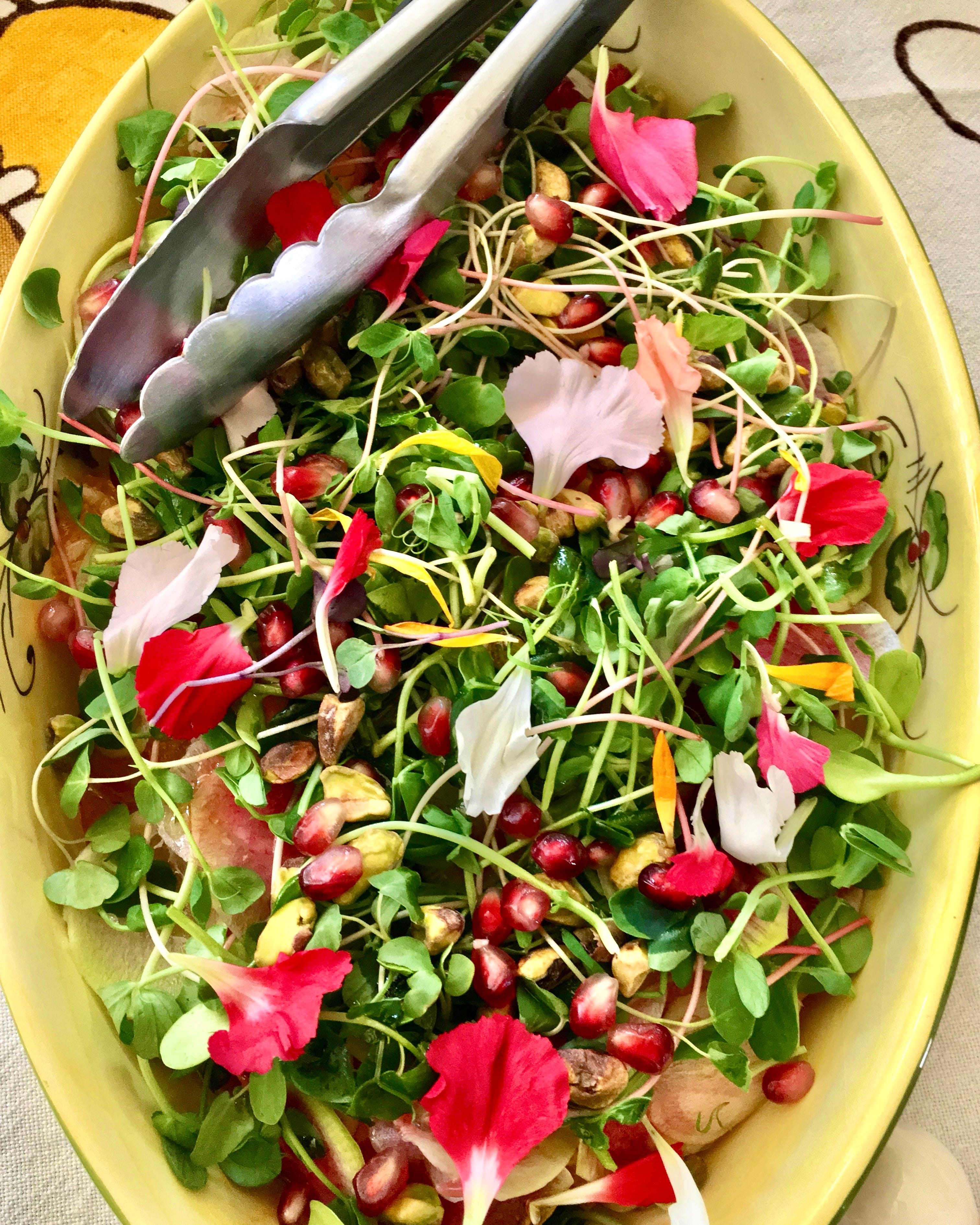
Savoury, tart, and sweet, this Moroccan-inspired salad is joyful by design. Vivid and full of colour, can begin a meal or come after the main course alongside fresh goat’s cheese or a firm sheep’s-milk cheese. There’s a small starburst of positivity that feels especially right at the start of the new year.
Ingredients
¼ cup shelled raw pistachios, coarsely chopped (substitute almonds or walnuts if desired)
4 large oranges; a mix of navel, blood orange, Cara Cara
6 radishes
3 large handfuls mâche
¼ cup extra-virgin olive oil, plus more for drizzling
2 teaspoons pomegranate molasses, more to taste
¼ teaspoon ground cinnamon
½ teaspoon kosher salt, more to taste
¼ cup pomegranate seeds
Nasturtium flowers to finish
Lightly toast the pistachios in a small skillet over medium heat until fragrant, about 2 minutes. Set aside.
With a sharp knife, cut away the rind and all the white pith from all 4 oranges. Cut the oranges into thin slices. Arrange slices on a serving platter.
Trim the radishes; slice very thin and arrange over the oranges. Distribute the mâche over the oranges.
Whisk together the oil, pomegranate molasses, cinnamon, and salt; taste and adjust, adding more salt, pomegranate molasses, and cinnamon to your liking. Drizzle the dressing over the salad.
Distribute the pistachios, pomegranate seeds and nasturtiums on the salad. Add a final slick of olive oil and serve.
What a stunning salad, Elizabeth, and the cover of that book is equally beautiful! Going to have to check that one out.
Great write up. Dreamy looking salad. I am adding another book reco here to inspire creative practice, from the world of music: Rick Rubin’s The Creative Act: A Way of Being.
Simple approach, pretty Buddhist in its philosophy and very approachable.