
Origin stories
and a recipe for Ellen's Pavlova, a classic light-as-air meringue dessert with its own back story

To everyone new here, welcome. I’m Elizabeth, the writer of The Delicious Bits Dispatch, a weekly missive for the curious, blending discovery, reflection, and musings, always wrapped up with a seasonal recipe worth lingering over.
The thing about old friends is that they know the back story—yours.
How you met your husband, your misguided career choices, the melodrama of your awkward years and the tragedies of adulthood. Your history is entwined with theirs, even if, as measured by the clock, you haven’t really spent that much IRL time together.
They may well have seen you at your worst, flagrant errors of judgement in clothing or in life choices. No matter. No judgment here.
Most of all, they believe in your dreams, can see them as clearly as you do, possibilities endless as the horizon. And if those dreams need a little bit of a reality check to give them flight, they effortlessly lift your wings and provide the push you need. A gentle course correction to your flight path, they’re the first to stand up and applaud when you finally get your act together and soar. And if you don’t land the plane? They’ll remind you of that other dream you had, other route you might take.

Kindred spirits
Enduring friendships come in all forms. Those that we often value most are the ones that grow as we do—two shy girls who meet in kindergarten, high school chums, university roommates. They have a special patina that only comes with careful polishing and time.
But the beauty and joy of friendship is that they ebb and flow with the seasons of our lives. Romantic relationships expand our circles, blending families and friends in a sometimes complicated dance. Childhood friends fade away, only to miraculously pop up on Facebook or at the high school reunion, and so we begin again.
And then there are the friendships forged at work.
These are relationships of a special calibre. The people we meet through work see us solving problems, navigating setbacks, celebrating wins, mentoring others, asking for help, making mistakes, and becoming the people we grow into. Facets of ourselves that even our closest friends and family don't often see. It’s as if the workplace friend gives us room and breath to be the fully formed and complex adults we’ve become.
The icing on the cake is when the friendship no longer relies on a shared sense of purpose, but on a genuine affection for one another that has little, if anything, to do with work at all.
So when the planets and circumstances align and you spend time with these gems, life feels very good indeed.
In good company
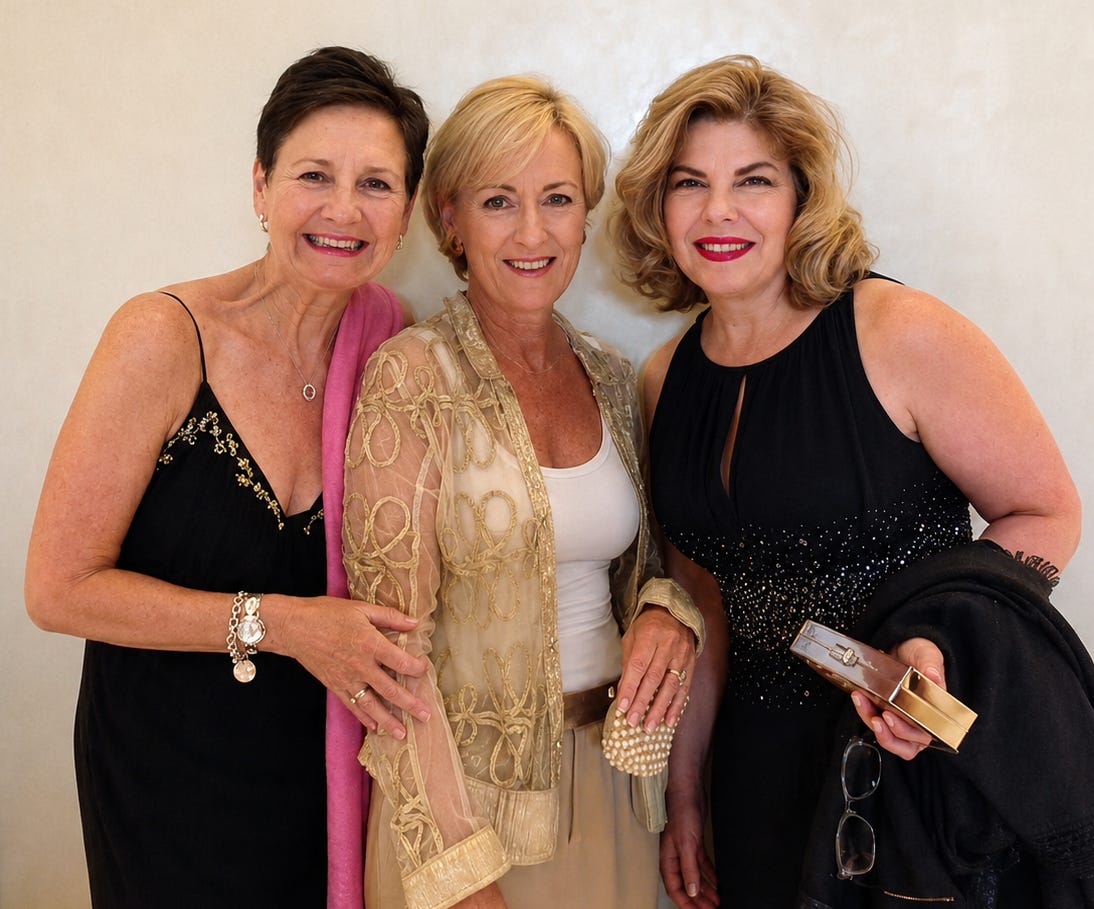
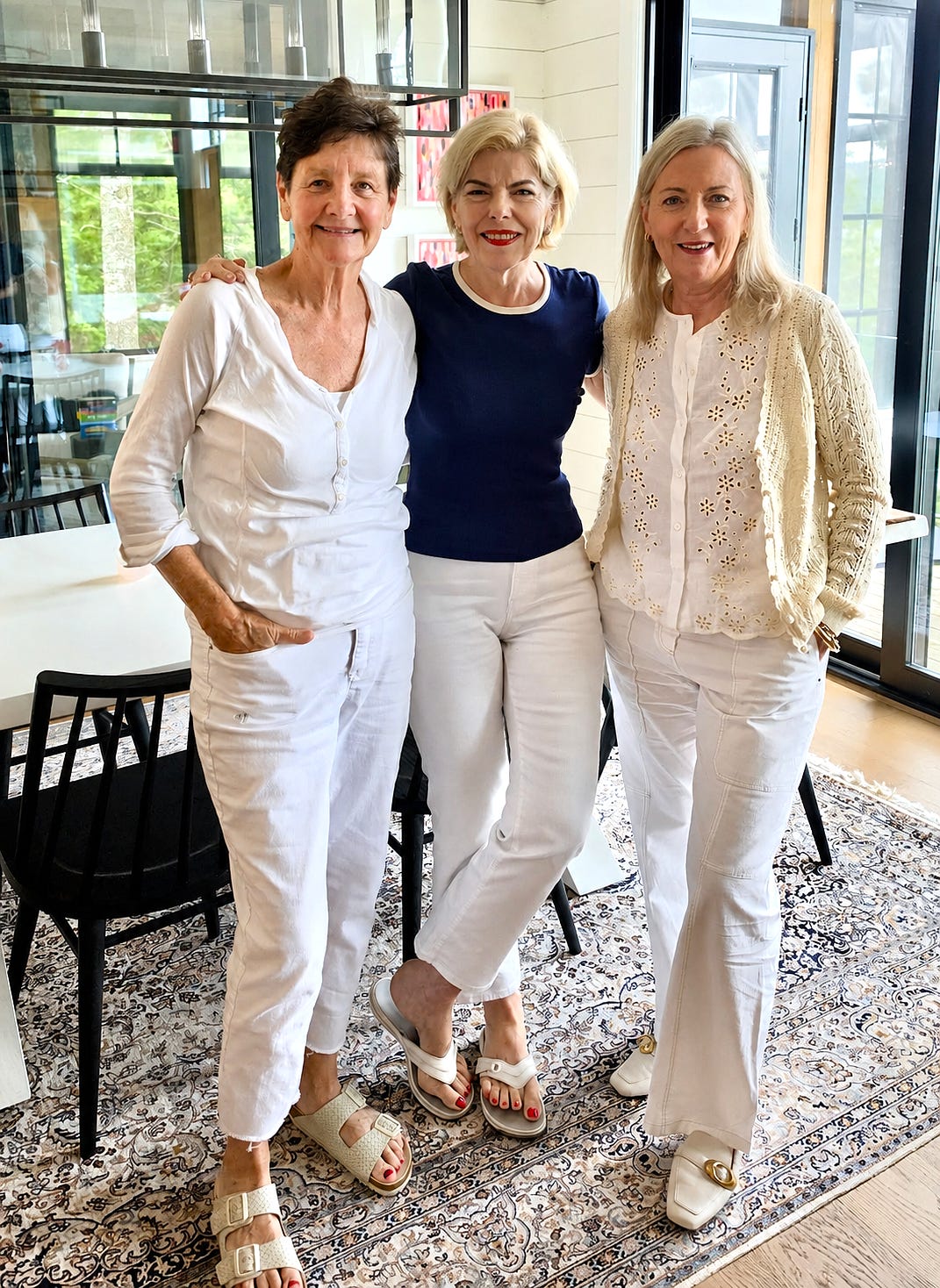
This past weekend, I had the chance to spend time with two of my favourite people—Susan and Ellen, two colleagues turned lifelong friends. We met years ago in Toronto, but life has taken us in very different directions since. Yet when our paths cross now, it feels like no time has passed at all.
It was a relaxed lake house weekend at Susan’s beautiful home north of the city. Time spent cooking together, going for long walks and boat rides, lingering over the table and quite a few bottles of wine. But mostly talking. Catching up on mutual friends, stories half-finished from previous conversations, hopes and dreams that we had long ago, now morphed into new ideas and plans.


Later this week, we’ll be able to carry on the conversation with a larger gathering of dear friends, former work acquaintances all, as we gather at Silvia’s house for a dinner that I know will last into the night. It will be the same wonderful blend of fast and furious conversations veering off in all directions, fashion advice, talk of weddings and new grandchildren and travel and most of all dreams.
Above all, there will be laughter—the kind of laughter that makes you catch your breath and opens your heart. It’s a tonic that I wish I could drink daily, but, somehow, like a fairy tale potion, its effects magically linger until I am able to take the next long draught.
If you enjoyed this week’s Dispatch, I’d be delighted if you subscribed, shared it with someone who might enjoy it, or joined the conversation below.
Ellen’s Pavlova
serves 8-10
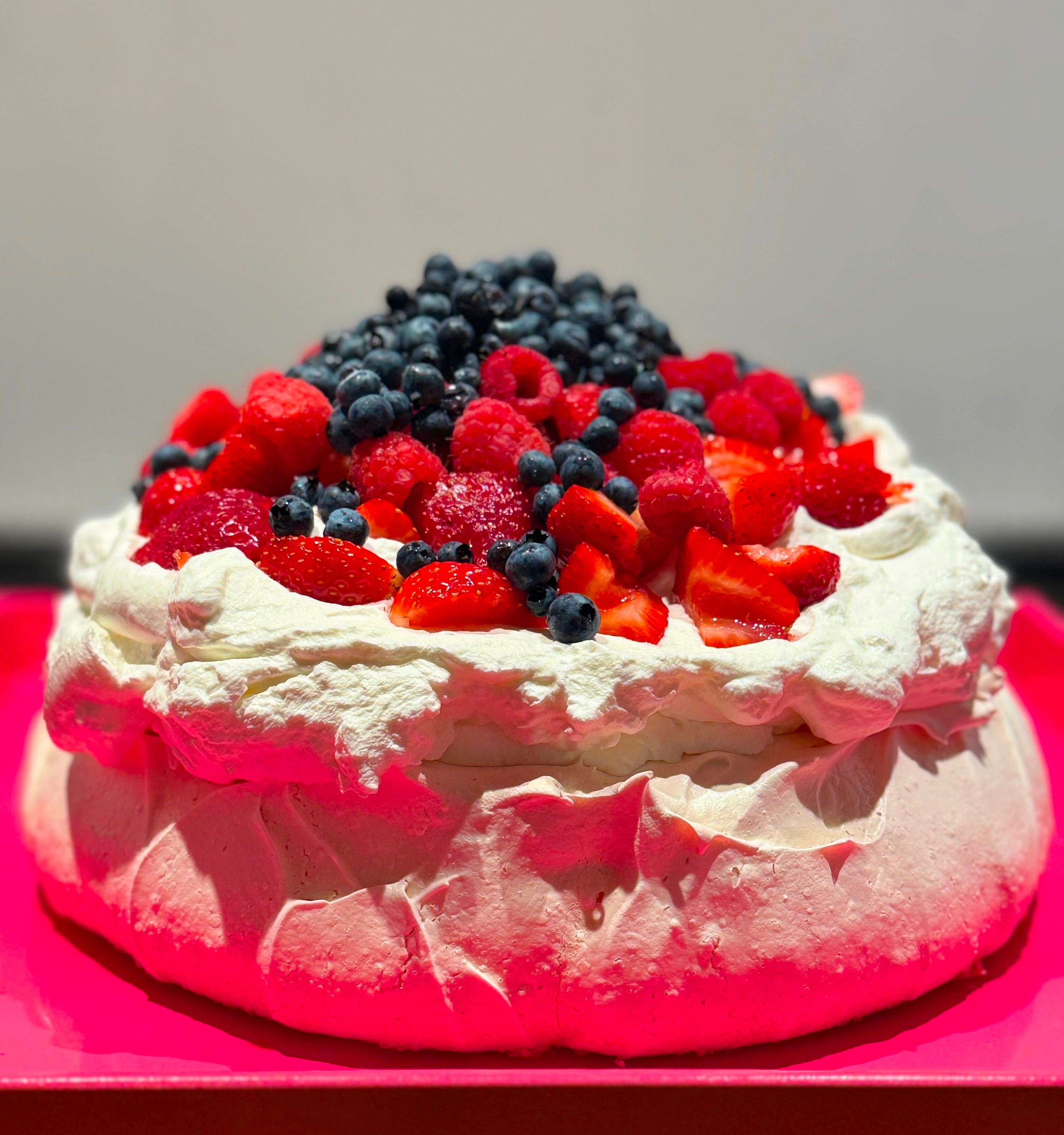
Like all good origin stories, the pavlova has a bit of controversy mixed in with the egg whites. Named after the Russian ballerina Anna Pavlova, the dessert first appeared in New Zealand—or was it Australia?—and debate has ensued ever since.
Go down a rabbit hole history search, and the minutiae of details lend credence to both sides of the argument, and even a theory that the origins of Pavlova lay in Spanische Windtorte, a dessert appearing in appearing in Austrian cookbooks from around 1800 and throughout the 19th century.
Perhaps the last word belongs to Michael Symons, an Australian food historian, writer, and independent scholar.
Both Australians and New Zealanders claim the Pavlova as their national dish. … The search, however, has located no singular birthplace, but something more interesting. The Pavlova is the work of innumerable people in both countries, and beyond.
No matter what its source, a pavlova is a thing of beauty. A dessert made from a baked meringue with a crisp outer shell and a soft, marshmallow-like center, it’s typically topped with whipped cream and fresh fruit, especially berries, kiwi, or passion fruit. Crunchy on the outside, light and fluffy on the inside, pavlova is a classic summertime dessert.
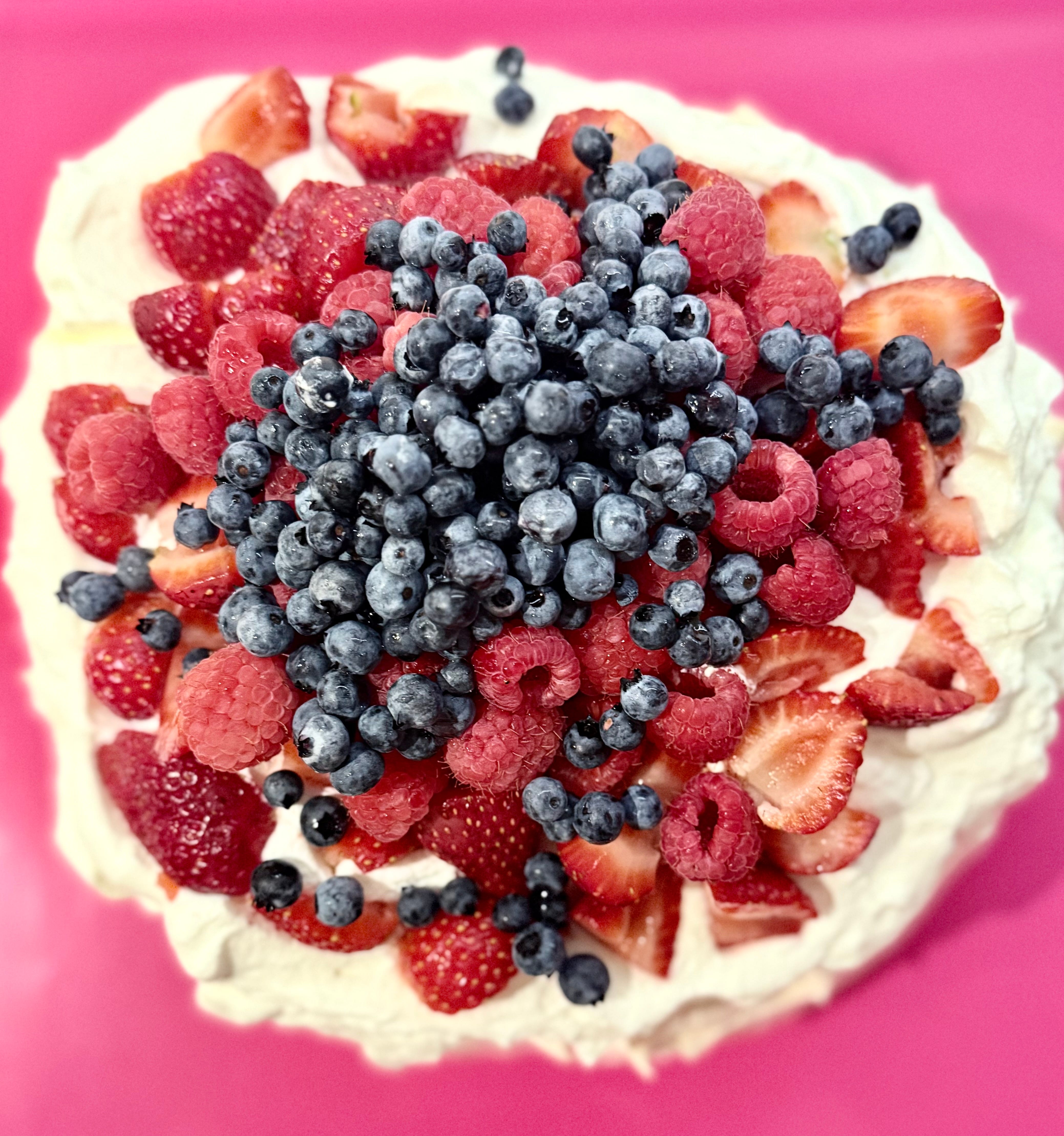
My favourite version is Ellen’s, which sticks with traditional whipped cream and in-season berries.
Note: Caster sugar, also known as superfine sugar, is a common ingredient in British balking, but not so common here. A quick cheat is to measure out the correct amount of sugar and whiz it in a food processor for 2 minutes. The finer consistency will be useful to make a perfect meringue.
Ingredients
225 ml egg whites from about 6 eggs
1½ cups (330g) superfine sugar (see note)
1 tablespoon cornstarch
1½ teaspoons white vinegar
Any combination of strawberries, raspberries and blueberries, about 1½ to 2 cups. Hull and quarter the strawberries if using.
Preheat the oven to 300°F (150°C). Line a baking tray with parchment paper.
Place the egg whites in the bowl of a stand mixer and beat on high speed until stiff peaks form.
With the mixer running, gradually add the sugar, 1 tablespoon at a time, waiting about 30 seconds between each addition. Once all the sugar has been incorporated, scrape down the sides of the bowl and continue beating for 5 minutes, or until the meringue is thick, glossy, and holds stiff peaks. Add the cornstarch and beat for 2 minutes more.
Add the vinegar and beat for another 4 minutes, until fully incorporated and glossy.
Spoon the meringue onto the prepared baking tray and use a spatula to shape it into an 8-inch (20 cm) round, making the sides slightly higher than the center to create a well for the filling.
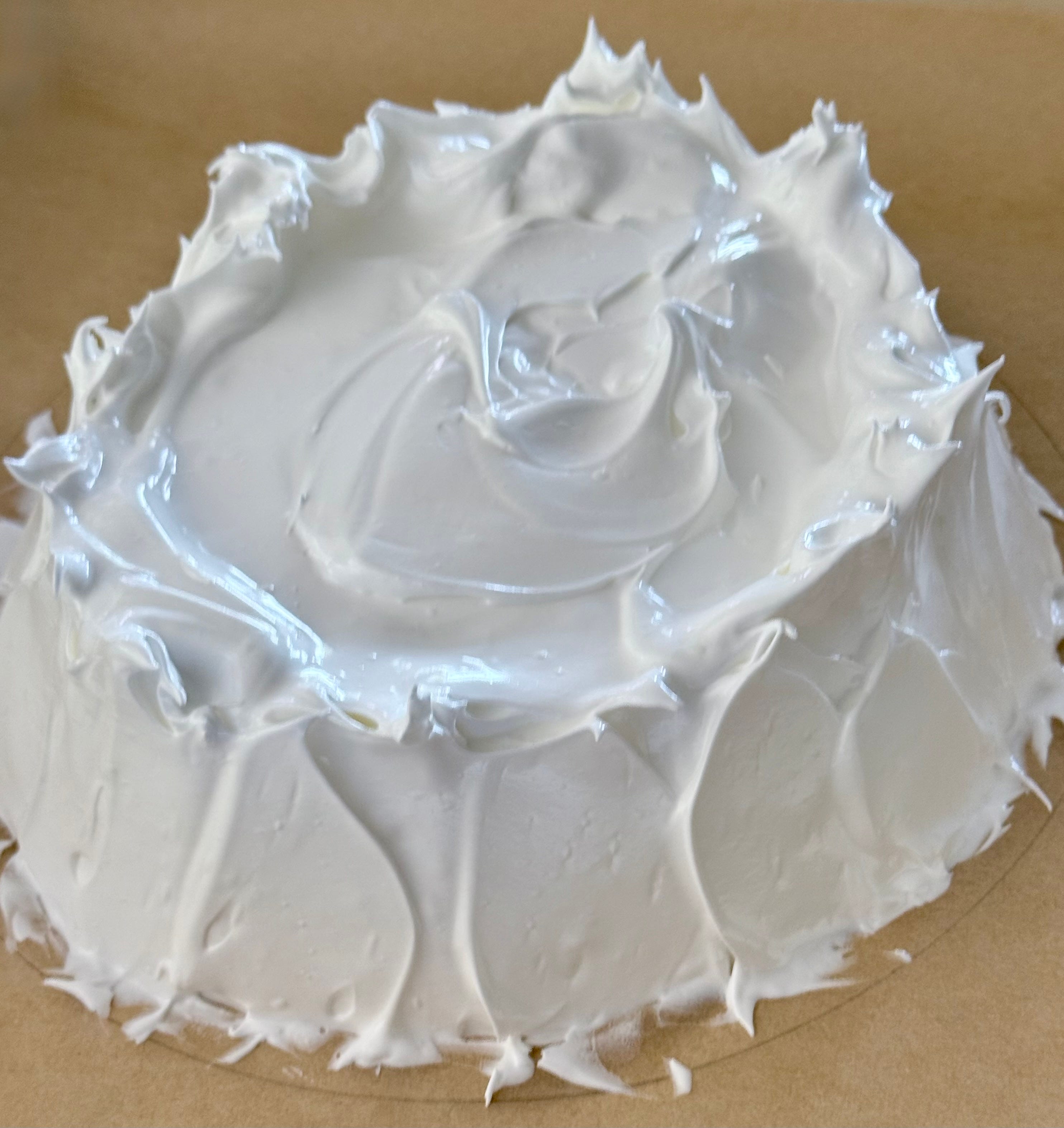
Reduce the oven temperature to 250°F (120°C) and bake for 1 hour 30 minutes, or until the outside is dry and crisp to the touch. Turn off the oven and leave the pavlova inside until completely cool.
Whip the cream until soft peaks form.
Transfer the cooled pavlova to a serving plate. Top with the whipped cream, then scatter over the berries. cut in wedges and serve.
I love pavlova, my mother in law shared the same passion, baking one with ice cream....sadly I feel the love skipped a generation so we don't have it as often. I have a recipe with hazlenuts in somewhere. I need to look it out.
Blessed are those who have long lasting friends. Such a tonic for long life. You are indeed blessed.