
Reading between the lines
and a recipe for pasta with agretti, asparagus, peas and lemon

To everyone new here, welcome. I’m Elizabeth, the writer of The Delicious Bits Dispatch, a weekly missive for the curious, blending discovery, reflection, and musings, always wrapped up with a seasonal recipe worth lingering over.
I have a growing dread that I won’t get all my reading done.
Not a school assignment, a management report, the emails that breed like rabbits multiplying and thriving on the bare necessities of my inbox to deposit their offspring.
No, the reading that weighs on me is the best seller, the buzzy debut novel, my bookclub’s latest selection. Not to mention the ever-growing piles around the house that, even after being culled, stubbornly refuse to decrease in numbers.
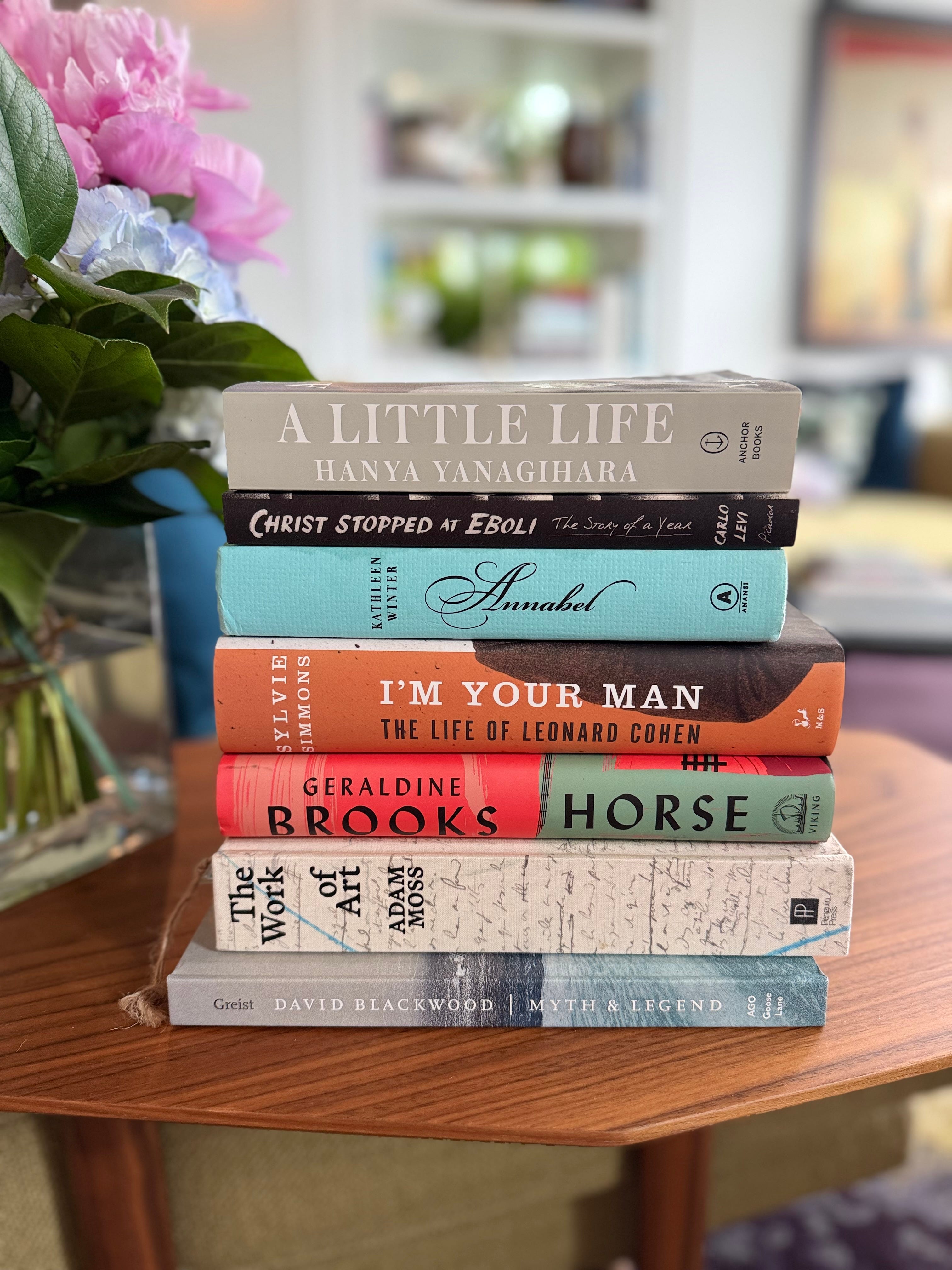
The never-ending story
It doesn’t help that my work life is centred around writing.
Said emails, yes. But also quarterly financial reports, marketing strategies, employee communications, the delicate art of navigating and ideally shutting down a potential crisis. That kind of writing uses a different muscle, one where words are valued in ounces and grams, a single passage changing meaning and intent so subtly yet decisively that the work of an hour suddenly seems for naught.
What I seek in my curled up reading nook is the antithesis of all that.
Give me tales of Jane fleeing across the moors, a modern retelling of Cain and Abel, the story of a horse or a boy and his horse. Show me the left hand of darkness, introduce me to a Jinni and a Golem, tell me what Katie did and how Julia came to be.*
It’s making me think I might just follow my 92-year-old friend Stan’s approach and spend happy hours rereading all of my favourites.
The way we were
When we first read a book, we bring ourselves to the experience, and it’s a moment in time, crystallized under glass. Our perspective and ideas reflect our singular self captured in the relationship we form with the written word. It reflects not only who we are, but how we read—what we ask of books, and what we hope they might give in return.
Does a book need to change your life? Reaffirm your beliefs, have characters you can understand and empathize with, fundamentally shift something inside you? Or are you satisfied to have a more detached relationship: an observer of the story arc, the writing skill, passages of dialogue that resonate, the characterization as much as the characters themselves?
Neither one is better, of course. Just different. One, reading for immersion and emotional connection; the other, reading with a more detached appreciation of craft. Both providing the richness of experience that makes the endeavor worthwhile. But it is in the reread that a peculiar magic happens.
Turning over a new leaf
If you would tell me the heart of a man, tell me not what he reads, but what he rereads.
― Francois Mauriac, French novelist and Nobel Prize laureate
Much like bumping into an old friend, revisiting a book gives us a sense of grounding. The books we return to voluntarily are the stories that comfort us, challenge us, accompany us, or help us make sense of ourselves. They survive changing tastes, passing trends, and the pressure of novelty. In a sense, they become part of our inner furniture. We can walk in the dark without stubbing our toes.
The first time we travel through a book, we are chasing the plot—impatiently hunting for what happens next. But when we return, that urgency is cleared away. Our eyes are finally free to wander the architecture of the story, noticing the subtle joints and fine grain of the writer’s craft that we were simply moving too fast to see the first time. The furniture has an added patina.
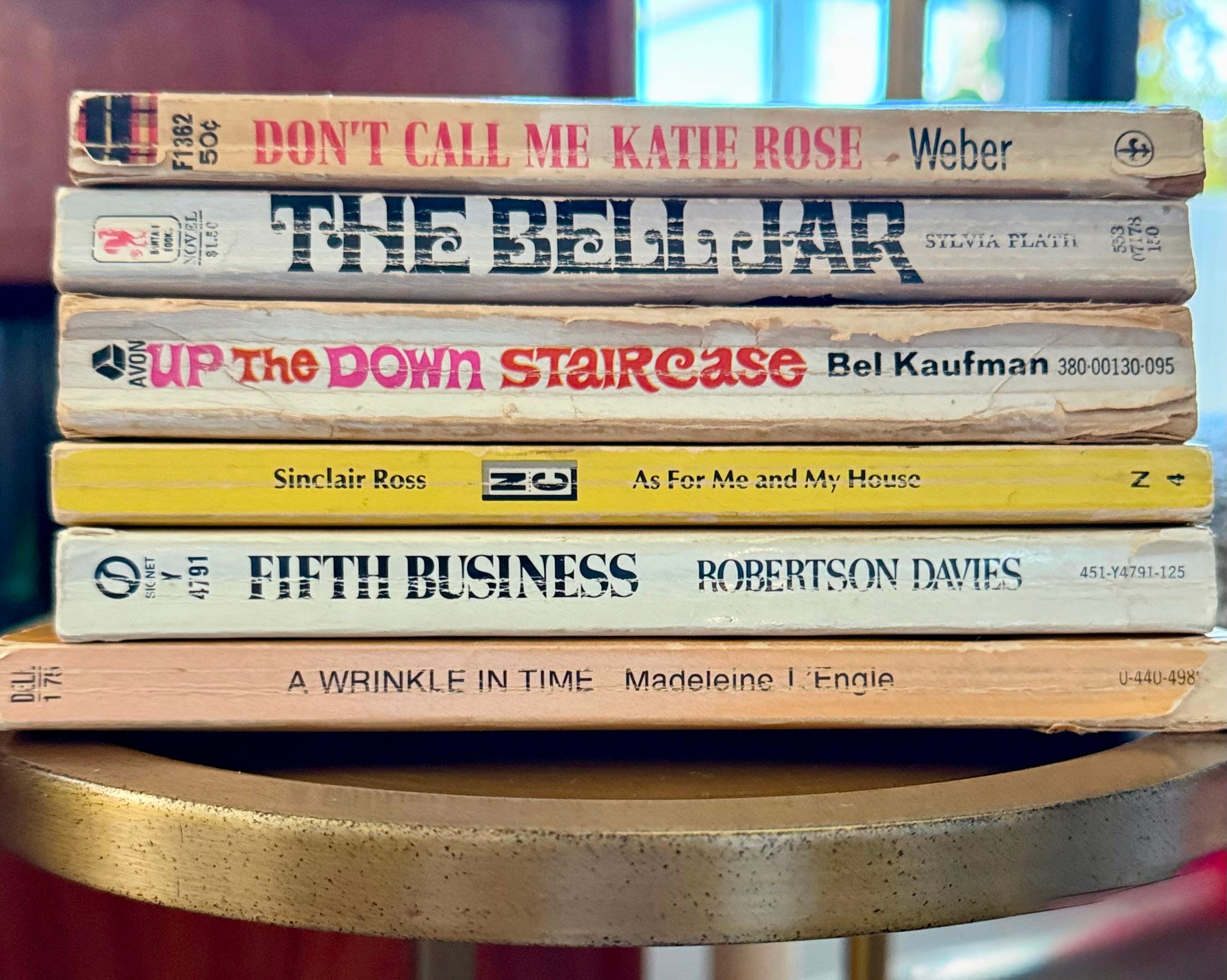
It also gives us the opportunity to see if what stirred or moved us still ring true, but even more exciting, to see what new diamonds are discovered down the mine shaft of our memories. The material hasn't changed; it's we, the readers, that have shifted. We're seeing things through a different prism, or the view from our past may have shifted altogether.
Reading familiar stories becomes a way to thread our past selves to who we are today. Because those words on the page are immutable, the book becomes an elegant mirror: any new meaning we find isn't actually a change in the story, but a measure of our own evolution.
Mauriac asks, Tell me what you reread, and I'll tell you who you are.
Perhaps the question becomes: Tell me what you discover when you reread, and I'll tell you who you've become.
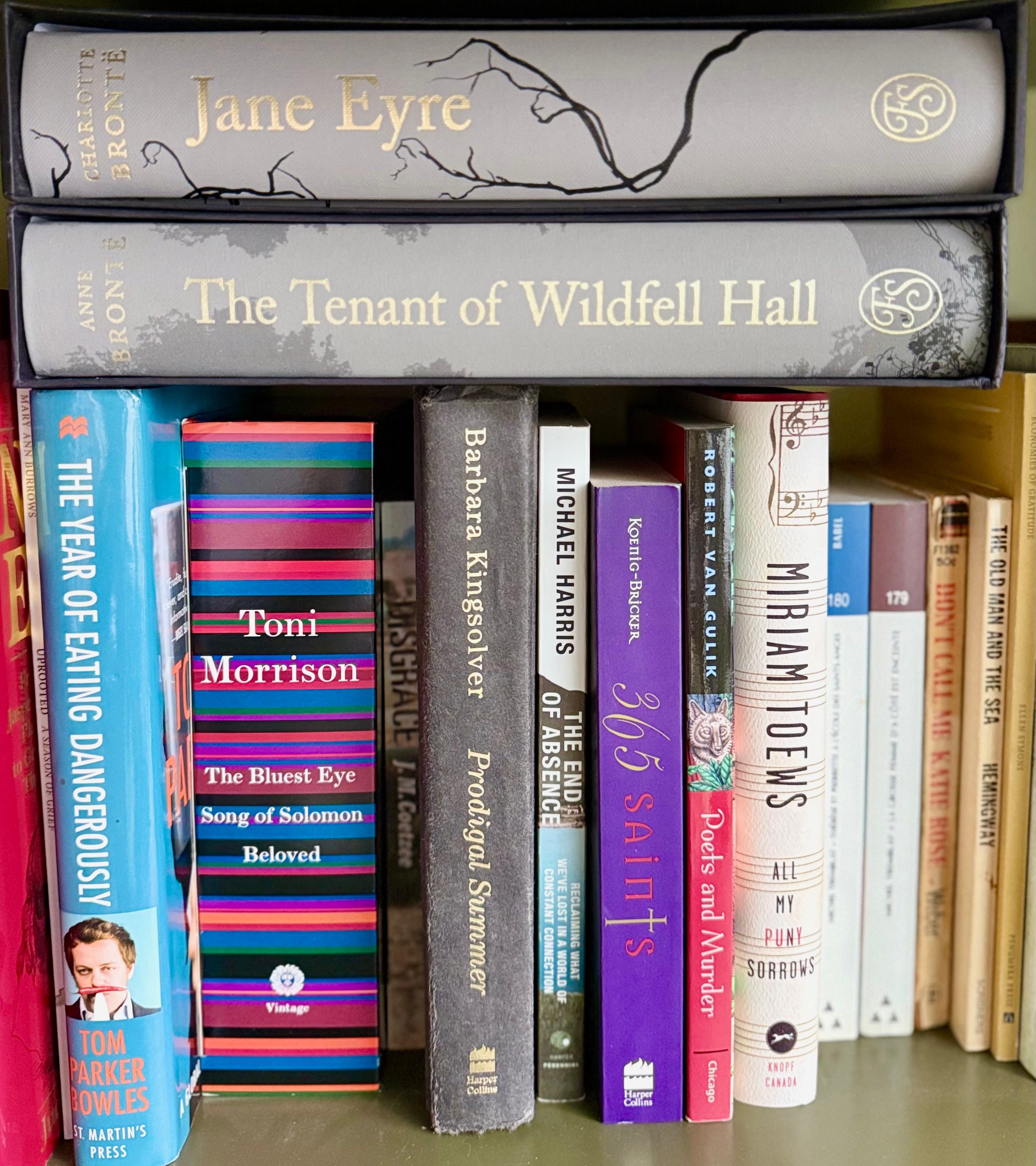
Tell me: do you reread books and what are your favourites? Leave a comment and join the conversation!
* A key to my reading nook
Charlotte Brontë, Jane Eyre
John Steinbeck, East of Eden
Geraldine Brooks, Horse
C.S. Lewis, The Horse and His Boy
Ursula K. Le Guin, The Left Hand of Darkness
Helene Wecker, The Golem and the Jinni
Lenora Mattingly Weber, Don’t Call Me Katie Rose
Julia Child with Alex Prud’homme, My Life in France
If you liked this post, let me know by clicking the ❤️ button, commenting, sharing the post or subscribing. It helps spread the word about Delicious Bits and brings me joy. Thank you, dear readers and eaters!
Pasta with agretti, asparagus, peas and lemon
adapted from Laurel Evans
serves 4
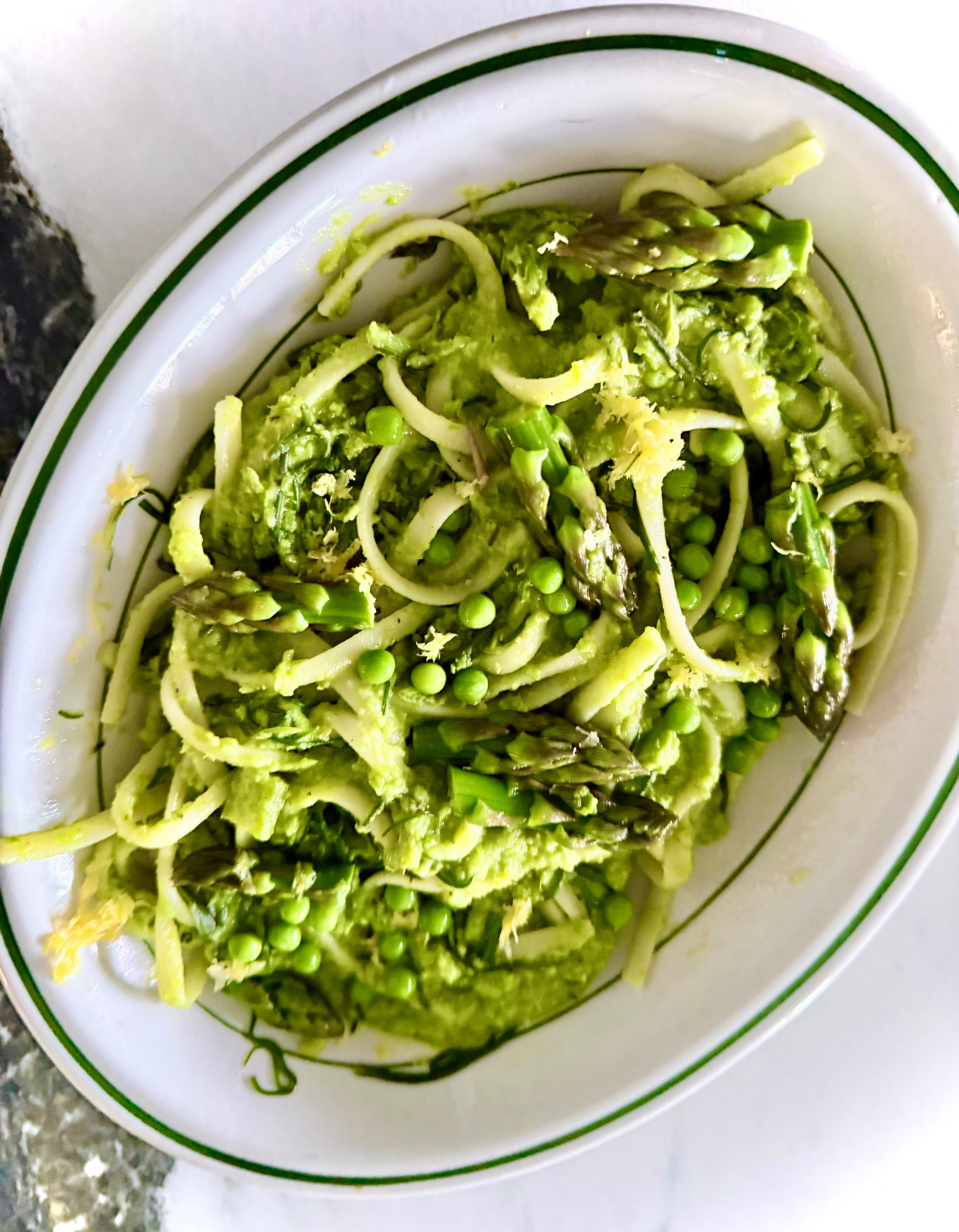
If you’ve been hanging out with me for a while, you know that seasonal cooking is my jam. And what that means is for the next few weeks I will be on asparagus overload, adding peas, strawberries, rhubarb and spring radishes to the mix. It’s my happy place.
So when I discover something new it makes my heart sing.
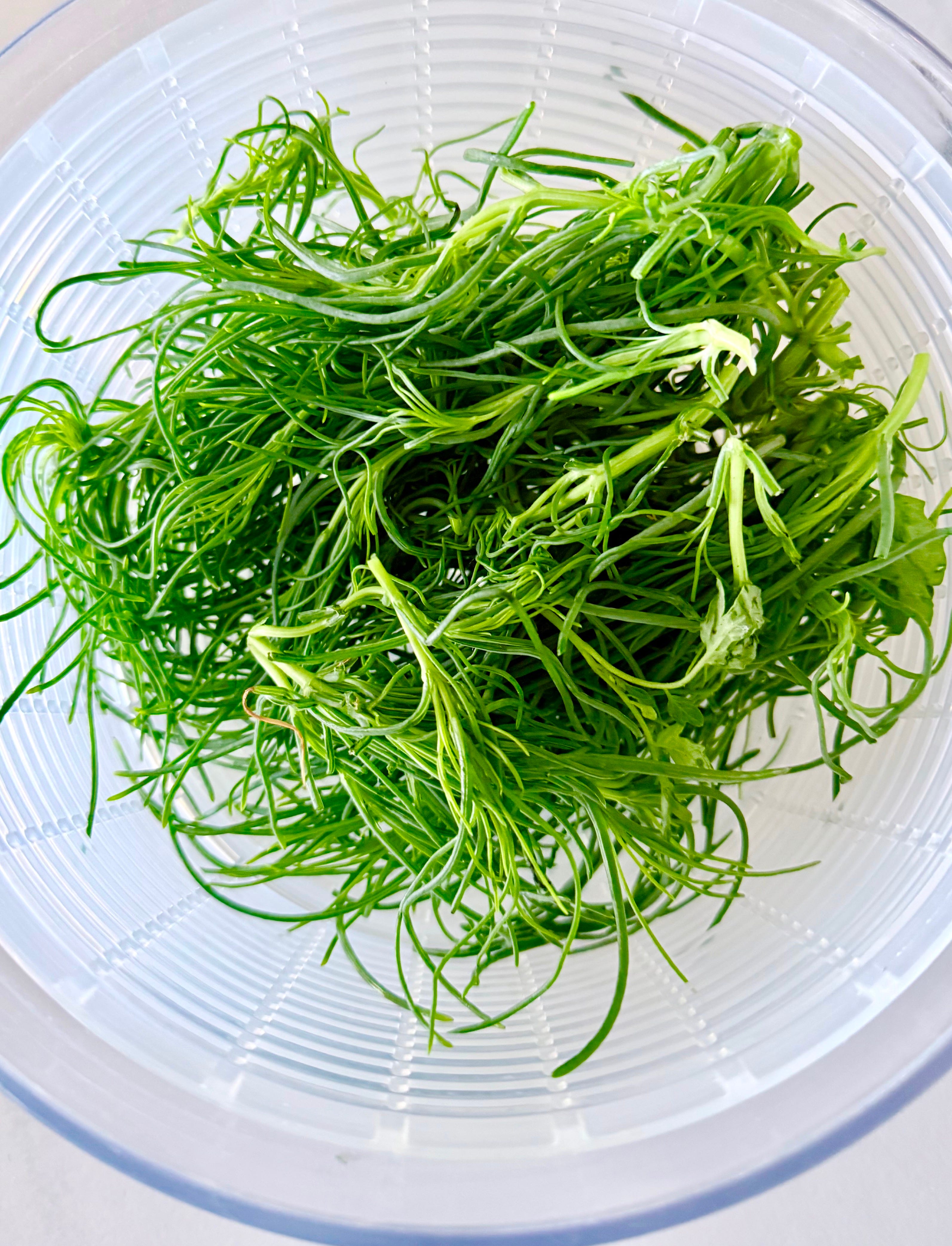
I first tasted agretti this past May at a tiny trattoria in Rome, where it arrived at the table simply prepared: steamed and dressed with excellent olive oil, lemon zest and a touch of chili pepper. Sometimes called monk’s beard, agretti looks a bit like a cross between chives and seaweed—long, wiry green strands with a delicate crunch and a pleasantly saline flavour that tastes faintly of the sea. Its season is fleeting, appearing for only a few weeks each spring, which makes spotting it at the market feel like a small gift. Here, it's paired with sweet peas, tender asparagus, and lemon in a simple pasta that celebrates some of spring’s most ephemeral treasures.
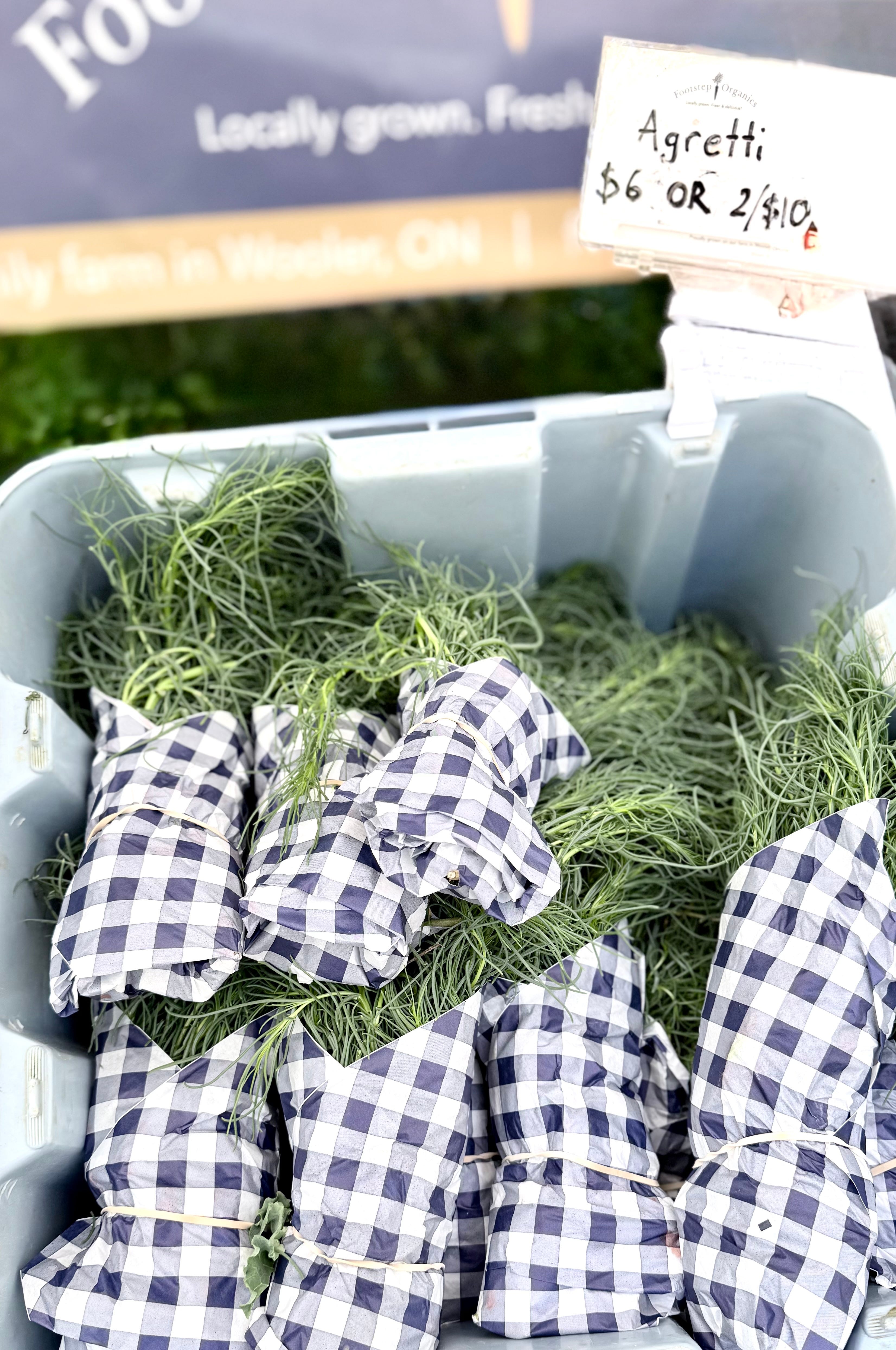
If you can’t find agretti, don’t worry—the dish is still lovely made with a little extra asparagus.
Ingredients
1½ lb (680 g) asparagus
2 bunches agretti (about 14 oz/400 g), cleaned
1⅓ cups (200 g) frozen peas
1 lb (454 g) spaghetti or fettucine
1–2 tbsp freshly squeezed lemon juice
1–2 tsp finely grated lemon zest, plus more for serving
Extra-virgin olive oil
Kosher salt and freshly ground black pepper
If you can’t find agretti, substitute an additional ½ lb (225 g) asparagus.
Bring a large pot of well-salted water to a boil.
Trim the woody ends from the asparagus. Cut off the tips and set aside. Slice the remaining stalks into small rounds.
Add the asparagus rounds to the boiling water and cook for 5 minutes. Add the asparagus tips and peas and cook for 2 minutes more. Using a slotted spoon, transfer the vegetables to a bowl of ice water to stop the cooking. Drain well.
Set aside the asparagus tips and a small handful of peas for garnish. Transfer the remaining asparagus and peas to a blender. Add 1 teaspoon lemon juice, 1 teaspoon lemon zest, 1 tablespoon olive oil, and a pinch each of salt and pepper. Blend until smooth.
Trim the roots from the agretti and wash thoroughly to remove any grit. Return the asparagus cooking water to a boil and cook the agretti for about 4 minutes, until tender. Drain well and pat dry. Toss with a drizzle of olive oil, a squeeze of lemon juice, and salt and pepper.
Cook the spaghetti according to the package directions until al dente. Reserve about ½ cup of the pasta cooking water before draining.
Return the pasta to the pot and add the agretti and a drizzle of olive oil. Add the asparagus-pea purée and toss until evenly coated, adding a splash of the reserved pasta water as needed to create a silky sauce.
Divide among bowls and top with the reserved asparagus tips, peas, and a little extra lemon zest. Finish with a drizzle of olive oil and serve immediately.
I share your dread and the piles of books (that seem to keep growing)! Lovely recipe as well!
This is the most beautiful piece of writing on reading and rereading Elizabeth. And I loved being nosey and reading all the well creased and well read book spines in your photographs.
I am so happy you found agretti in Rome! Definitely going to try your pasta recipe - though I may need to wait as local asparagus has just finished its season here in SE England.
I have finished packing all my books for our move to Ireland. There were very few that I could bring myself to give away and I am so so looking forward to taking them out of the boxes, placing them on their new bookshelves and when fully unpacked, sitting down in front of the fire this autumn and having the time, the luxury to read decadently in peace. I have missed this luxury for most of this year due to selling and packing.