
These foolish things
and a recipe for a super easy hummus platter

To everyone new here, welcome. I’m Elizabeth, the writer of The Delicious Bits Dispatch, a weekly missive for the curious, blending discovery, reflection, and musings, always wrapped up with a seasonal recipe worth lingering over.
I was all set to write about the World Cup this weekend.
But as often happens when I sit down to capture my chaotic thoughts, the clock ticking between Saturday night and my self-imposed Sunday publishing deadline—somewhere between 10 a.m. and 11:59 p.m.—what started as a germ of an idea of a Tuesday had sprouted and grown into something entirely different.
Things first started shifting for me when I read a post from Kalee Tilli about the art of saying goodbye to a home. Then I read a note from Rebecca Blackwell about a pair of broken candlesticks, and suddenly I wasn't writing about football anymore.
As is often the case when I get inspiration from my fellow Substack writers, those differently-coloured and random threads wind themselves around the skein of my mind and start weaving a different sort of narrative.
The right stuff
When my sisters and I helped our father sell our family home, I saw firsthand what a lifetime of holding on can bring. From Christmas cards from years past carefully bundled with string, still in their envelopes, to old tools rusted from years of idleness, it was a full houseful of objects once valued, yet meaningless to us.
Still, there were certain things that caught my eye, and that travelled with me. A souvenir from Rome; a Madonna and child figurine; a decorative plate that was a cherished wedding gift given to my parents; a wooden music box with beautiful inlaid marquetry; a yellow Pyrex bowl that my mother used for everything.
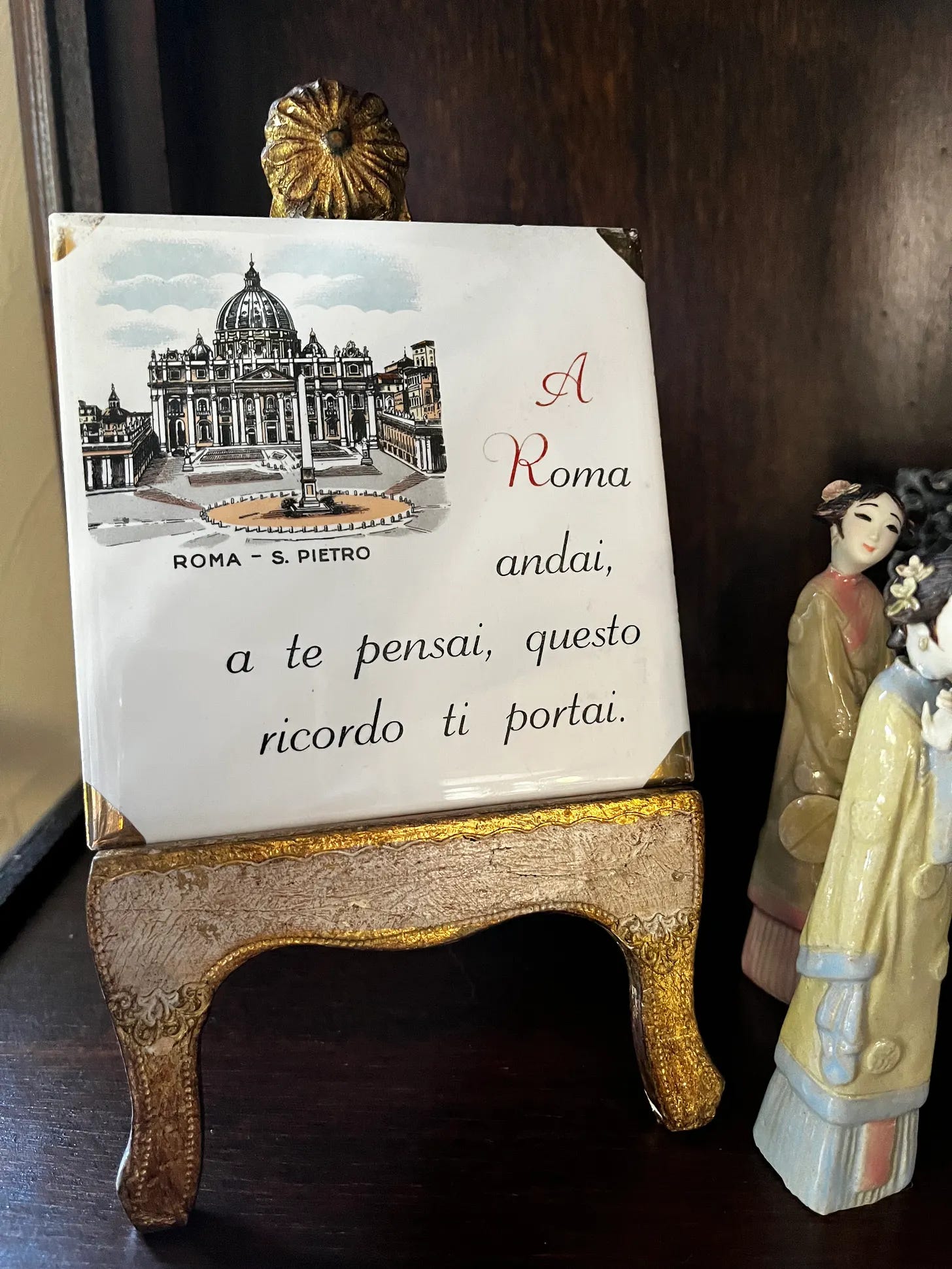
While they weren’t obvious choices or things of great value, still, they blended seamlessly into the warp and weft of our belongings, a thread that connected me to lives lived long ago. Small, daily reminders of people and times past.
Three years ago, when we moved from our beloved home of 26 years, the harder decisions and negotiations came. We were bound by finite future space, infinite possibilities to fill it. There were easy choices, and much that was left behind. It felt impossibly hard for me, the keeper of my family’s modest possessions, the accumulator of my own.
All of it made more daunting because we really were starting with a clean slate. From century home to modern condo in the blink of an eye. The only things coming with us were the things usually reserved as icing on the cake: books, art, decorative objects…possibly a Madonna or marquetry box.
A place at the table
Among all the beautiful things we carried into our new home, none have become more woven into the fabric of our daily lives than the china.
My love for pretty china things did not start with an inherited collection, but rather, was assembled one auction, one vacation, one flea market, one garage sale at a time. Each piece finding its way onto our table, becoming part of the rhythm of our everyday lives.
I’ve often wondered, and more frequently lately, where all our pieces will go. There is no child to inherit them and scant interest from the next generation. Still, I have always hoped that there is another “me” somewhere—the person who revels in the beauty of craftsmanship long gone, and buys the forgotten box of treasures languishing in a dusty shop.
Then I read Rebecca’s note about a pair of treasured glass candlesticks that had belonged to one of her husband’s great-aunts and had broken. Not from neglect or the rigours of travel, but simply from being used: candles burning a little too close, a little too often to the fragile bases. That convergence made her wonder if there was a metaphor in it: that the greatest value is extracted by use rather than by being preserved. She wrote: “I hope, at the end of my life, whenever that may be, that I feel well used. Well used in the way of our favorite things. Not preserved. Not held apart. Used.”
It wasn’t that she changed my mind. I've always believed in using the good china. Instead, she gave words to something I'd never quite articulated. The worth of the beautiful things we gather isn’t measured by how perfectly they survive us, but by how fully they become part of our lives: used for breakfast and Sunday night pasta, presiding over hurried dinners and lingering conversations, not precious, but allowed to chip, to fade, and, eventually, to break.
In the end, perhaps the greatest compliment we can pay the things we love is to use them well.
These foolish things
In weaving together a new life, what I’ve come to know is that it is the seemingly trivial possessions we held onto that turned our blank slate into a warm and inviting home. They are an indelible part of our histories—the stories we tell, the through line to who we are.


As we lingered over a casual Friday night dinner, I looked at the table…Richard's grandmother's plates, crystal glasses from Prague, our wedding china, the most adorable ceramic rooster from Puglia…and felt that hard-to-name beauty settle in. These are the foolish things that make my heart sing.
If you enjoyed this week's Dispatch, I'd be delighted if you subscribed, shared it with someone who might enjoy it, or joined the conversation below.
The CookStack Collective
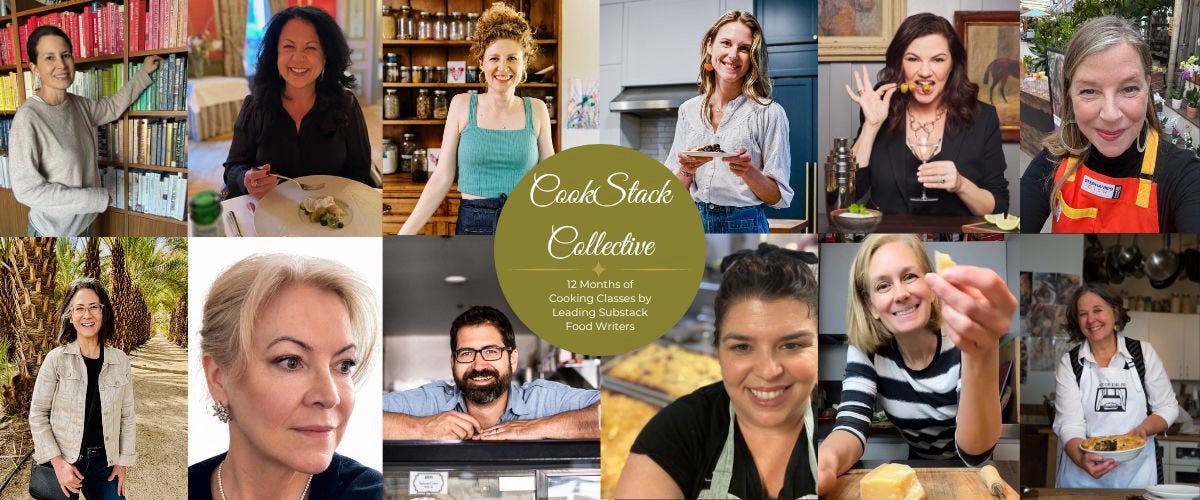
Before we get to this week’s recipe, I wanted to be sure you knew about a fantastic group of 12 Substack food writers who have come together to form the CookStack Collective. A year-long series bringing together twelve food writers, bakers, cooks, and teachers for monthly live Zoom classes, each session offers a new host, fresh recipes, and the chance to cook along, ask questions, and learn directly from some wonderfully talented people. The classes, materials, and recordings are available exclusively to paid subscribers
The inaugural CookStack Collective class was hosted by Rebecca Blackwell this past Friday, and Richard and I joined a lively group who cooked alongside Rebecca in real time, while others simply poured a glass of wine, watched, asked questions, and enjoyed the camaraderie. It was a warm, welcoming way to spend an evening, and one of the joys of the series is that the recipes and recordings are available afterward, so you can cook along whenever it suits you. You can find out more here.
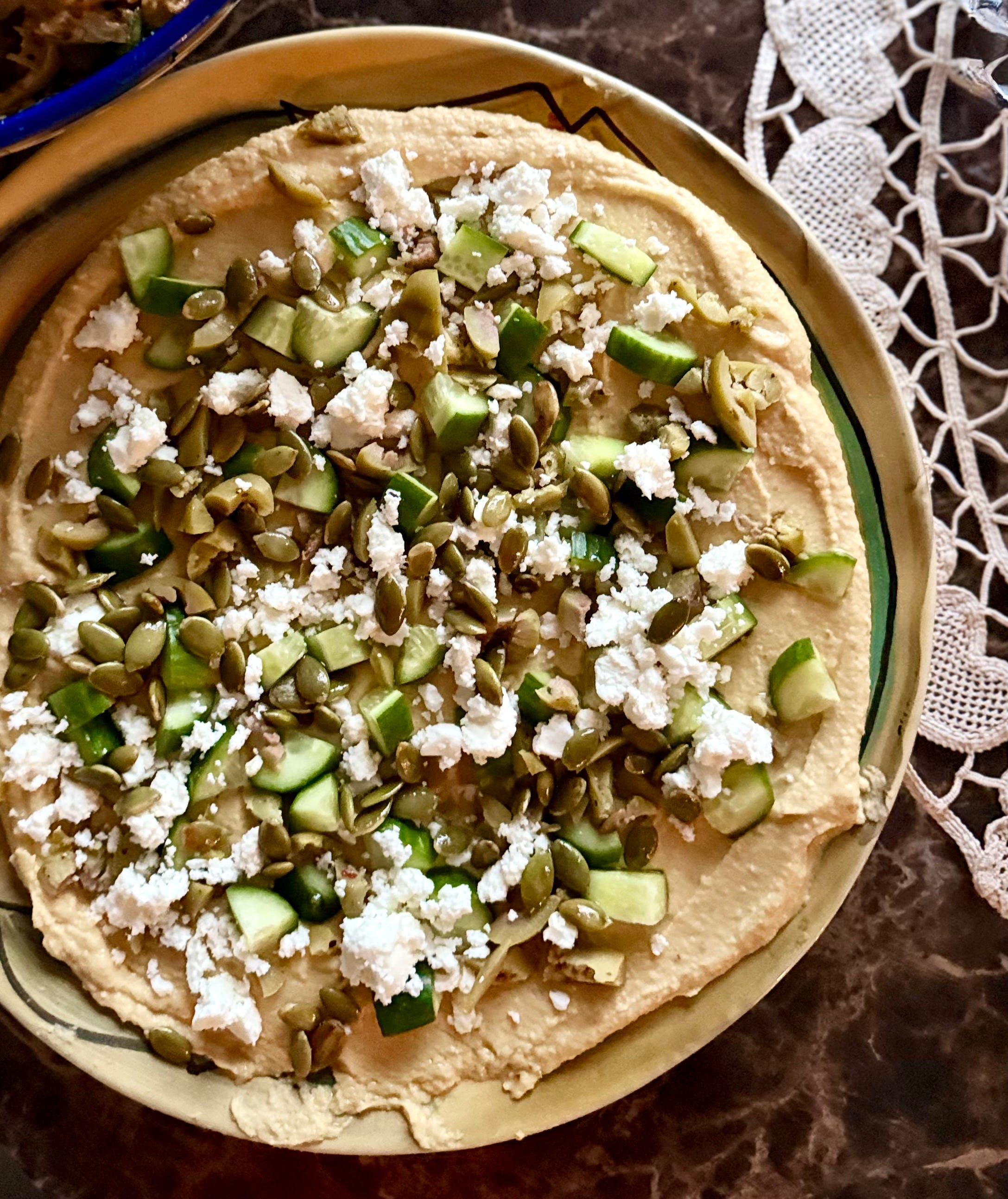
Creamy homemade hummus platter with olives, cucumber & feta
recipe courtesy of Rebecca Blackwell, Let’s Get Lost
Serves: 2 (can easily be doubled)
Friday night is date night in our household, or more accurately, let’s eat out night. We have a small roster of favourite locals where we can get the city’s best burger, superb Hakka Chinese cuisine, classic French bistro fare or a really good roast chicken.
This past Friday we stayed in and cooked together, joining the inaugural CookStack Collective class, hosted by Rebecca Blackwell. Rebecca was cooking from the tiny 100-ft galley kitchen of her sailboat, proof positive that space and limited equipment are never an impediment to making really delicious food. We made a gorgeous hummus platter, sesame chicken salad and watermelon-feta salad with an unexpected mustard vinaigrette.
Before the class started, I set the table with some of our beautiful treasures, in honour of Rebecca’s lost candlesticks and in keeping with our own practice of using the good china, always. I like to think that those things add a special sprinkle of fairy dust and flavour over whatever they touch.


Note: This platter is adaptable to your tastes and what’s on hand. If you want to use tomatoes, choose firm small cherry tomatoes and be sure to dress the platter just before serving (see the tomato variation below). The hummus will keep in an airtight container in the refrigerator for up to one week.
Ingredients
2 (15-ounce) cans chickpeas, drained and rinsed
¼ cup fresh lemon juice
1-2 garlic cloves (more to taste)
1 teaspoon kosher salt
1 teaspoon ground cumin
1 teaspoon paprika or Aleppo pepper
¼ cup tahini
¼ cup ice water
¼ cup extra virgin olive oil
To finish the platter
2 Persian cucumbers, cut lengthwise and diced (or any other crisp veggies you’d like to add: red peppers work well here)
½ cup chopped olives (green, Kalamata, or a mix)
½ cup crumbled feta
Extra virgin olive oil, for drizzling
Toasted pumpkin seeds (optional)
Sumac or additional Aleppo pepper, for garnish
In a food processor, combine the lemon juice, garlic, salt, cumin, paprika (or Aleppo pepper), and tahini. Process until smooth and creamy. With the processor running, slowly drizzle in the ice water. Continue blending until the mixture becomes pale, light, and fluffy.
Add the chickpeas and olive oil and process for a few minutes, stopping to scrape down the sides as needed, until completely smooth. Taste and adjust the seasoning with more lemon juice, garlic, salt, or spices if you like. Hot tip: if the hummus isn’t as creamy as you’d like, try adding an ice cube or two and continue blending.
Spread the hummus onto a shallow serving plate or platter, creating swoops with the back of a spoon.
Scatter the cucumber, olives, and feta over the hummus. Drizzle generously with good-quality olive oil and finish with toasted pumpkin seeds (if using) and a sprinkle of sumac or Aleppo pepper.
Serve immediately with warm pita, crackers, or fresh vegetables.
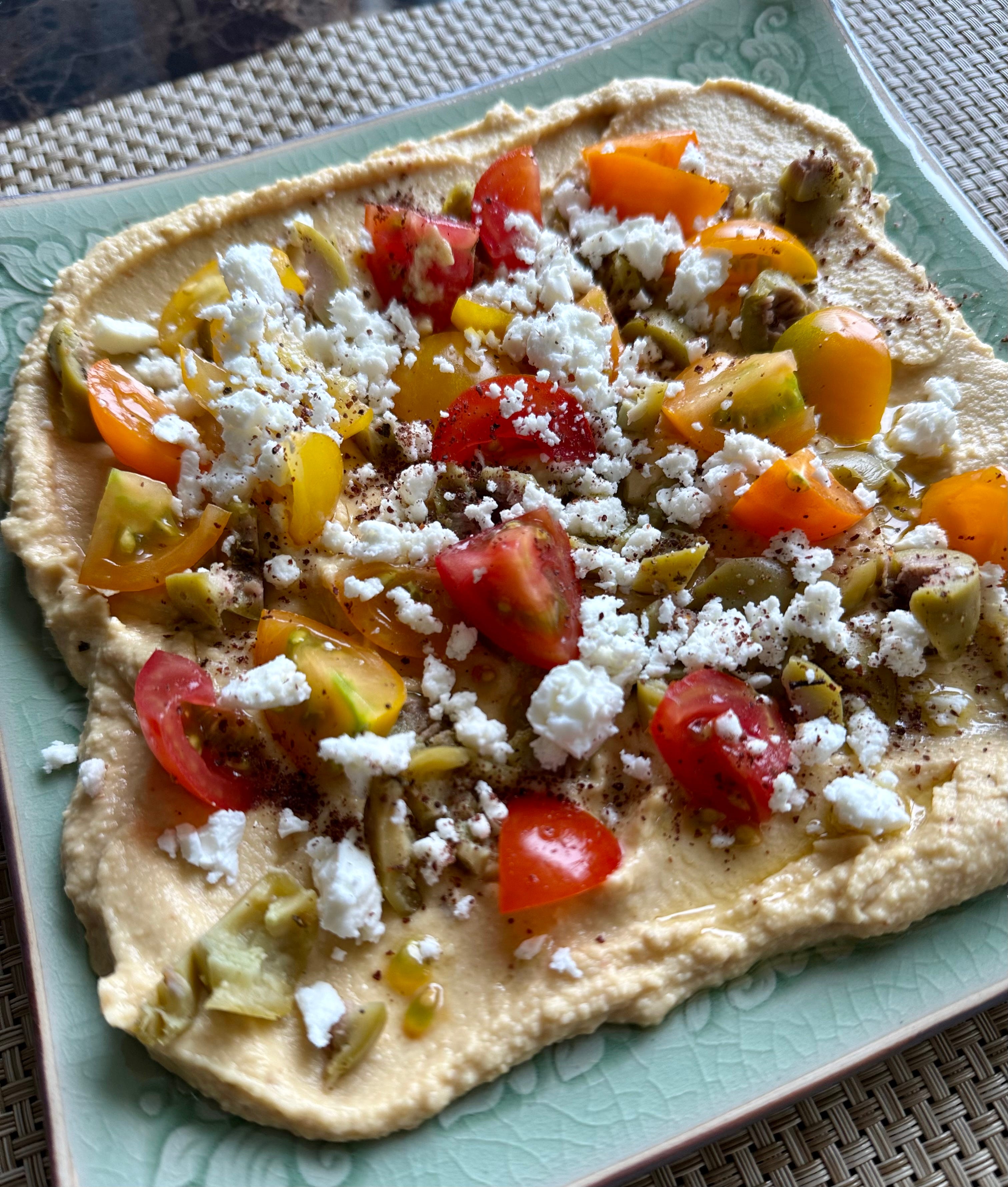
Hummus platter with olives, tomatoes, feta and sumac
As already mentioned, this hummus platter is full of possibilities for variation. Although Rebecca recommends avoiding tomatoes as they may make the hummus watery, I found that small, firm in-season cherry tomatoes were a bright and welcome taste of summer on the platter. Finishing it with sumac, a suggestion from Rebecca, gives the platter added flavour.
For this variation, substitute the cucumbers for cherry tomatoes, eliminate the pumpkin seeds and add a sprinkle of sumac to finish.
You are saying something so important in this post, Elizabeth. My MIL says the same about jewelry. Use it, wear it, enjoy it. Don’t wait for THE occasion.
I absolutely LOVE this and the reminder that what's used is loved and cherished. Now I need to read Rebecca's post!