

I don’t exactly remember my first experience with foraging. Windsor was an industrial hub, the product of proximity to Detroit and the Big Three automakers. If you didn’t work in a manufacturing plant, as my dad did, then perhaps your family members were in the tool and die trade or some other offshoot of the car industry.
It seems as unlikely a place as any to forage for wild mushrooms. But I see the picture in my mind’s eye, details diminished with time, like a faded photo that’s curled around the edges. Maybe I’m 4 or 5. My sister and I are with my mother and one of her friends. We’re in an overgrown field of rough green terrain. Close by, and surreal to my adult memory, there are likely signs of Windsor’s industry – electronic grids, metal towers. I imagine that the treasures discovered, gently unearthed, brushed of dirt, and carefully placed in a plastic bucket, must have seemed all the more precious to my mother, found as they were in this mechanised landscape. A world away from the Italy where she was born.
Magic Mushrooms
What kind of mushrooms were they? How did they know where they were? Or for that matter, whether they were edible? What did she make with them? Unanswered questions, untold stories. And memories that remained submerged in my mind until a trip to Italy in 1993, and my second encounter with the art and magic of foraging.
My cousin Giacomo was an opera lover, mountain climber, a gardener and the fastest driver I’ve been in a car with. He was also a forager of the highest order, and his specialty was porcini mushrooms.

Everyone gets excited by fresh truffles. And undoubtedly those rare and expensive creatures deserve a special place in the kitchen. But I will never forget the meal that Giacomo made us with his cache of fresh porcini mushrooms. Huge, meaty and gorgeous, quartered and sautéed simply with garlic, parsley, olive oil and splash of white wine, this was dinner, with nothing more than crusty bread needed to make a meal.
The Landscape of Ideas
Fast forward to 2017, when I went to Sicily to participate in a 10 week farm to table program called Cook the Farm. An accumulation of ideas, questions, knowledge, and above all a program focused on fundamental curiosity about the intersection of food, tradition, modernity, sustainability and globalization.
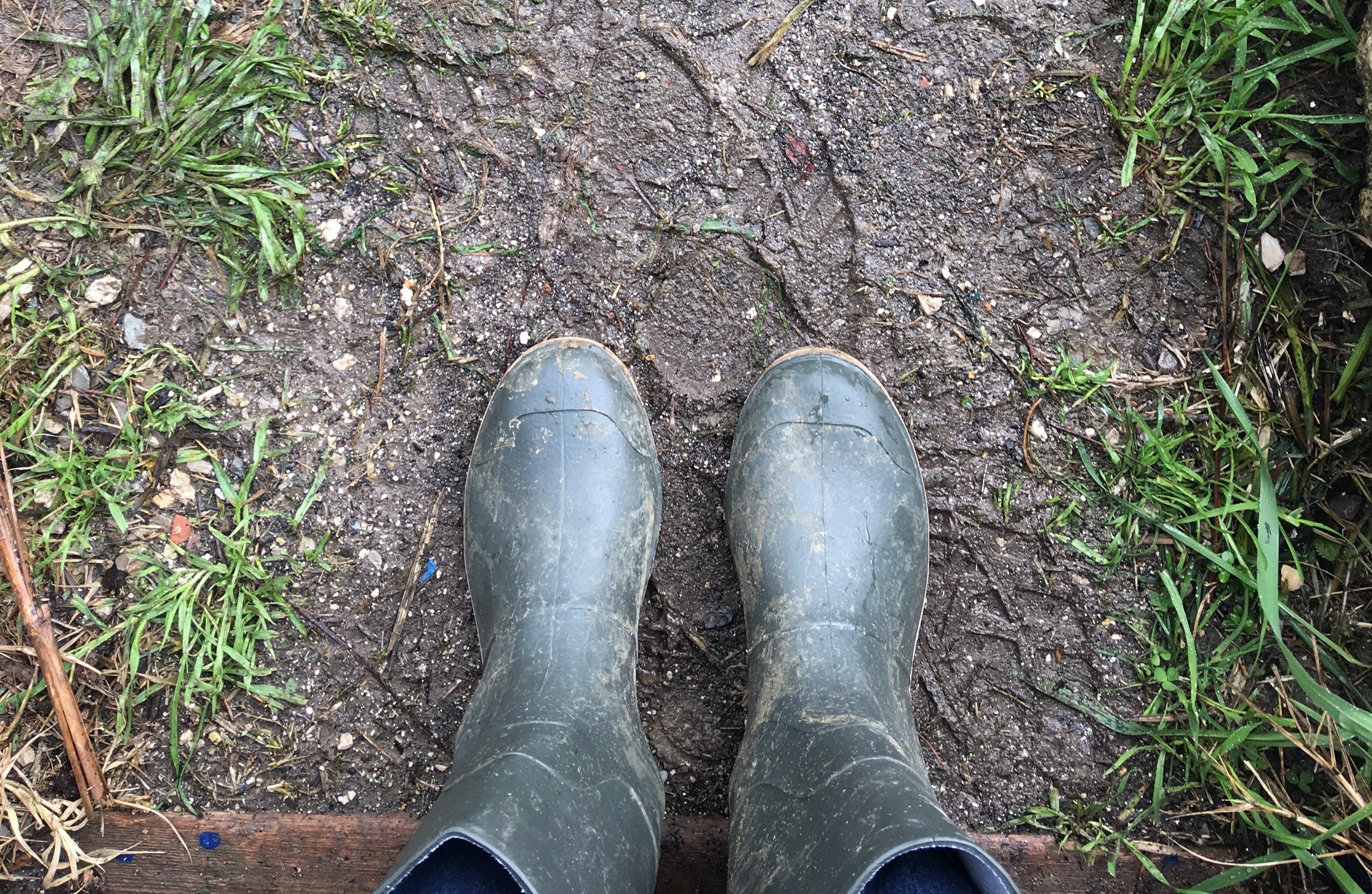
Foraging in Sicily
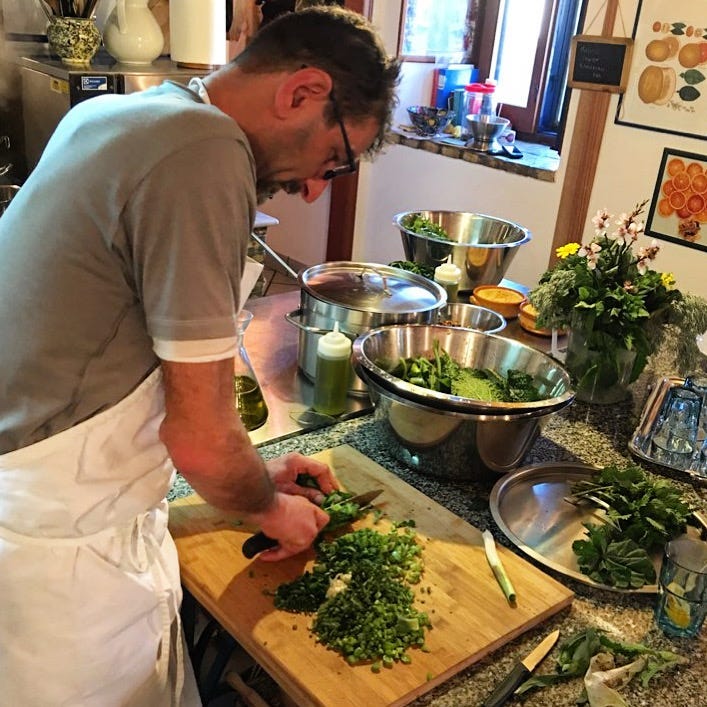
Which brought me back to foraging, and to Claudio Bincoletto, who came to spend two days with us during the program. Claudio grew up on a 60-acre farm just north of Venice, and remembers foraging with his mother from a very young age. An organic farmer, a chef, a horticulturist and sustainable landscape expert, Claudio sees foraging as a way to connect with something elemental in us all.


In a setting as different as it could be from my childhood roots, the day we spent in the fields of Sicily revealed an abundance of riches. Wild fennel, mallow, borage, wild leeks, mustard greens…all picked with restraint, leaving the bounty behind to continue to propagate and flourish. The best part, of course was spending the next day in the kitchen with Claudio, cleaning and cooking our treasures into delicious dishes: wild greens soup, salad, and frittatas.
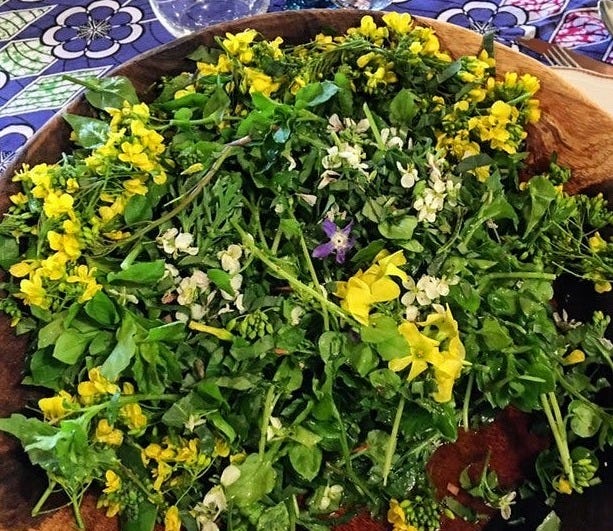
Back home, there are plenty of wild things to find. One of my favourite market vendors, Forbes Wild Foods, employs a network of foragers across the country to find, harvest and preserve the goodness growing right in front of our eyes. Like all responsible foragers, Forbes doesn’t plunder the land, which is why their products are so precious.
In the abundant months ahead, what appears on our plates goes beyond what’s at the grocery store. The farmers who care and till the land, especially our smaller producers, often delight in experimenting and coaxing fine things to eat out of the land that are rare finds.
With care and imagination, we can bring the landscape of ideas to our plates and bellies, and in doing so, really sink our feet into the soil and connect to a wellspring of sustenance that’s increasingly rare to find.
If you liked this post, let me know by clicking the ❤️ button, commenting, sharing or subscribing. It helps spread the word about Delicious Bits and brings me joy.
Spring onion loaf
adapted from Olive magazine
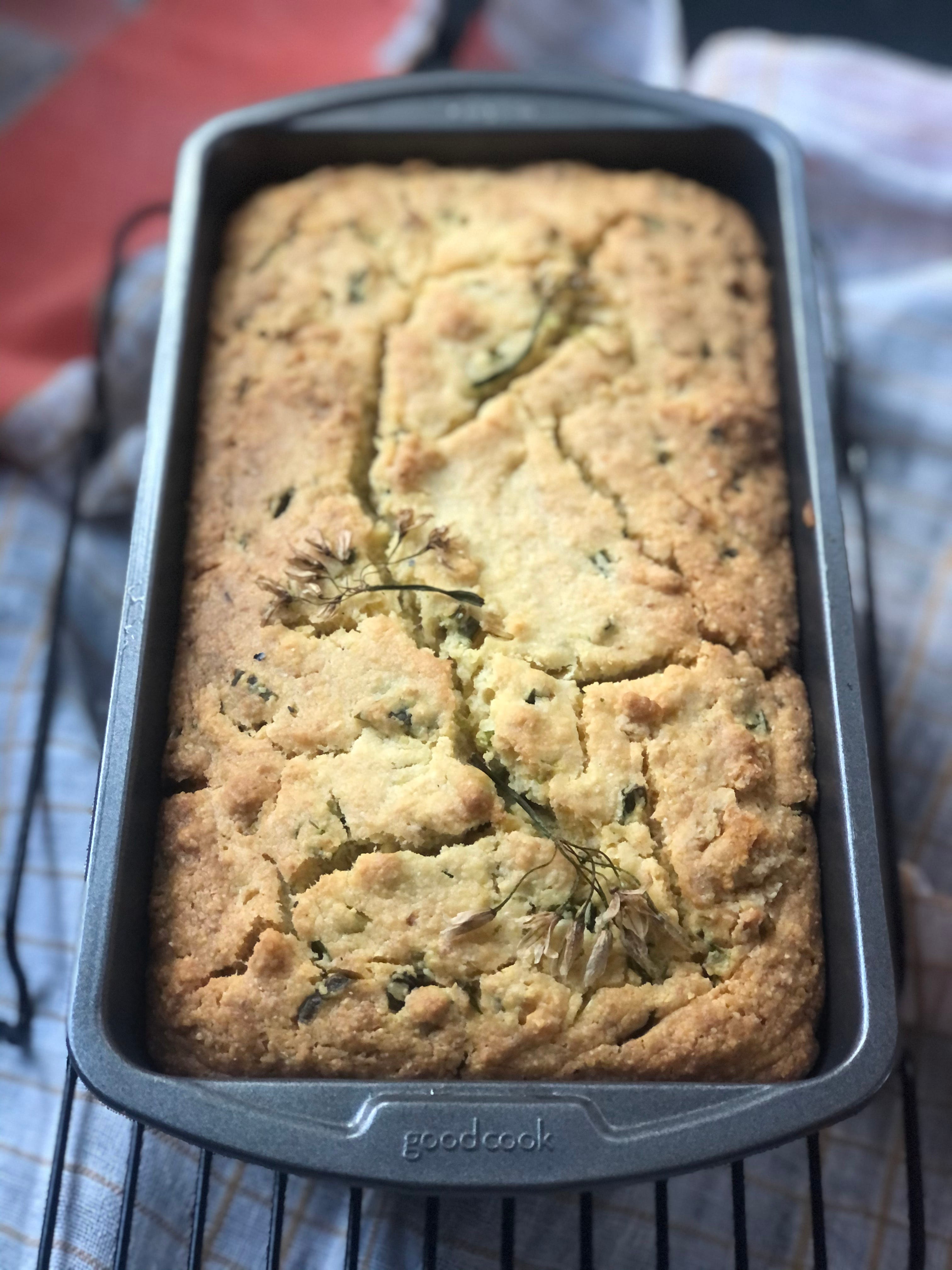
When I go to the farmers’ market, I always take a look at what’s on display at the Forbes stand. Beyond the cedar jelly, preserved fiddleheads, wild Saskatoon berry compote and other delicious goods, there’s often something freshly foraged. Like the best harbingers of spring, seeing something green at Forbes means that winter is loosening its claw hold, one stubborn finger at a time. If I’m lucky, Forbes will have wild onions or ramps, also known as wild leeks. This precious greens, harvested with care, can be used in place of standard spring onions with delicious results.
This loaf recipe uses readily available spring onions (scallions), but if you have a source for ramps, try the variation in the headnote below.
Ramps (Wild Leeks) Variation:
Instead of the spring onions, use 8–10 medium ramps (wild leeks). Use all of the leaves, but only the bulbs from about 5–6 ramps, as the bulbs are much stronger in flavour. Slice the bulbs thinly and roughly chop the leaves. Cook the bulbs for 3–4 minutes before adding the leaves for the final 30–60 seconds.
Ingredients
7 ounces (200 gr) spring onions (green onions/scallions), bottoms trimmed and finely sliced (about 12–16 spring onions, depending on size). Use both green and white parts
10 ounces (300 gr/2½ sticks) butter, plus more for the loaf pan
2 cups (480 ml) buttermilk
9 ounces (260 gr) self-rising flour
8½ ounces (240 gr) polenta
2 teaspoons baking powder
4 teaspoons granulated sugar
2 eggs
1 teaspoon kosher salt
1 teaspoon freshly ground black pepper
Heat the oven to 375°F / 190°C.
Melt 1 tablespoon of the butter in a frying pan over medium heat. Add the spring onions and cook for about 2 minutes until softened but not browned.
Add the remaining butter and the buttermilk to the pan and heat gently until the butter melts completely. The mixture may look slightly separated. Set aside to cool.
In a large bowl, mix together the flour, polenta, baking powder, sugar, salt, and black pepper.
Whisk the eggs lightly into the warm buttermilk mixture.
Pour the wet ingredients into the dry ingredients and stir until just combined. Do not overmix.
Butter a 9×5-inch loaf pan and line it with parchment paper. Pour the batter into the prepared tin and smooth the top.
Bake for 45–65 minutes, or until a skewer inserted into the center comes out clean, or the internal temperature reaches 205–210°F. If the top begins browning too quickly, cover loosely with foil for the remaining baking time.
Cool in the pan until just warm before removing and slicing.
A perfect read this morning, Elizabeth! What an experience! I’ve looked at Ballymaloe, but “Cook the Farm” was new to me. Thank you for sharing! The morels, ramps, and woodland violets are out now in my neck of the woods ❤️🌱
What a lovely post Elizabeth! I am not much of a forager, aside from blackberry picking. But perhaps I shall be brave enough to give it a go! Also, love your lumberjack shirt and dungarees combo. A fantastic foraging outfit and lovely photo of you!