
Being there
and a recipe for Richard Sax’s classic chocolate cloud cake

To everyone new here, welcome. I’m Elizabeth, the writer of The Delicious Bits Dispatch, a weekly missive for the curious, blending discovery, reflection, and musings, always wrapped up with a seasonal recipe worth lingering over.
December has a curious way of rewarding stamina over judgment.
Every year, our calendar is filled with dinners, drop-ins, concerts, parties, and frivolities that sound like a great idea at the time. The trouble with calendars and schedules is that I’m not particularly good at managing either.
What seems perfectly doable in theory for a December Saturday: quick market trip, brunch with friends, drinks with the neighbours, starting on that batch of homemade gingerbread cookies sometime between 2 and 4 pm, a holiday open house drop in—usually ends up being a race to the finish line, the physical expression of scrolling past events and people to tick the boxes.
It’s a good thing that Richard is both an excellent judge of just how long things will take and a pragmatist. It doesn’t take him but a minute to figure out that cookie making will be deferred, the drinks with friends might spill over into impromptu dinner plans, and the open-house drop-in become an impossibility.
Still, my stubborn holiday heart wants to do it all.
One always has time enough, if one will apply it well.
Johann Wolfgang von Goethe, The Autobiography of Goethe: Truth and Poetry From My Own Life
Lately, I’ve come to realize that the issue with this jammed-packed month of activity is not just the number of events; it’s the quality of the time and energy I spend that becomes problematic. What starts as enthusiasm quickly wanes with each successive outing, even if they’re not on the same day.
We all have friends that glide through life without breaking a sweat. The ones that always seem to be engaged and interested, up for anything. But paradoxically, they're also often the ones who can call it quits on an evening when it seems the party is just getting started, who seem to know when enough is just the right amount. It’s a sleight of hand that’s very different than an Irish goodbye.
Call it the law of diminishing returns: the principle that explains that the benefits gained from something will represent a proportionally smaller gain as more [time, energy, money] is invested in it. It’s like that delicious pizza you’ve been craving; the first slice satisfies your craving perfectly, but by the time you convince yourself that a third piece is a good idea, suddenly the whole enterprise seems ill-advised.
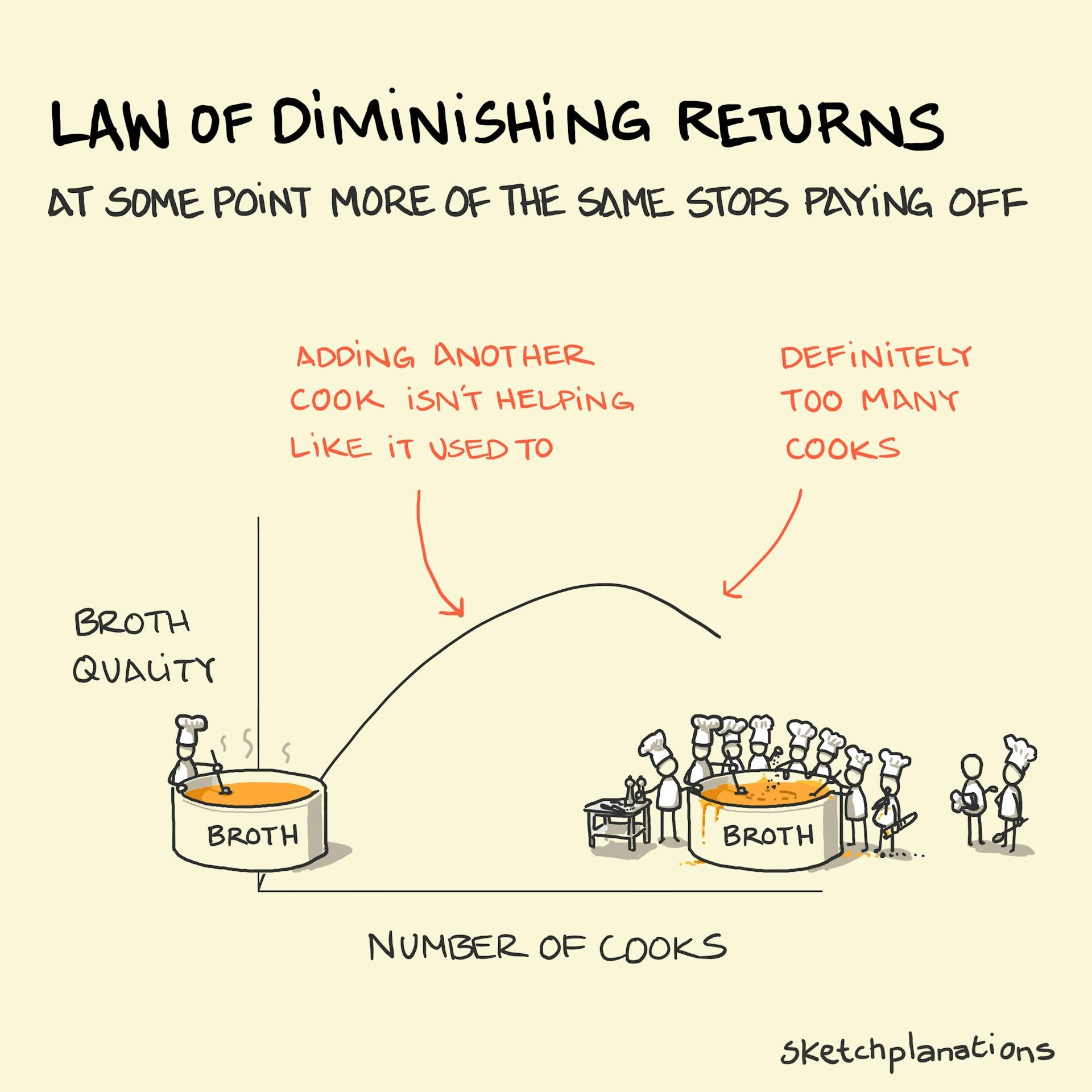
People who can stop after the first bite—or leave after the first hour—don’t just have better will power or rigid schedules; they may have a mindset that values quality presence over time served.
Psychologist Jodi Wellman calls it experience efficiency. As she explains it, “Not everyone loves to linger. Some of us love to leave. To want things to be over quickly is not necessarily to reject experience—it may be to honor it differently. Those of us with high experience efficiency aren’t (necessarily) disengaged; we’re simply attuned to scale-tipping moments of joy. We enter with intention, engage as much as we want, and leave before the law of diminishing emotional returns kicks in.”1
The bad news is time flies. The good news is you’re the pilot.
—Michael Altshuler, motivational speaker and author
Which brings us back to December.
This is the month where staying feels like a moral obligation. Leaving early can feel rude, ungrateful, or insufficiently festive. We measure participation by duration, as if presence were something that could be tallied in hours.
Wellman makes a useful distinction: choosing to leave early isn’t a lack of presence; it’s a preference for concentrated presence. That framing feels especially relevant during a month when everything is competing for our time and energy.
We might do well to heed Wellman’s advice this season and remember that leaving early doesn’t undo the pleasure of having been there, that stepping away when a moment feels complete can make room for what follows, and that a short stretch of wholehearted presence often carries more meaning than hours spent only half engaged.
And if we overstay our own prescribed energy limit? That’s okay too. That extra hour at the party just might yield a connection and conversation worth having that fills our well in ways we didn’t imagine.
The point is to be kind to ourselves and to others. By bringing our best self to every gathering, the joy of the season multiplies many times over.
If you enjoy these Dispatches—and I hope you do—tap the heart, share, or comment to help new readers find their way here
Chocolate cloud cake
Classic Home Desserts, Richard Sax
serves 8-10
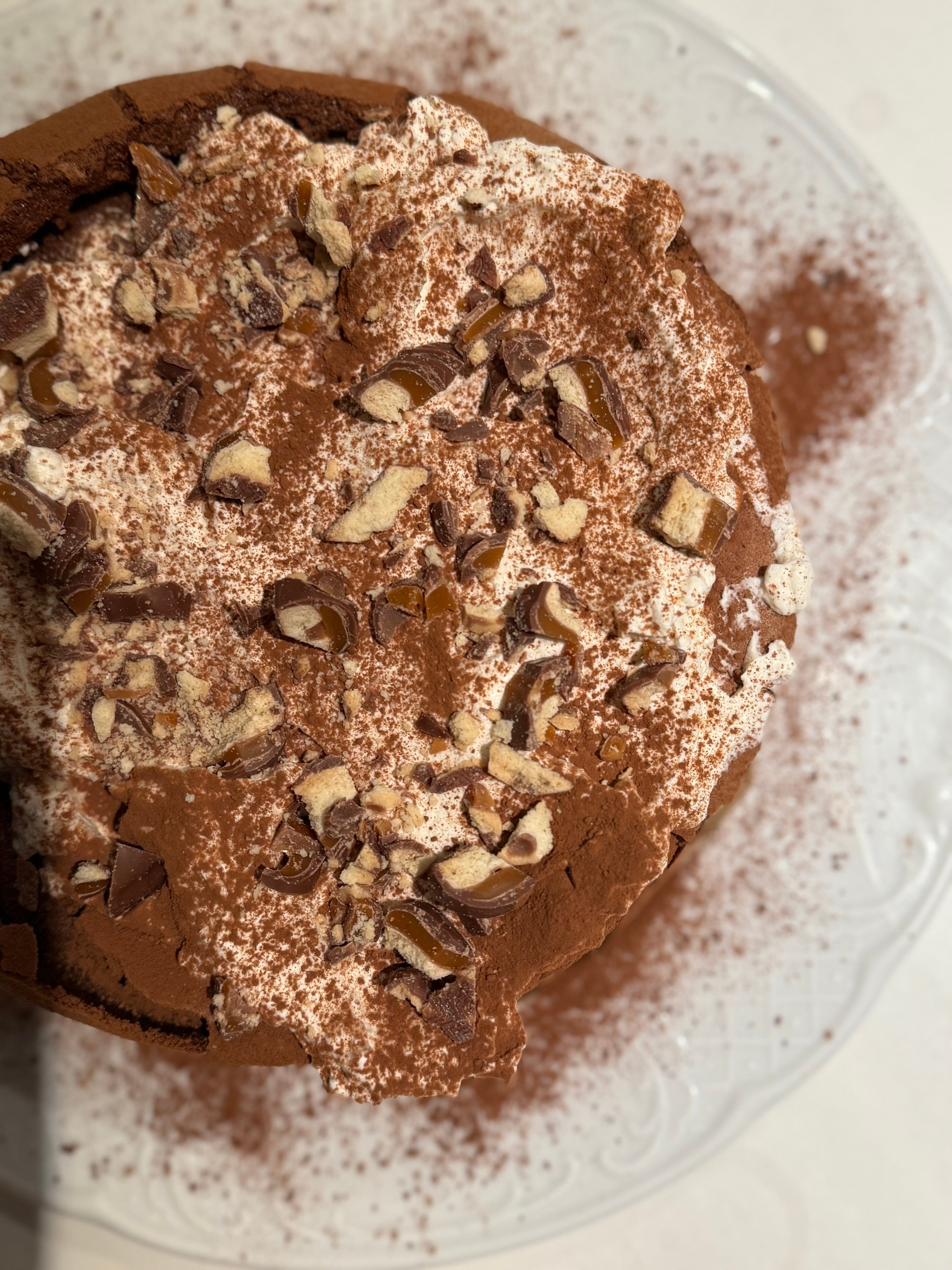
If determining when your energy quotient is spent, it’s equally important to recognize where spending lots of time gives us joy and fills our cup.
For me that is baking. Oddly, perhaps, as I prefer savoury to sweet and will gladly choose cheese over chocolate most days. Yet it’s the meditative nature of the bake, the precision and focus that it affords my whirling mind, that I value most. And when I find a desert that offers simple steps, precision, impeccable technique and delectable results, that’s where I want to spend my time.
That search inevitably leads me back to cooks and writers who value the same things.
Richard Sax was a journalist and cookbook author who served as the founding director of the Food & Wine test kitchen, helping to set rigorous standards for recipe development. He believed deeply in testing and precision, with an enduring respect for the pleasures of home baking. Classic Home Desserts, published in 1994, is his most beloved book and remains a modern classic well worth seeking out. The Chocolate Cloud Cake that follows is often cited as one of his most enduring recipes—and for good reason.
Note: If you’ve ever had a Terry’s Chocolate Orange, you know that the combination of orange and chocolate is something quite magical. Terry’s Chocolate Orange is a hollow sphere of sweet milk chocolate, perfumed with orange oil and divided into segments, a British Christmas staple meant to be cracked open rather than sliced. Adding the orange zest and Grand Marnier make this cake reminiscent of a Terry’s, in souffle-like form.

Ingredients
8 ounce (225g) bittersweet chocolate, chopped
½ cup (110g) butter, cut into small pieces and brought to room temperature
6 eggs, 2 whole, 4 separated
1 cup (200 gr) sugar
1 tablespoon pure vanilla extract
Grated zest of one orange, optional but highly recommended (see Note)
1 tablespoon Grand Marnier, optional but highly recommended (see Note)
Whipped cream topping
1½ cup vey cold whipping cream
3 tablespoons icing sugar
1 teaspoon pure vanilla extract
To finish: unsweetened cocoa powder and/or bittersweet chocolate shavings. For a decadent and fun addition, add chopped Skor, Heath or your favourite chocolate bar. Necessity being the mother of invention, I used Twix bars here when Skor wasn’t to be found.
Heat the oven to 350°F (175°C). Line the bottom of an 8-inch springform pan with parchment paper. Do not butter or spray the pan.
Melt the chocolate in a heatproof bowl set over, but not touching, gently simmering water, stirring occasionally until smooth. Alternatively, melt the chocolate in the microwave in 20–30 second intervals, stirring well between each interval. Remove from the heat and whisk in the butter until completely smooth. Set aside to cool slightly.
In a bowl, whisk the 2 whole eggs and the 4 egg yolks with ½ cup of the sugar just until blended. Whisk in the warm chocolate mixture, followed by the orange zest and Grand Marnier if using.
In another bowl, beat the 4 egg whites with hand mixer until foamy. Gradually add the remaining ½ cup sugar and beat until the whites form soft mounds that hold their shape but are not quite stiff. Stir about ¼ of the beaten egg whites into the chocolate mixture to lighten it; then gently fold in the remaining whites until no streaks remain. Scrape the batter into the prepared pan and smooth the top.
Set the pan on a baking sheet and bake for 35 to 40 minutes, until the top is puffed and cracked and the centre is no longer wobbly, usually 35 to 40 minutes. Do not overbake. Let the cake cool completely in the pan on a rack; it will sink in the center as it cools, forming a shallow crater. Don’t be alarmed: this is supposed to happen!
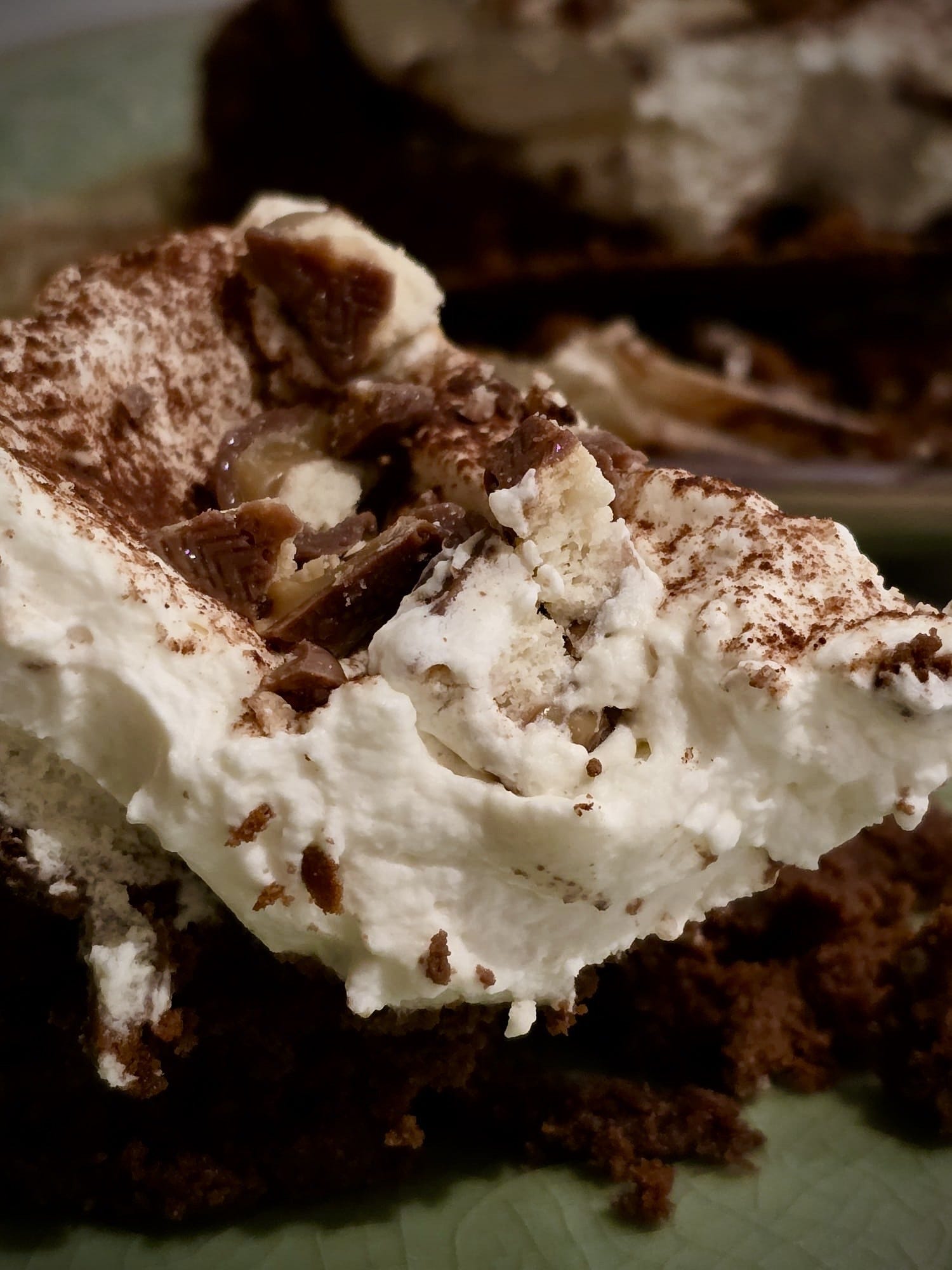
Just before serving, whip the cream with the icing sugar and vanilla until soft mounds form that hold their shape but are not quite stiff. With a spatula, carefully fill the crater of the cake with the whipped cream, pushing it gently to the edges.
Dust the top with a light dust with cocoa powder, sprinkles of chocolate shavings, bits of Skor bars or all three. Run a knife around the edge of the pan, remove the sides, and serve.
Jodi Wellman, Psychology Today (April 18, 2025)
Every holiday season for as long as I've been an adult has seen me tumble into January with pure relief that it's over. January was my favorite month because nothing happens in January. Some of this was just the time of life I was in. When you have young children and a life of your own to manage at the same time there's just a lot to attend to and no getting around it. But, I also feel like I've been on a journey for a while now of releasing myself from obligations. Most of which are self-imposed. And this December has been downright relaxing. I'm not even trying to do all the things. And, the sky hasn't fallen. What's more, we are not showing up to the things we choose to go to exhausted from the start. We show up bright and cheerful and full of energy. It's great.
Just this morning I read this, "There’s no prize for failing to spend your time as you wish." Do all the things, or don't. Leave early or stay late. Do what you will because it's what you will, not because you feel obligated to do so. This is my goal now, if you can call it a goal. Humans are funny, aren't we? We make up the rules and then have to give ourselves permission to break them. Loved this, as always, Elizabeth. You somehow always know how to write the thing I most want to read.
Relaxing and being open to possibilities makes most sense. Most of us live structured lives and now is the time to enjoy whatever comes our way..