

To everyone new here, welcome. I’m Elizabeth, the writer of The Delicious Bits Dispatch, a weekly missive for the curious, blending discovery, reflection, and musings, always wrapped up with a seasonal recipe worth lingering over.
“Are you amazing right now?”
It wasn’t exactly a question I expected to be asked. Not at 10 am in the morning at the farmers’ market while buying eggs. My answer was as quick as the question. “Not really,” I said.
“But you’re talking to me and I’m amazing, so you are amazing too,” the vendor assured me. “Life is amazing. You’ll see – 2022 is going to be different. We’re going to choose different things now. Choose love.”
In a world that felt fraught with anger, and sadness and despair and hopelessness, that exchange with John Ilecu, beekeeper and proprietor of Bees Universe, has always stayed with me. In those dark days of the pandemic, when everything seemed hopeless and divisiveness was running rampant, choosing love seemed like a very sensible thing to do.
And how right John was.
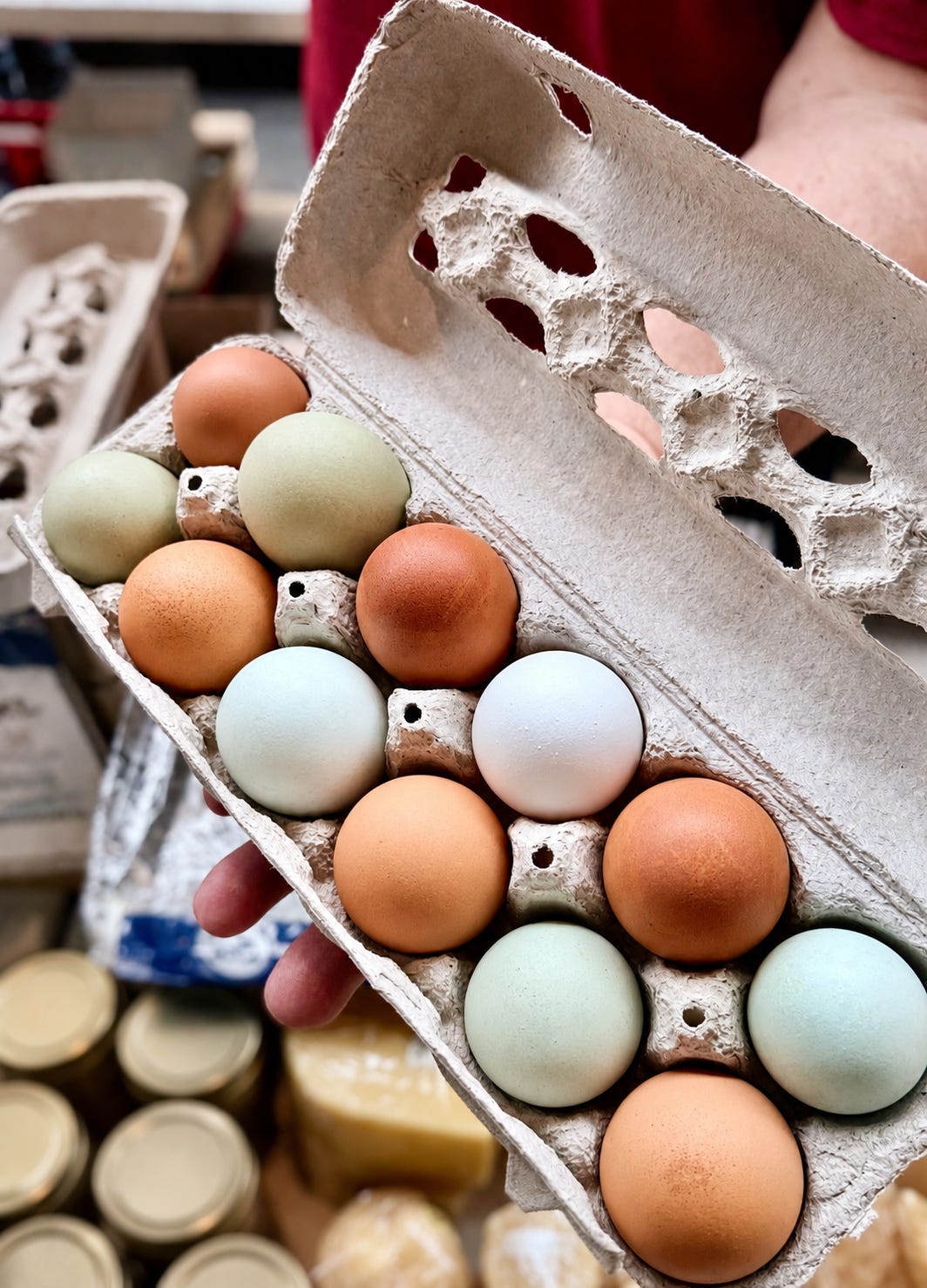
Because of course, on that long ago day, I was choosing love. My market basket was full of love: everything tended to with care, thoughtfully grown, painstakingly harvested. Corn, big and firm and sunny yellow; juicy nectarines; small Kirby cucumbers for pickling; fat eggplant; freshly baked sourdough bread; zucchini and peaches and Sungold tomatoes, as small as marbles and exquisitely sweet. Those eggs.
Perhaps there’s no better time to relearn that lesson.
One word frees us of all the weight and pain of life: that word is love.”
― Sophocles
There are as many words - and definitions - for love as there are for snow.
It may well have started with the ancient Greeks, who classified love methodically, as with everything they studied and philosophised about. From unconditional love, romantic love, love amongst friends and family and the concept of hospitality defined as a type of love, those Greeks dissected love as scientifically as a bug under a microscope.
A few centuries later writer C.S. Lewis picked up where the Greeks left off. Lewis, best known by many as the creator of the beloved Chronicles of Narnia, also wrote prolifically on a diverse range of topics: Christian theology, science fiction, literary criticism, poetry, and deeply personal memoir.
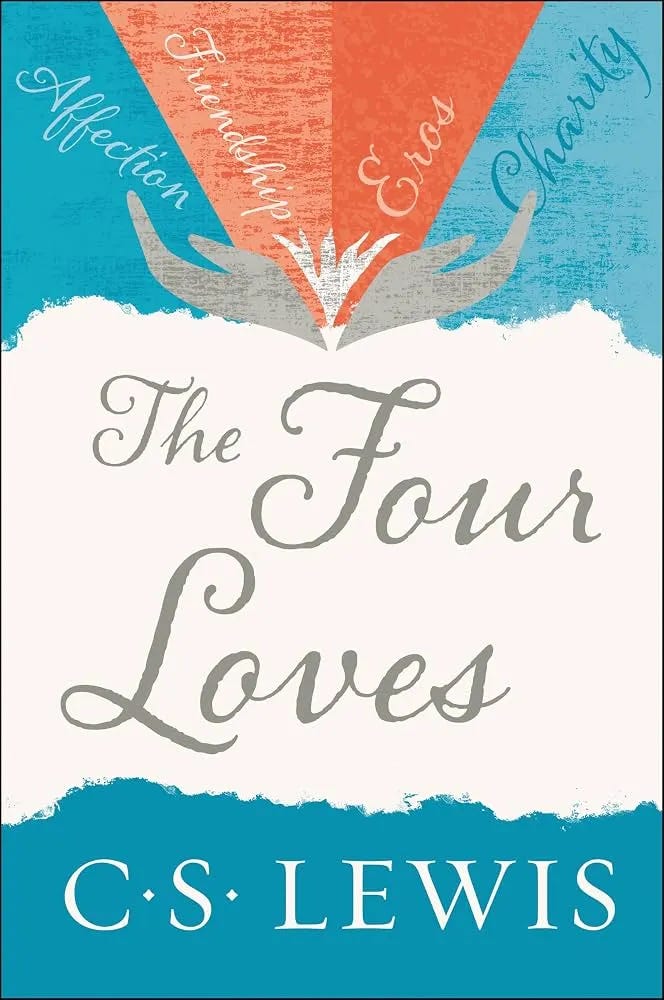
One such book is The Four Loves. Reconstructing the Ancient Greek classification of love, Lewis pushed it further, adding a moral argument about which kind of love matters most and why.
“To love at all is to be vulnerable. Love anything and your heart will be wrung and possibly broken. If you want to make sure of keeping it intact you must give it to no one, not even an animal. Wrap it carefully round with hobbies and little luxuries; avoid all entanglements. Lock it up safe in the casket or coffin of your selfishness. But in that casket, safe, dark, motionless, airless, it will change. It will not be broken; it will become unbreakable, impenetrable, irredeemable.
To love is to be vulnerable.”
As Lewis sees it, there are two paths available to us. One is to love and risk that your heart “will be wrung and possibly broken.” The other is to protect yourself by refusing to love at all: “wrap it carefully round with hobbies and little luxuries; avoid all entanglements; lock it up safe in the casket or coffin of your selfishness.”
But is that instinct for safekeeping really the best option for our tender hearts?
Lewis argues that a heart kept safe this way doesn’t actually stay whole but it morphs it into something far less desirable. Locked away in that airless casket, our hearts are not preserved, but calcified. A heart that can’t be hurt becomes a heart that can’t be reached by anyone, including whatever might have redeemed or softened it.
Crazy little thing called love
This thing (this thing) called love (called love)
It cries (like a baby), in a cradle all night
It swings (woo), it jives (woo)
Shakes all over like a jellyfish
I kinda like it
Crazy little thing called love—Crazy Little Thing Called Love, written by Freddie Mercury, performed by Queen, The Game (EMI/Elektra, 1980)
Despite the gnarly thorny path of life we’re navigating, we continue to write about, sing about, think about and talk about love, perhaps more than any other topic. But I think it’s much more interesting to observe what we do with that love, whatever form it takes. And never more so than now.
As we navigate a way of being in the world, we’re all carrying an invisible bag of rocks around, and while some bags may be smaller than others, it’s an extra weight nonetheless.
We’re so continually divided over so many things, none more so than what the future will look like, and who we’ll be, that a cup of loving kindness might very much be in order.
Yes, to love at all is to be vulnerable. And sure, love anything and your heart will be wrung and possibly broken. But I’d rather have that miracle of muscle and sinew and blood and emotion beating fast with love than drying up from neglect.
The way in, every day, may just be to show up, heart wide open. To offer kindness, wrapped in patience and empathy.
Or, as my farmer friend John would say, choose amazing and choose love.
If you enjoyed this week’s Dispatch, I’d be delighted if you subscribed, shared it with someone who might enjoy it, or joined the conversation below.
Pasta alla Norma
adapted from Six Seasons, Joshua McFadden
serves 6
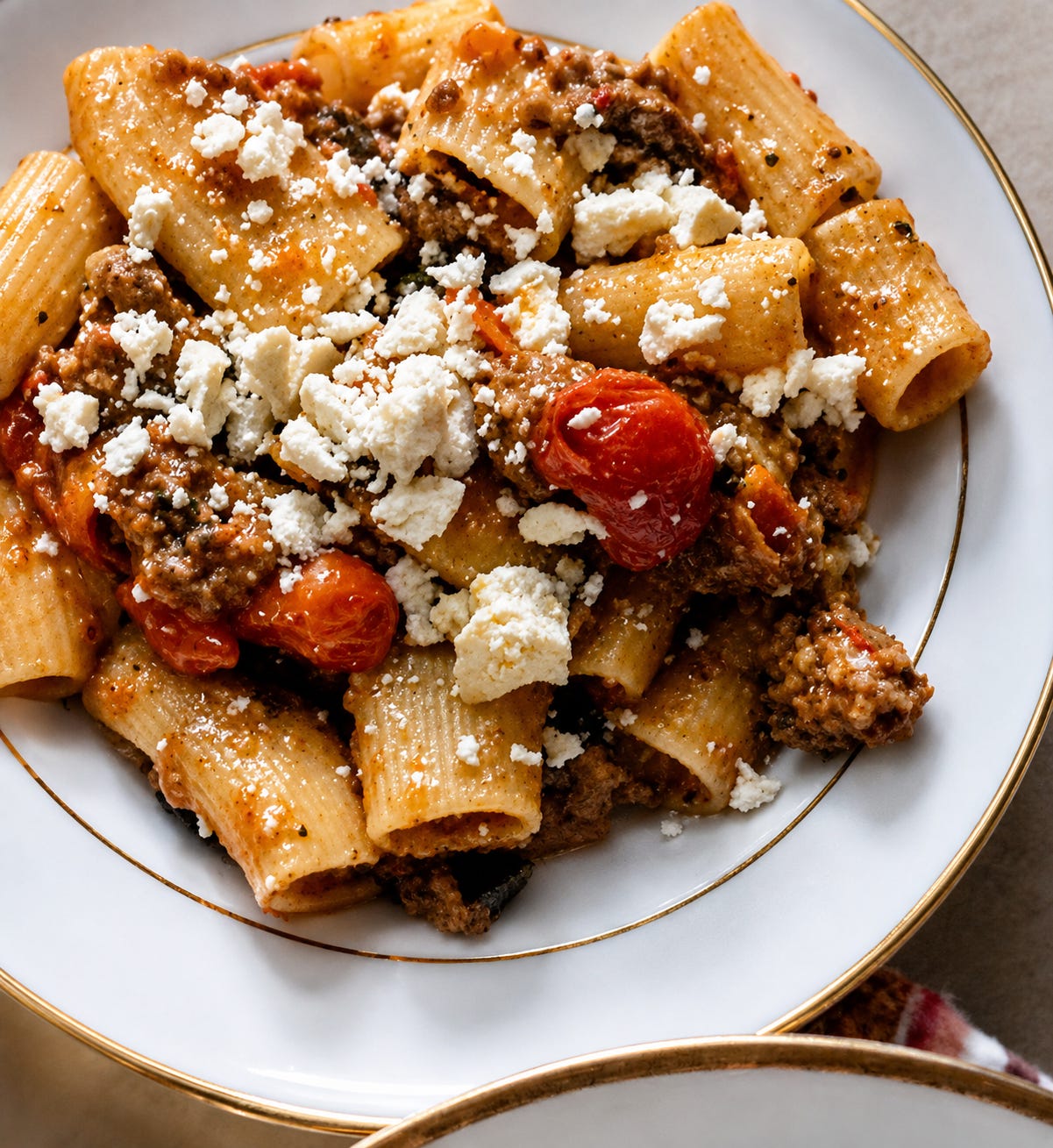
Last week I talked about the fanciful history of nightshades and it only whet my appetite for more.
It’s true that pasta is usually associated with cooler fall days and winter months, unless it’s a cold rice or pasta salad eaten in the extreme heat of summer, and preferably at the beach. But it’s also true that a bowl of pasta with a delicious sauce is really a bowl of love - and it’s always the right time for that.
While I’ve been trying to keep things cool and light, there are certain seasonal combinations that urgently sing for attention. Eggplant and tomatoes is one. These nightshades - Old World purple eggplant, juicy New World tomatoes - really shine in one of Sicily’s most famous dishes. I like to double up the recipe and freeze half the sauce for the first chilly autumn night, to remind me of the very best of height-of-season flavours.
It’s no wonder that everything tastes so good right now, sown and grown as it all is, with love.
Ingredients
3 medium purple globe eggplants (about 2¼ pounds), tops and tails trimmed, cut crosswise into ½-inch-thick rounds, then cut into strips about 2 inches long (peeled if preferred)
1 tablespoon kosher salt, for salting the eggplant
4 tablespoons olive oil
1 large clove garlic, smashed and peeled
2 Italian sausages (about 1½ lb), one mild, one spicy, casings removed and meat mixed together
3 lb. cherry tomatoes (about 4 pints), halved if large
3 tablespoons fresh oregano leaves
1½ teaspoons dried chili flakes, or to taste
1½ lb dried tubular pasta, preferably rigatoni
1½ cups grated Pecorino Romano cheese
1 cup ricotta salata, coarsely grated, more to taste
Place the eggplant strips in a colander in layers, salting each layer as you go. Set the colander over a plate and let stand for at least 1 hour to release moisture from the eggplant.
While the eggplant rests, heat 2 tablespoons olive oil in a large skillet over medium heat. Sauté the garlic for 3 minutes, or until lightly golden. Add the sausage meat, breaking it up with a wooden spoon or spatula. Cook, stirring frequently, until just cooked through and golden brown, 4–5 minutes.
Remove the sausage from the pan with a slotted spoon and set aside; discard the garlic. Keep the pan for sautéing the eggplant.
Transfer the eggplant strips to a clean tea towel and blot to remove excess moisture and salt. Gather the towel around the eggplant and gently squeeze to release any remaining liquid.
Add the remaining 2 tablespoons olive oil to the pan over medium heat. Add the eggplant and sauté, in batches if necessary, until lightly golden on all sides. Add more oil sparingly as needed; eggplant absorbs oil quickly.
Add the tomatoes, oregano, and chili flakes to the pan; season with salt and pepper. Cook, scraping up any browned bits, until the tomatoes begin to collapse and turn saucy and juicy, 6–8 minutes. Return the sausage to the pan, reduce heat to medium-low, and cook, stirring occasionally, for another 8 minutes or so, until the tomatoes have broken down further and the sauce is bubbly.
Meanwhile, bring a large pot of well-salted water to a boil and cook the pasta until al dente, reserving ½ cup of pasta water before draining. Drain the pasta and add it to the sauce, stirring to combine. Add the Pecorino and stir well. Taste and adjust seasoning; if the sauce seems dry, add reserved pasta water a few tablespoons at a time, stirring to incorporate.
Divide the pasta among individual plates, sprinkle with grated ricotta salata, and serve immediately.
