
From page to plate
and a trio of Italian cookbooks to inspire both your gift giving and your table

To everyone new here, welcome. I’m Elizabeth, the writer of The Delicious Bits Dispatch, a weekly missive for the curious, blending discovery, reflection, and musings, always wrapped up with a seasonal recipe worth lingering over.
It’s that time of year.
I’m being inundated with my favourite kind of “best of” lists: the latest and greatest cookbooks to hit the shelves. While many bemoan the future fate of books and publishing, one need only look at the proliferation of cookbooks being published—really good cookbooks—to feel some measure of hope in the cookbook’s future.
I’m not here to enumerate those you may already know about: Good Things, Samin Nosrat; Six Seasons of Pasta, Joshua McFadden; Easy Wins, Anna Jones; Dinner, Meera Sodha; Linger, Hetty Lui McKinnon. If you haven’t read as many of these lists as I have, here’s a primer to get you started with these and many more.
But my shelves are bulging, and squeezing space for even another book or two requires creative engineering. So I’m going back to a tradition of sorts that lived on my Instagram page during the pandemic. I called it the “Cookbook Redux Advent Calendar,” wherein I counted down my favourite cookbooks of years past from December 1st through 25th. It was an especially easy thing to do during those long lonely days: if I wasn’t making dinner for a party of eight, I could imagine what book I might reach for, and share why.
I’m not bringing back the countdown, but I do want to share a few hidden treasures you may not yet have discovered.
“No one who cooks, cooks alone. Even at her most solitary, a cook in the kitchen is surrounded by generations of cooks past, the advice and menus of cooks present, the wisdom of cookbook writers.”
―Home Cooking, Laurie Colwin
The imaginative and creative ways that cookbook authors continually reimagine food and create inspiring recipes is something I will never tire of. Yet still, there are my stalwart friends on the shelf…the ones that taught me how to make a béchamel properly, or knead dough until I could recognize the elasticity under my palms, or trust my senses more than a recipe.
So, if you are looking for inspiration that has stood the test of time, might I offer these three cookbooks for your consideration? It’s no coincidence that they are all from Italian cookbook authors; after all, this was the cuisine that was most imprinted on my heart, even if my early attempts included standards of the American kitchen.
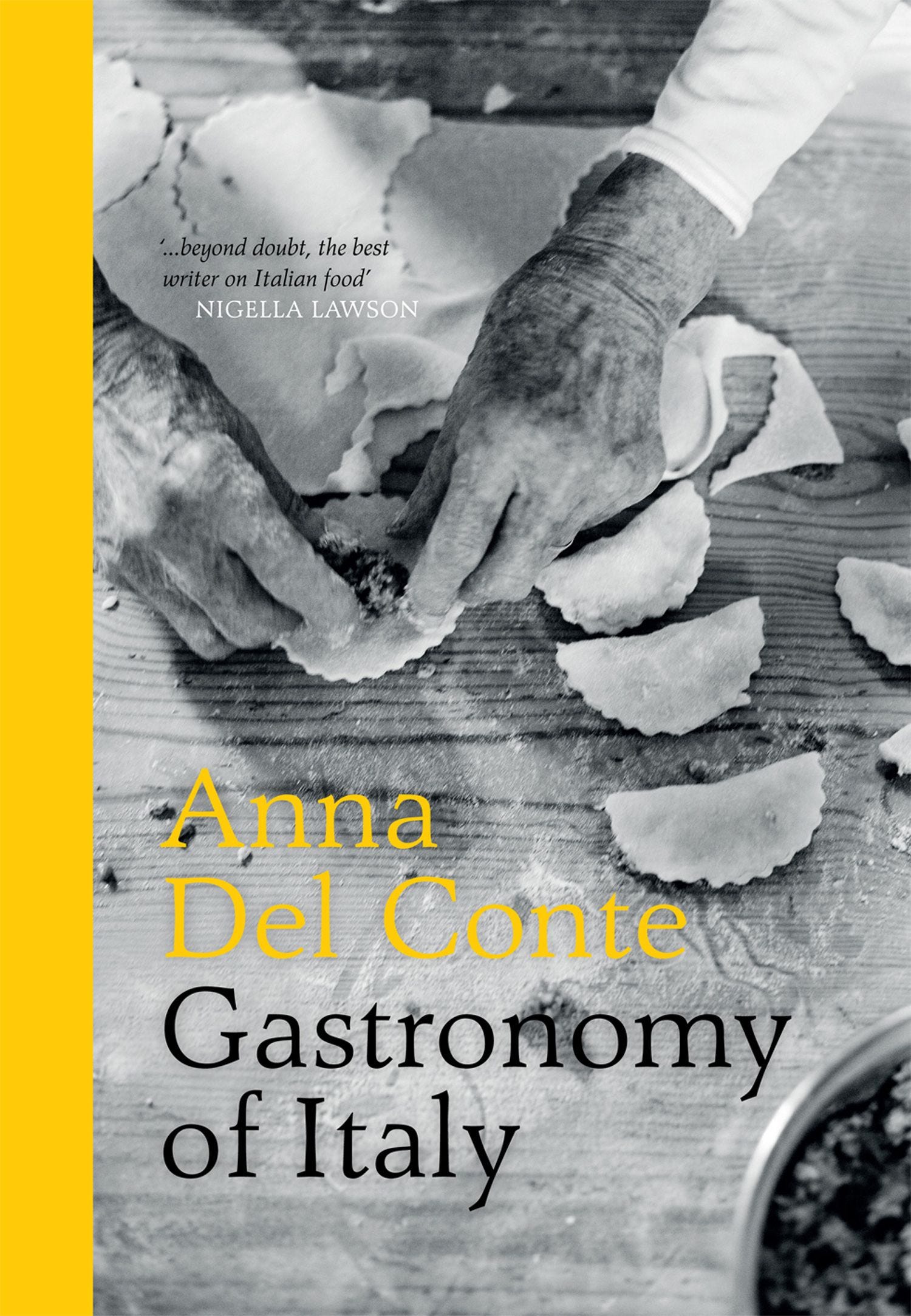
Gastronomy of Italy, Anna del Conte
In food, as in life, it is sometimes a foreign culture that defines us. Diana Kennedy spending a lifetime understanding Mexican cuisine; Julia Child teaching Americans to flambé just like the French; Elizabeth David bringing the Mediterranean to Britain.
But it’s those that are displaced and far from home that seem to most deeply distill their native food down to its purest essence. In doing so, they bring to their chosen country both new ways and ingredients and just sometimes a bit of a food revolution.
Such is the case with a now 100 year old Milanese cookery writer who moved to London as a young woman in 1949. Anna del Conte may not be a household name here, but her 1976 Portrait of Pasta cookbook has been described as “the instrumental force in leading the English beyond the land of spag bol, macaroni cheese and tinned ravioli.”1 More importantly she catalogued a country with the Gastronomy of Italy. A straightforward love letter and A-Z of all ingredients Italian, it is part history book, part culinary guide, part geography lesson, with just the right amount of recipes thrown in to inspire.
If this sounds too academic for dinner, Anna also knows that all great Italian food has simplicity at its core. So when I had ground pork in the fridge and not much else, her Riso Arrosto alla Genovese made good use of my cupboard ingredients. With butter, onion, garlic, dried porcini mushrooms, parmigiana, meat stock, parsley, Arborio rice, ground pork and a splash of wine, dinner was ready in 45 minutes. del Conte says that this is the only Italian rice dish that is baked in this way. It is all at once creamy, flavourful, and a perfect one dish dinner. Think of it as a variation on risotto that doesn’t require constant stirring.
Istria, Paola Bacchia
It is often in places of the greatest strife and conflict that the most interesting foods arise. That might be said of Istria, a place almost as mythical as Narnia. The largest peninsula within the Adriatic Sea, Istria is shared by three countries: Croatia, Slovenia, and Italy.
While Italy holds the tiniest piece of Istria today, there are some claims that Istrian Italians were more than 50% of the total population for centuries. So it’s no wonder that there is a particularly unique food tradition from this part of the world that is a melange of cultures. This region also holds a special place in my heart, as it is where my mother was born, and its stories and flavours are precious threads that tie me back to her.
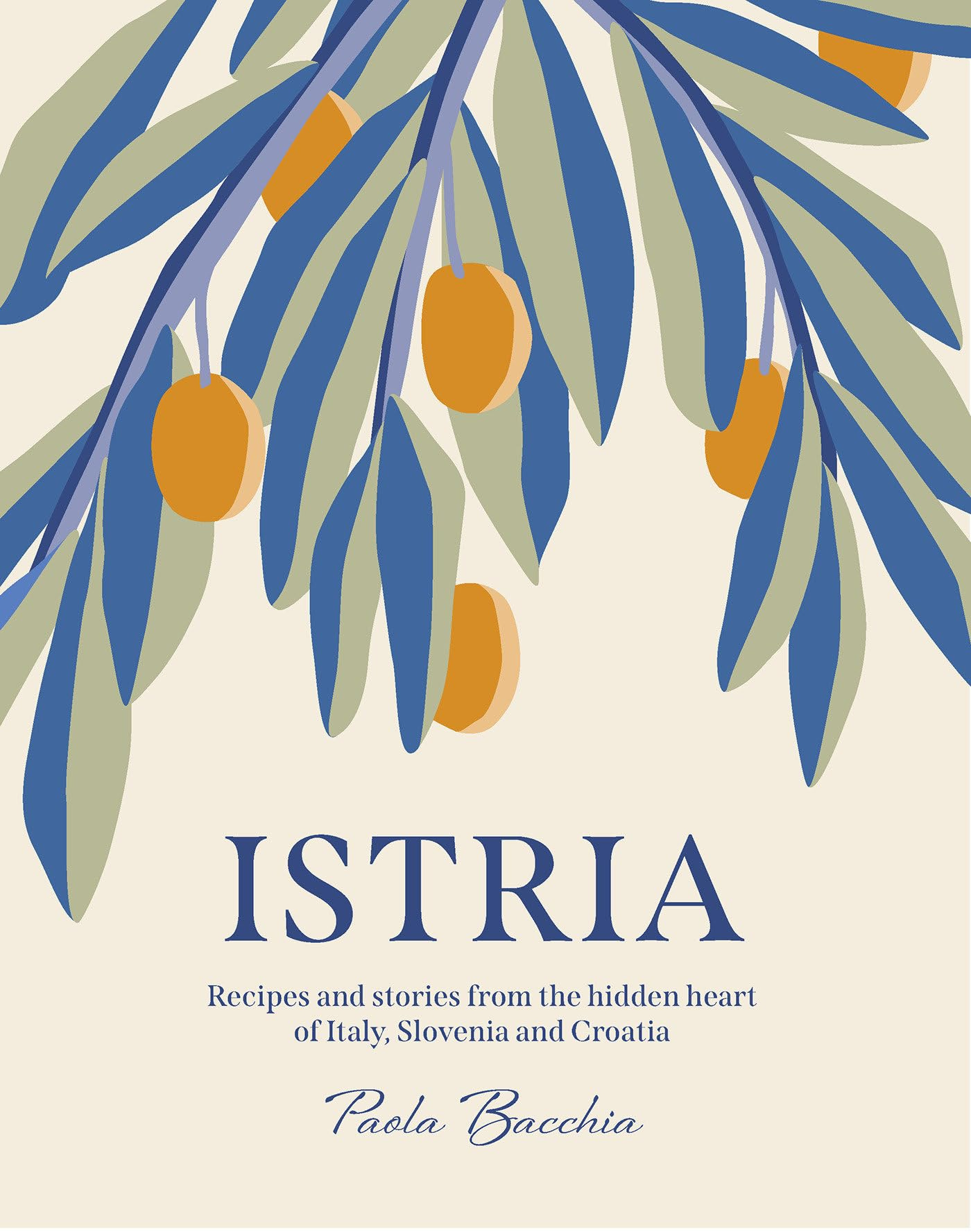
Istria by Paola Bacchia, captures the recipes and stories from this hidden heart of the Adriatic. After WWII, and the dissolution of Istria, Bacchia’s parents took advantage of free passage to Australia, but they never left their Istrian heart behind. This cookbook is a love letter to the dishes of her childhood. Venetian, Balkan, Hungarian influences abound. Ricotta Spread with Paprika or Polenta Wedges with Anchovy Oil might be followed by Strudel with Greens and Potatoes, Chicken with Roasted Peppers or Pork and Pancetta Skewers. For dessert, what about Apricot Strudel or Spiced Chocolate and Sour Cherry Cake?
A personal family history, filled with nostalgic photos, a history lesson and a food education, Istria is the perfect book to add to both your kitchen and bedside table.
Bocca, Jocob Kenedy
I leave you with one more cookbook to contemplate and savour.
Bocca, published in 2011 by Jacob Kenedy, is a love letter to Italy. As Kenedy says so eloquently, “Italian culture is hard to pin down, as each region has its own, which is where the variety originates, and the joy lies.” Though Kenedy himself is British, with a thread of Louisiana Creole heritage, his cooking is all Italian heart, a reminder that Italian cuisine captures the imagination of anyone who understands its simple, seasonal soul.
Kenedy opened Bocca di Lupo in London when he was 28, after spending time immersing himself in Italy. The name of the restaurant has a double meaning, referring to both in bocca al lupo—the Italian equivalent of “break a leg”—and to being “hungry like a wolf.”
We had the pleasure of eating at Bocca last year, and amongst the many fine Italian meals we’ve enjoyed over the years, this one shone. The dishes were deeply rooted in regional tradition, honest and generous, and the room itself hummed with the kind of conviviality Italian cooking inspires, families with small children mingling happily with date-night couples and we merry travellers (plus Ottolenghi happily dining at the bar).
The cookbook captures the essence of the restaurant and of the country that inspired it. Deeply authentic and helping the home cook understand the regional roots of each dish, Bocca is as pleasurable to read as it is to cook from.
If you enjoy these missives—and I hope you do—tap the heart, share, or comment to help new readers find their way here
Stuffed cabbage rolls
adapted from Istria, Paola Bacchia
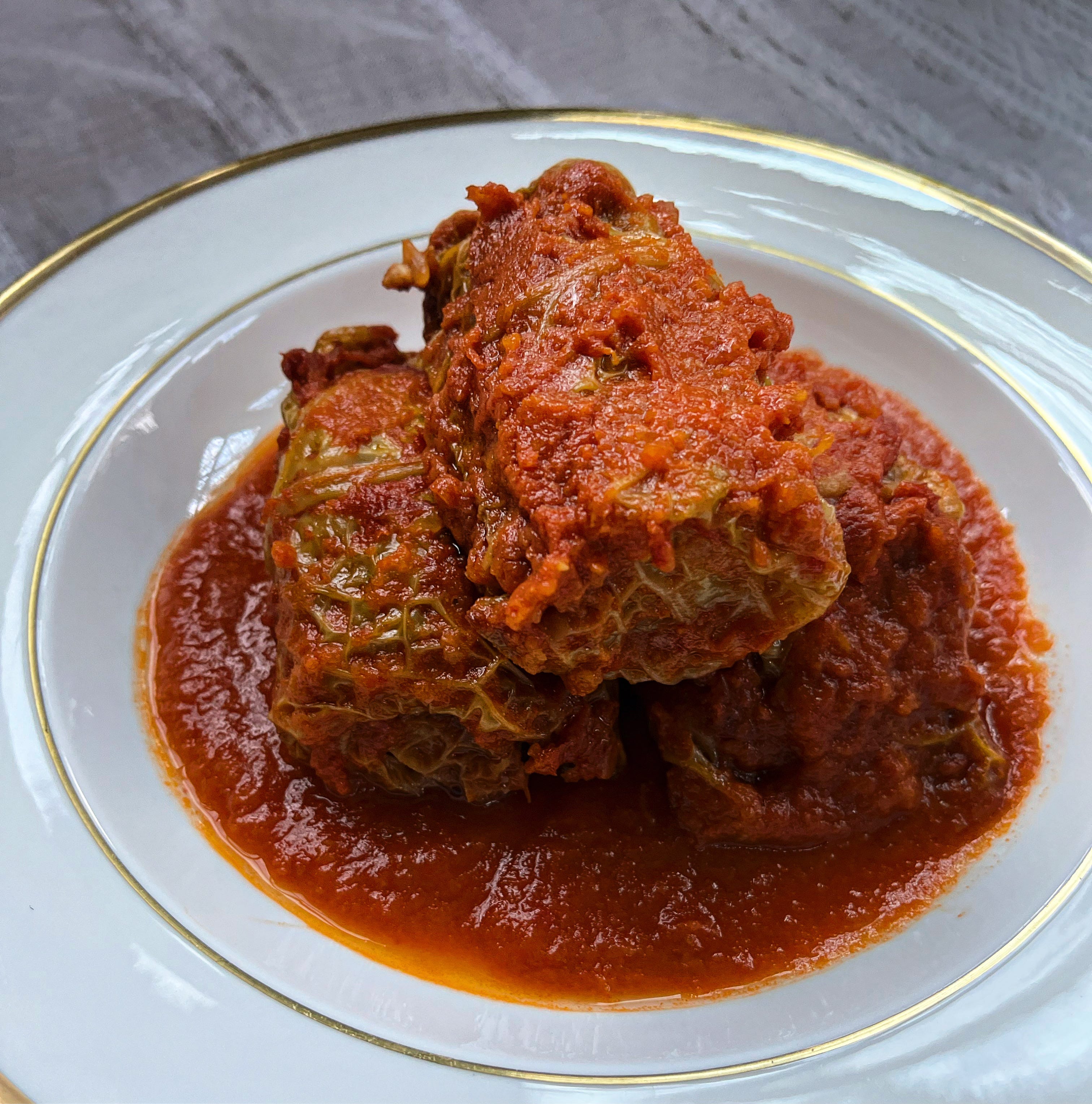
Stuffed cabbage rolls find a home in many parts of the world, especially eastern Europe, and often have pride of place on the table. This version has its roots in Istria, where my mother was from. Be sure to make them ahead as the flavours develop and deepen after two or three days. They can be easily frozen.
Ingredients
1 medium head Savoy cabbage
Sea salt
200 grams ground beef
200 grams ground pork
80 grams short grain rice
1 medium onion, finely chopped
1 garlic clove, finely chopped
1 tablespoon finely chopped parsley
1 teaspoon sweet paprika
1 teaspoon caraway seeds, crushed
3 tablespoons olive oil
1 cup sauerkraut (optional)
2-3 cups of your favourite tomato sauce
Heat oven to 350F.
Remove any damaged leaves from the outside of the cabbage. With a small paring knife carefully remove the core. Bring a large stockpot of salted water to boil and carefully lower the cabbage into the boiling water. Bring to a boil again, reduce the heat, cover and cook for about 15 minutes. Reserve cooking water.
Remove the cabbage onto a cutting board and let cool slightly. Remove the leaves one at a time, trimming the central spine for easier rolling. If the leaves at the centre of the cabbage are not cooked, bring the reserved water to a boil and cook the remaining leaves a few minutes more. Set prepared leaves aside.
In a large bowl, combine the beef, pork, rice, onion, garlic, parsley, paprika, caraway seeds and one scant teaspoon of salt. Mix with your hands until the mixture is homogenous.
Place 2-3 tablespoons of filling in your hands and form a small baton (log shape). Place filling at one end of a cabbage leaf then roll it up, folding the sides in over the filling. The roll should be about 1 1/2 inches thick. Do not roll it up tightly as the rice will expand as it cooks. Repeat with remaining leaves and filling.
In a large Dutch oven or casserole dish, spread one cup of tomato sauce. Place the cabbage rolls in the pan side-by-side. If using sauerkraut, place as much shredded sauerkraut as will fit between the rolls. Pour remaining tomato sauce to cover rolls. Cover tightly with aluminum foil (or a lid if using a Dutch oven). Bake for 2 hours. Check a roll to see if the rice is cooked. If it is not, continue baking, checking after 30 minutes to check doneness.
Serve now or better yet - let cool, refrigerate and reheat the next day or two to let the flavours develop.
Thanks for introducing me to these lovely cookbooks—they all sound like treasures. And I can’t wait to try those cabbage rolls!
Delighted these are all new to me. Feels like Christmas morning! Such a beautiful share. Thank you! ☺️