
When the saints come marching in
and a recipe for pasta con le sarde

To everyone new here, welcome. I’m Elizabeth, the writer of The Delicious Bits Dispatch, a weekly missive for the curious, blending discovery, reflection, and musings, always wrapped up with a seasonal recipe worth lingering over.
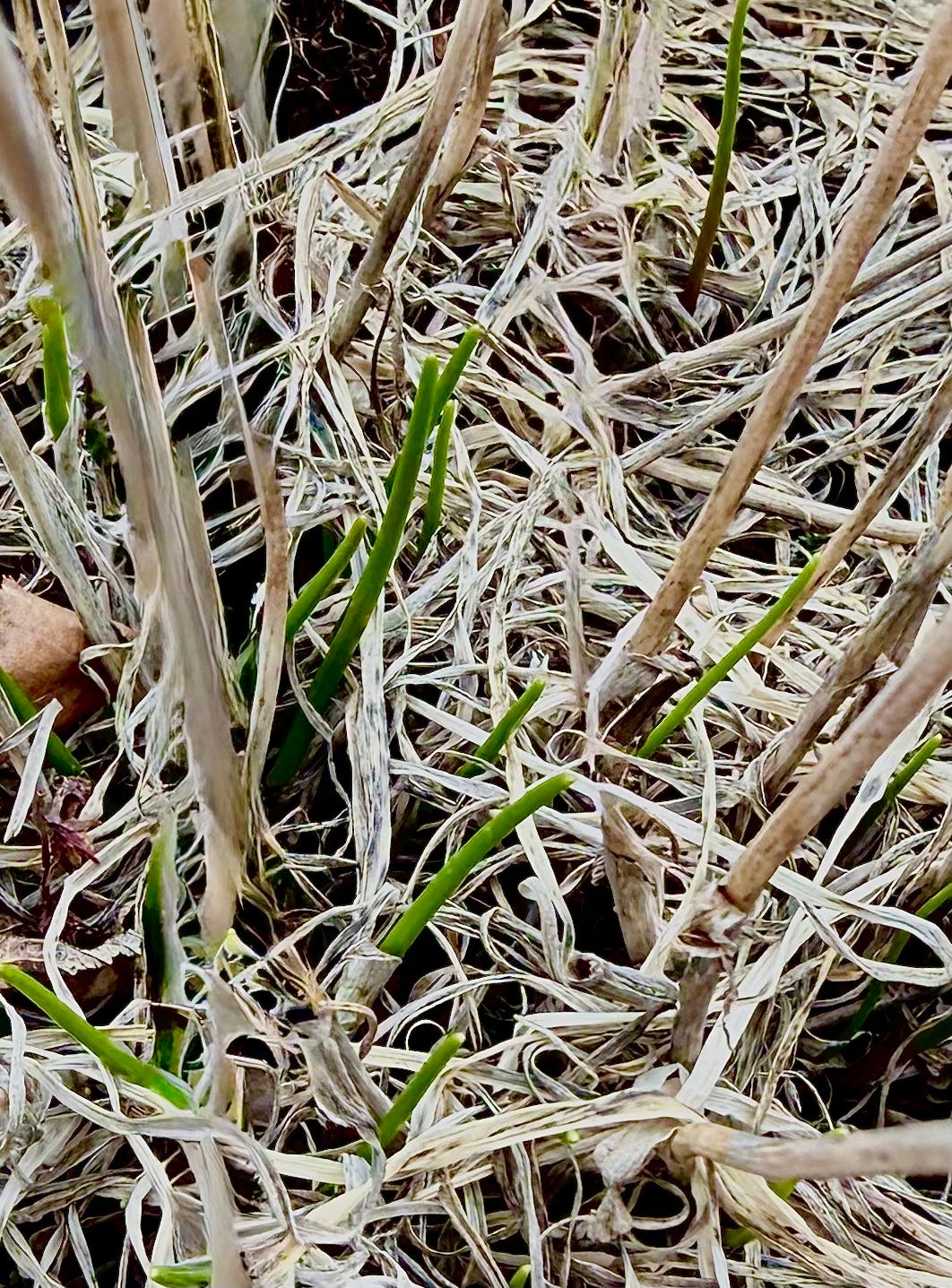
Today I saw the first green chive shoots in my container garden.
Tiny bright and brave, they were pushing up through the hardened earth and the freshly fallen snow of a winter that seems twice as long as usual. I have yet to see a robin, but I know it’s only a matter of short weeks until we can fling open the windows, and only a few short days until spring is officially here.
All of this conspires to make us feel lighter—the anticipation of sweaters being put away, the snow tires removed, missing gloves forgotten—but even before the early rhubarb or sweet spring asparagus come out from under cover and beckon us to eat beautiful green things, this coming week is one that gives us an opportunity for a bit of early spring indulgence.
The sacred origins of everyday foods
Many everyday foods also have a place in religious traditions.
Bread, apples, honey, ghee, dates: all are foods that have spiritual significance beyond their quotidien use. But as cultures became more secular, what we ate at the everyday table lost any special significance, and some of those original associations may have been lost in translation.
Still, in many parts of the world, particularly those with Christian roots, celebrations rooted in feast days remain a vibrant part of local culture and tradition, including the making of special recipes that have deeper meaning.
When the saints come marching in
This week in particular has two distinctly different celebrations, each born from a saint. The first is St. Patrick’s Day, celebrated on March 17. Why you’ve undoubtedly heard, and perhaps participated in a St. Paddy’s Day toast or two, what you may not know is that this massively popular celebration began in the United States, becoming an export back to Ireland in the 20th century.
Irish soldiers in the British army marched in a St. Patrick’s Day parade in New York City in 1762, the beginning of an instant parade tradition that spread afar to Australia, New Zealand, the United Kingdom and Canada. And yes, Ireland. Although St. Patrick’s Day had long been observed as a religious feast in Ireland, the first official parade in Dublin did not take place until 1931.
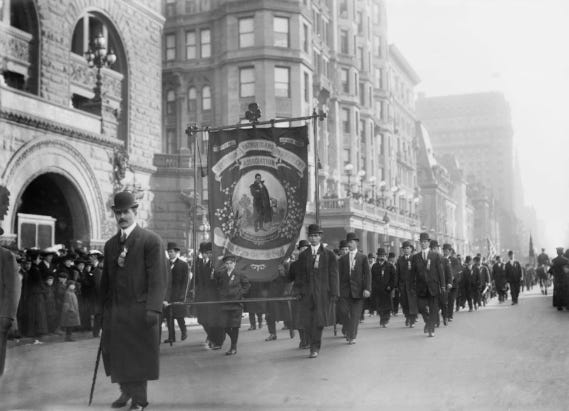
Unlike other religious observances that were rooted in ritual first, the parades, wearing ‘o the green, silly hats and shamrocks of St. Patrick’s Day festivities lack deep food traditions. While a reveller might start March 17 with an Irish fry up, and there may be plenty of soda bread, corned beef and cabbage, Irish stew and Guinness on offer, food is a supporting player, not integral to the whole.
So to really understand the convergence of religious observance and its expression through food, we have to go to Italy. Naturalmente.
Feast days and food ways
Throughout Italy, many cities, towns and small villages celebrate feast days honouring their own santo patronos (patron saints). Both famous and obscure, these saints give rise to traditions that go back hundreds of years, creating a thread that weaves ancient beliefs and rites with modern day sensibilities (check this website to find out more).
If you live in an urban centre with an Italian community, you might have been lucky enough to stumble across one of these festivals. What you would have seen are processions, the saint’s icon floating high and reverently above the crowd. There might have been the wearing of traditional costumes, special markets, and most certainly food.

But to truly appreciate the all-encompassing nature of a feast day celebration, there’s no better place than in Italy itself.
Father’s Day, Italian style
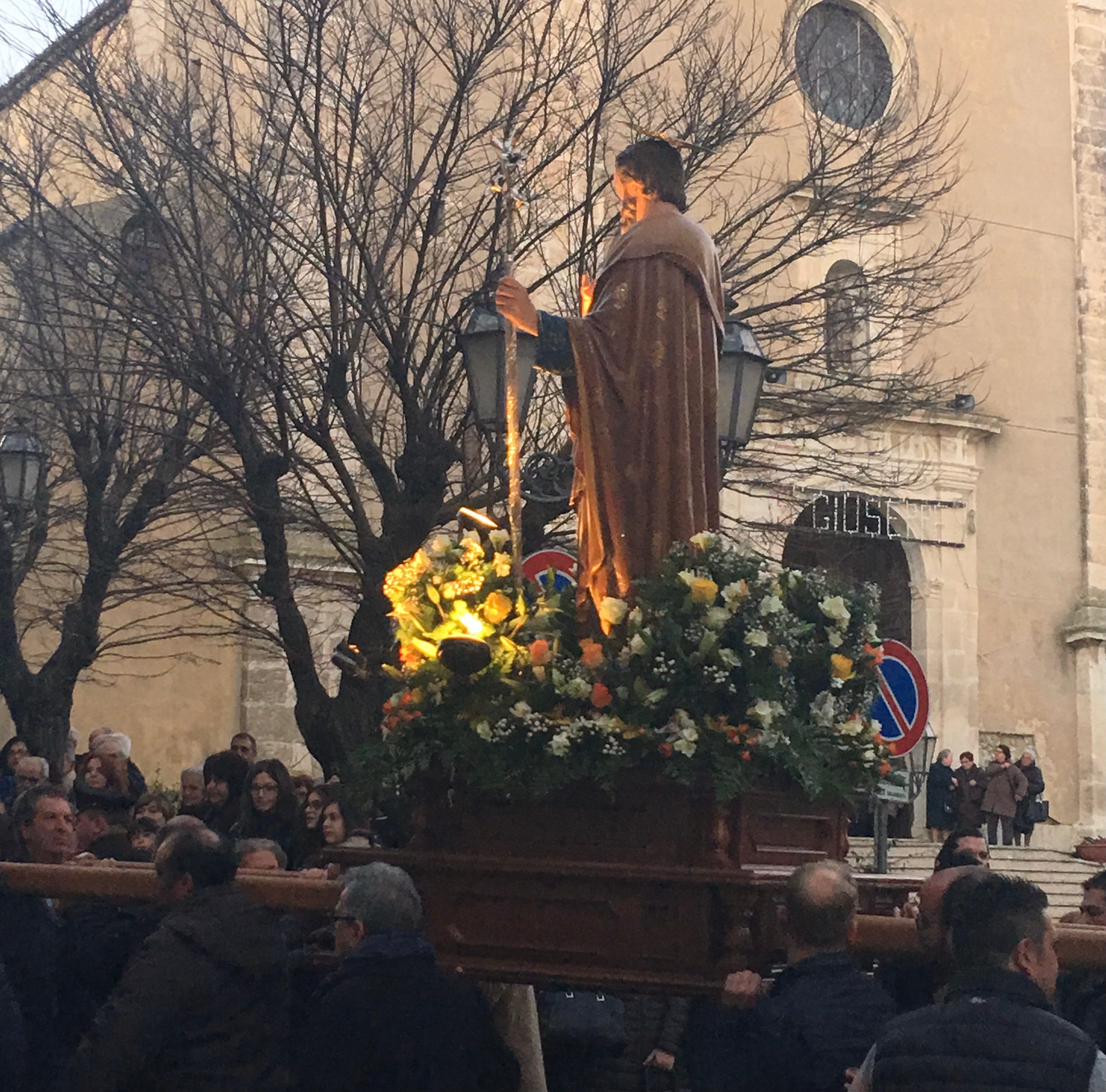
In Italy, many people celebrate not just their birthday, but their onomastico—the feast day of the saint they’re named after. Rooted in Catholic tradition, each day of the year is dedicated to one or more saints, and if your name matches one, that day becomes your personal celebration. Rather than marking age, the onomastico honours identity, faith, and family heritage, since many Italians are traditionally named after saints or relatives. The day is often celebrated much like a birthday, with well-wishes, small gifts, sweets, or special foods—and in some regions, it’s considered just as important, or more important, than a birthday itself.
Take San Giuseppe. While my father was a Giuseppe, and we didn’t celebrate his name day, in Italy it’s a big deal.
The Festa diti San Giuseppe is celebrated across Italy on March 19, as that is officially Father’s Day (because Saint Joseph is kind of the ultimate dad). Of course Italians have to make every celebration their own, so you’ll find some specialties that are specific to a particular region: frittelle di riso from Tuscany, bigné di San Giuseppe in Rome, zeppole in Naples, pasta con le molliche in Basilicata and Puglia. You can find countless authentic recipes for these delicacies, each with their own special imprinteur.
What you might not find is the distinctly Sicilian iterations of the festa di papa. There, the food traditions are deeper, broader and somehow more mystical.
To the table
It is uniquely in Sicily where you will find the Tavola di San Giuseppe—St. Joseph’s Table. The practice of creating large food altars dates to the Middle Ages. According to legend, a severe drought and famine in Sicily miraculously ended when the farmers prayed to St. Joseph, and the rains arrived.
Thus was born the tradition of erecting altars of abundance as an expression of gratitude, and still today you will find these very elaborate tables, groaning with food, in private homes, churches and community centres across Sicily (to give you a sense of sheer volume, there can be up to 100 types of food on these altars).
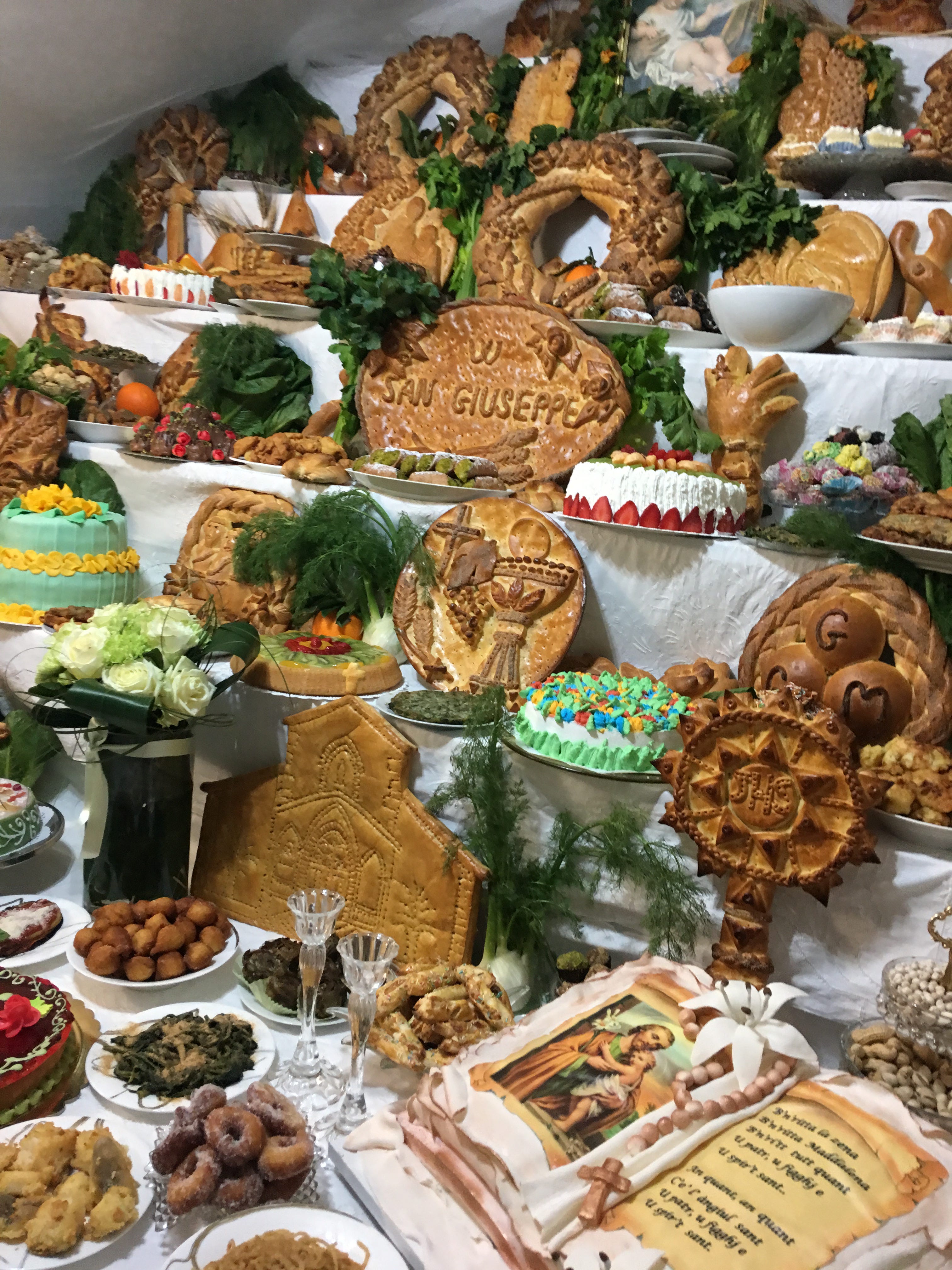
Cooking for this festa is a serious business in Sicily. The foods represent both the past and the future. The past are the fava beans and lentils, the foods of winter. The future is represented by the greens of spring: wild mustard, wild fennel, chard. Spices are used to represent richness and prosperity. Savoury is balanced by sweet.
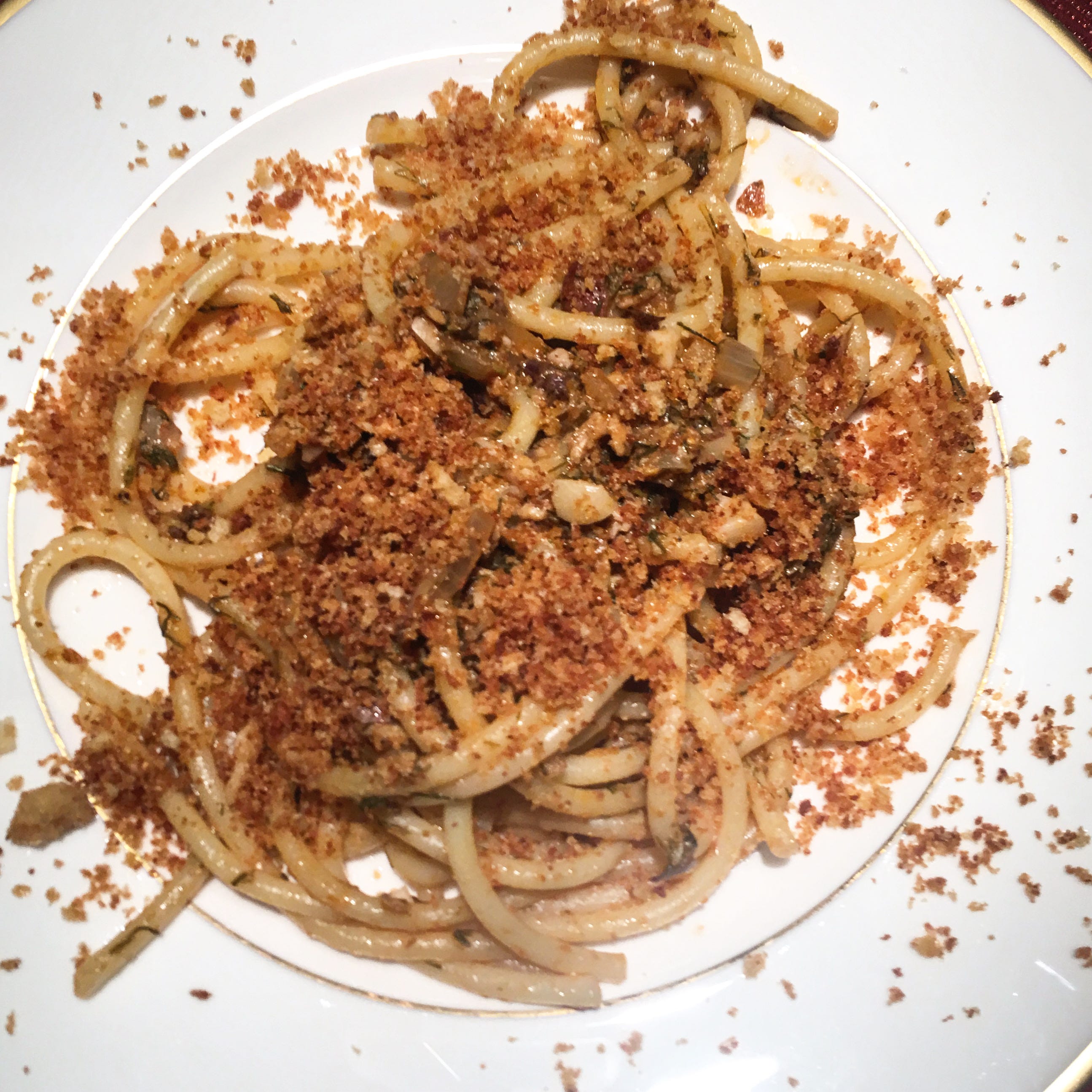
Two of my favourite Sicilian dishes are also consumed during the San Giuseppe feast. The first is a classic: pasta con le sarde: bucatini pasta served with a sauce of sardines, wild fennel, golden raisins, pine nuts, onions, white wine, olive oil, saffron and bread crumbs. The second is less recipe than staple: sautéed bitter greens served either alone or in combination with other ingredients.
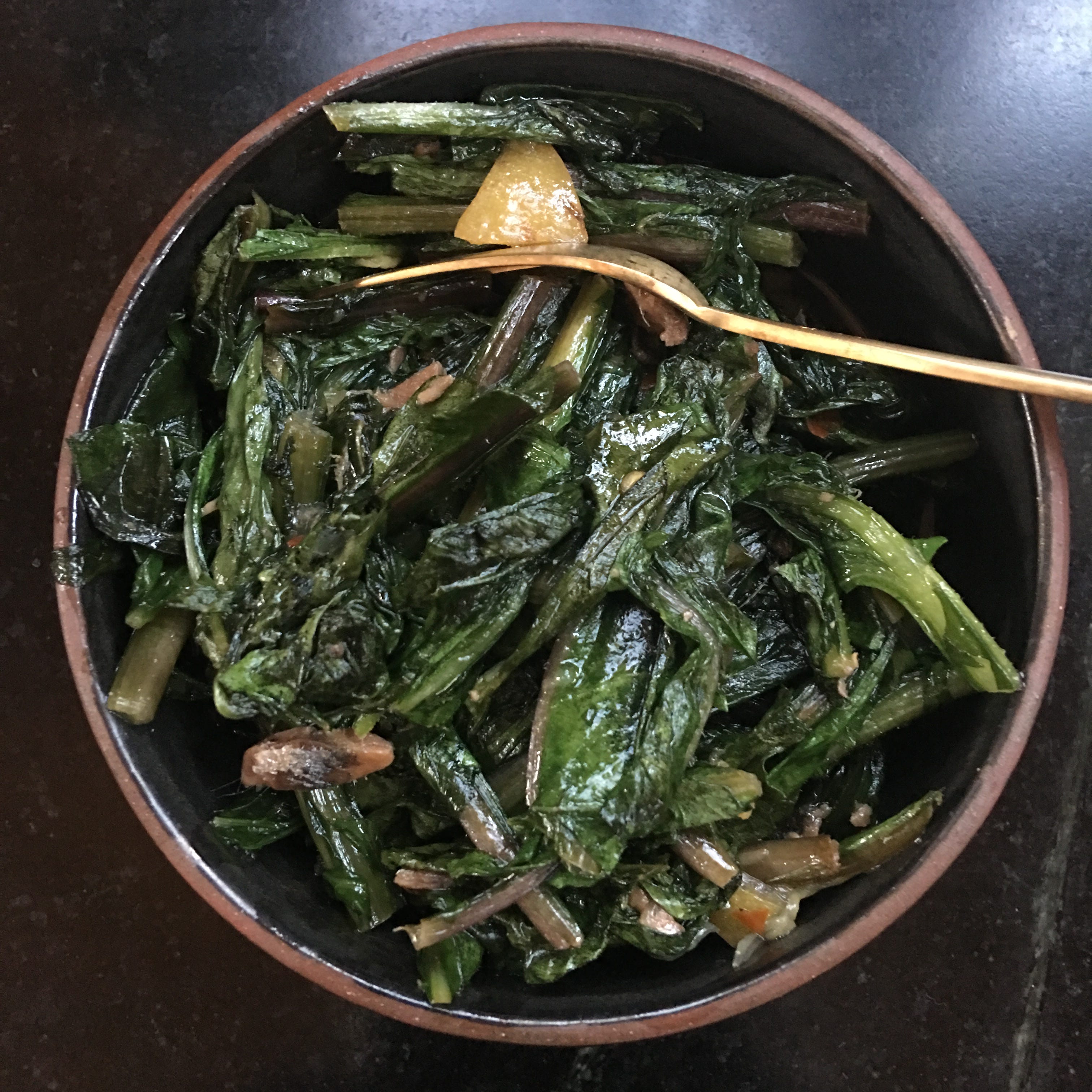
And of course there are the sfinci: fried cream puffs served hot with a dusting of cinnamon, confectioner’s sugar, and honey, or, cold and open-faced with a smear of ricotta cream and decorated with candied orange.
You might want to try to make one or all three of these recipes on March 19. If you do, you’ll be part of an ancient tradition dating back hundreds of years. You’ll bring the spirit of Sicily into your kitchen. And you’ll be well-fed to boot.
If you’re enjoying these Dispatches, a like, share, or comment helps more readers find their way here.
Pasta con le sarde
serves 4
I admit that, while this pasta dish is stellar, it loses a bit of of its authentic lustre because of the absence of wild fennel. Growing freely all over the island of Sicily, wild fennel is a harbinger of spring that gives a wonderfully unique flavour to the dishes it graces.
One other change of note: this dish is typically made with raisins or currants and pine nuts, but I like the clean crunch of chopped almonds instead, an authentic substitution that I learned in Sicily. Seek out a recipe for the original for a real treat.
Ingredients
Breadcrumb Topping
1 teaspoon ground fennel seeds
1¼ cup bread crumbs
Kosher salt and freshly ground black pepper
¼ cup olive oil
2 tablespoons granulated sugar
1 large garlic clove, peeled and lightly smashed
Sardine Sauce
1½ cup minced peeled and cored fennel bulb, fronds chopped and reserved
2 tablespoons olive oil, plus more as needed
1 cup minced yellow onion
1 large garlic clove, peeled and lightly smashed
¼ cup tomato sauce
⅓ cup raw almonds, roughly chopped
1 pound/340g sardines, cleaned and cut into 1-inch pieces
1 tablespoon tomato paste, dissolved in ½ cup (120ml) dry white wine
Pinch saffron (dissolve this in the wine too)
1 pound (450g) bucatini or spaghetti
Make the breadcrumb topping:
Heat the olive oil a medium skillet over medium heat. Add the ground fennel seed and cook until fragrant. Add breadcrumbs, salt, sugar and garlic clove and cook, tossing, until golden. Discard garlic and transfer breadcrumb mixture to a bowl and set aside.
Make the sardine sauce:
Bring a large pot of water to boil. Add the chopped fennel (not the fronds) and cook until the fennel is tender, about 15 minutes. Drain, reserving water.
In a large skillet or sauté pan, heat the olive oil over medium heat. Add the onions, garlic and drained fennel and sauté until fragrant, being careful not to let either turn brown, 2 to 3 minutes.
Add the reserved fennel fronds, the tomato sauce, the almonds, the wine and saffron if using. Season with salt and pepper to taste. Simmer for 5-7 minutes and then add the sardines. Simmer a further 3-5 minutes, or until the sardines are cooked through (they will break up as they cook). Taste and adjust for seasoning.
Bring the reserved fennel cooking water to a boil, adding more water as needed and salting the water to cook the pasta. When just al dente, drain the pasta, reserving a cup of the cooking water.
Combine the pasta with the sardine sauce, adding some of the pasta water. Bring the sauce to a simmer and stir the pasta with tongs to ensure it is being coated with the sauce. When the liquid has absorbed, serve the pasta, passing the breadcrumb topping separately.
Just fascinating!
Oh, these feasts with edible altars. Wherever they don't exist, they should be invented.
Your writing kept a smile on my face from the beginning to the end. It is so much fun to dig into the traditions and foods and the connections between the two.
More of this, please.