

To everyone new here, welcome. I’m Elizabeth, writer of The Delicious Bits Dispatch: a weekly missive for the curious, with discoveries, reflections, and a seasonal recipe worth lingering over.
This post is the second of a three-part series about how we grow and change, often in ways that don’t follow a neat or predictable path. Last week I wrote about the relief of knowing there isn’t just one prime of life. This week I ask: what changes when we stop moving quickly past what’s already in front of us?
Read Part One →
Seeing isn’t a passive act. It requires participation. It requires curiosity, attention, and imagination.
—Elif Shafak, Unmapped Storylands
In a recent post, writer Elif Shafak reflected on whether we actually see what is right in front of our eyes, or simply skim the surface. Using a 19th-century painting as an example, she explores how much we miss when we give short shrift to what our eyes take in.
At first, the painting appears simple—three diners eating in a cafe—but closer and slower looking reveals surprising details: flies and bees, conflicting facial expressions of anger or invitation, ambiguous gestures, hidden stories. The more we look, the more we see and in seeing, there are more questions than answers, meanings layered beyond the comprehension of a cursory look.
Shafak asks: “When we look at the world around us, at least every now and then we can quietly ask ourselves: “What is it that I am not seeing?”
That question—what am I not seeing?—has been rumbling in my mind, not just a spring well for creativity and exploration, as Shafak suggests, but as a lens through which we view everything around us, one that requires a constant fine-tuning and calibration to get deeper.
To see slowly is to see more completely.
—Michael Findlay, art dealer and author
That idea — that seeing isn’t automatic but cultivated — is something that author Michael Findlay explores beautifully in Seeing Slowly: Looking at Modern Art.
The average museum-goer spends roughly ten seconds with a work of art—including reading the wall label. Ten seconds to absorb years—sometimes decades—of thinking, making, failing, revising. With photography now allowed, even encouraged, the imbalance becomes even clearer: visitors often devote more time positioning themselves in front of a painting than to actually looking at it, backs turned, phones raised.
Art is increasingly treated like social media, documented to be consumed quickly left behind as we move on to the next image.
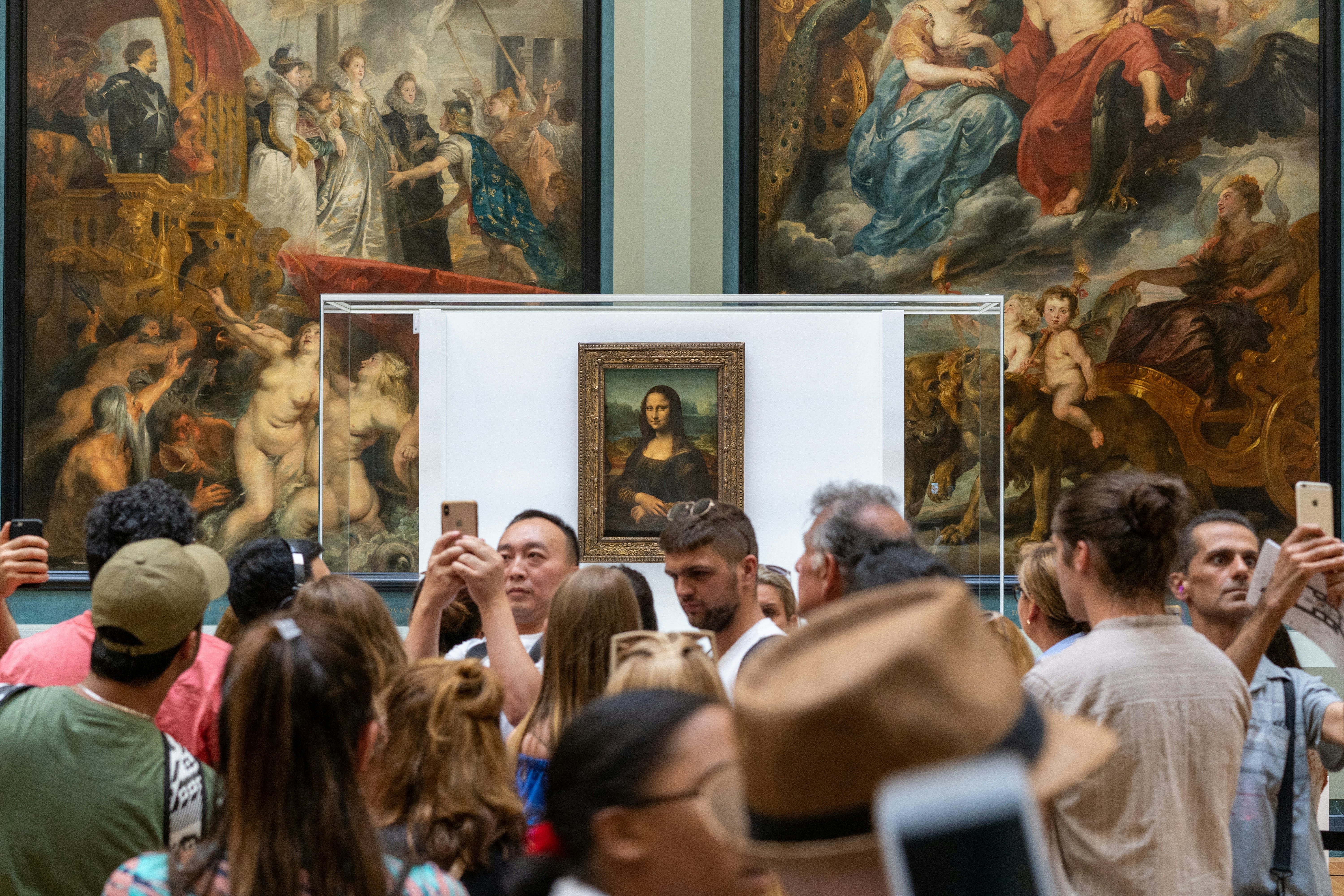
Findlay writes that “real seeing isn’t just about looking with your eyes — it’s about engaging your attention without rushing past what’s right in front of you.”
What if we brought that same kind of attention to ourselves?
The real voyage of discovery consists not in seeking new landscapes, but in having new eyes.
—Marcel Proust, French novelist, literary critic and essayist
For years, my husband Richard gave only a passing glance to his own gifts, assuming there was nothing there that required closer attention. He thought that the way he noticed balance, pattern, and nuance—his visual acuity—was simply how everyone saw the world. Because it felt effortless, it didn’t register as a distinctive skill.
A designer creating objects meant to bring humour, beauty, and delight into everyday spaces, Richard often brushed his work aside, referring to it as “making things people don’t really need.” It was an offhand phrase, offered jokingly, a way of describing his work without quite claiming its value.
Over time, Richard saw that what felt incidental to him was, for others, a source of pleasure and connection. As he better understood his unique perspective, he began to follow that creative impulse beyond objects and into writing, trusting that the same sensitivity to balance, tone, and nuance could shape a larger narrative. That book is nearly finished.
From there, his love of beauty—in music, art, and design—has led Richard into fulfilling work with nonprofit arts organizations. What had once felt like a small, easily dismissed skill revealed itself as a perspective that had many pathways to follow.
That shift — from downplaying a gift to seeing it clearly and letting it shape a life — can change everything.
Coming into focus
Seeing slowly is a way of not rushing past ourselves. It asks us to notice what’s already present — the instincts, inclinations, and ways of being we’ve learned to overlook.
When we take the time to really see, what once felt familiar can begin to feel consequential. Gifts we dismissed and capacities we minimized come into clearer focus, not because they’ve changed, but because we have.
Learning to see this way doesn’t demand reinvention. It asks only for recognition — of what has been there all along.
If you enjoy these Dispatches—and I hope you do—tap the heart, share, or comment to help new readers find their way here
Sicilian fish soup
adapted from Cooks Illustrated magazine
serves 6-8
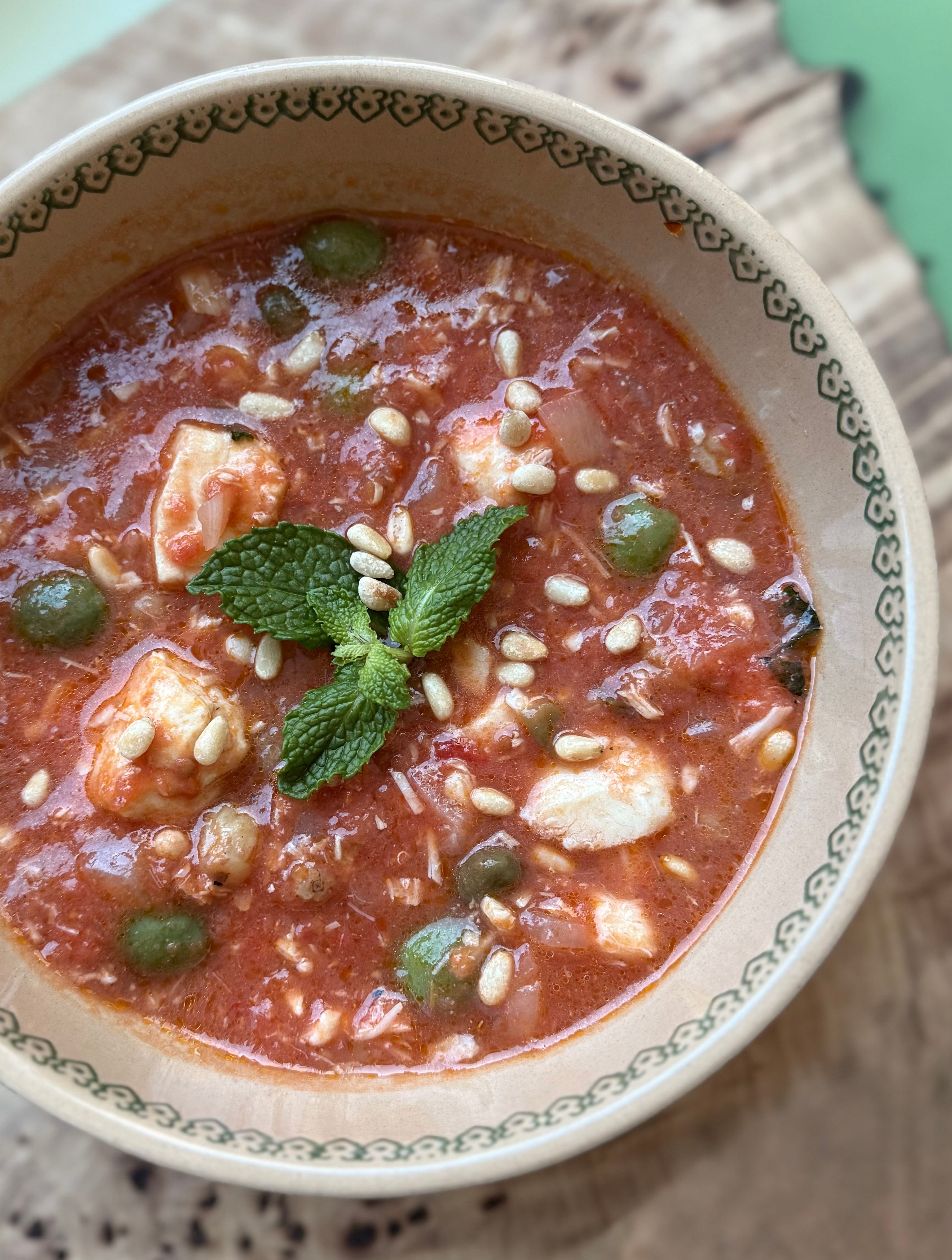
When I spent ten weeks in Sicily almost a decade ago, it felt as though I were encountering Italy for the first time. There is a different texture and in the light, the hardscrabble green pastures both soft and sharp against the sky. Food shaped by history, hardship and the imprint of many cultures is more alive and mysterious. And the people hold a toughness born from the land itself, paired with a fierce loyalty and a genuine, open-handed welcome that is impossible to forget.
In the time I spent there, I was able to see deeply—especially through the cuisine—how Sicily expresses itself. Sweet and sour flavor combinations sit at the heart of its cooking, a balance shaped by centuries of trade, conquest, and survival. This soup sits at the intersection of all those conquests, with the sweetness of pine nuts and raisins —common ingredients in the Sicilian kitchen—to the briny bite of the olives and capers. Add a pinch of red pepper flakes for heat, if desired. Serve with crusty bread or bruschetta—toasted slices of country bread rubbed with garlic and brushed with olive oil.
Ingredients
2 tablespoons extra-virgin olive oil
2 medium onions, chopped coarse
1 large garlic clove, minced
½ cup dry white wine
28 oz can diced tomatoes
2 large bay leaves
Salt and ground black pepper
2 cups fish stock
¼ cup golden raisins
3 pounds halibut, black cod or a combination of both
2 tablespoons drained capers
½ cup green olives, pitted and quartered lengthwise
¼ cup pine nuts, toasted
¼ cup coarsely chopped fresh mint leaves
Heat the oil in a large stockpot or Dutch oven. Add the onions and cook over medium heat until softened, about 5 minutes. Stir in the garlic and cook until aromatic, about 30 seconds.
Add the wine and simmer until reduced by half, 2 to 3 minutes. Add the tomatoes, bay leaves, 1/2 teaspoon salt, and pepper to taste. Bring to a boil over high heat, reduce the heat, and simmer until the mixture has thickened to the consistency of tomato sauce, 15 to 20 minutes.
Add the fish stock and raisins and bring to a boil over high heat. Reduce the heat and simmer until the flavors meld, about 10 minutes.
Stir in the fish, capers, and olives and bring back to a simmer over medium heat. Simmer for 7 minutes, stirring a few times to ensure even cooking. Remove the pot from the heat, cover, and let stand until the fish is just cooked through, 2 to 3 minutes. Discard the bay leaves and adjust the seasonings. Serve immediately, garnishing each bowl with pine nuts and mint.
I am so happy that I follow your writing and get to benefit from your thoughtful pieces. And I have never been a fish stew person, but my husband loves it and now I may have to try this!
Looking without seeing, is a curse of these times.
Excellent piece Elizabeth.